Biodiversity net gain is a new approach to development and land management which aims to protect the natural environment by ensuring it is measurably improved as part and parcel of any given development.
The National Planning Policy Framework (NPPF) states that development should contribute to and enhance the local environment, minimise impacts and provide net gains for biodiversity. Plans should:
‘promote the conservation, restoration and enhancement of priority habitats, ecological networks and the protection and recovery of priority species’.
The Environment Act sets out the key components of the biodiversity net gain system; essentially a minimum 10% net gain (assessed using a biodiversity metric) which may be delivered at or away from the development site, and which must be secured for a minimum of 30 years.
None of this changes or undermines existing legal protections.
Some habitats, however, are deemed to be too important for the principle of off-setting a loss via the net 10% gain that this processes entails.
Under the new system these special habitats will be called ‘irreplaceable habitats’. They have been defined in the NPPF as habitats that are ‘technically very challenging or time-consuming to restore, considering factors such as age, uniqueness, species diversity, or rarity’.
At the moment the “example” list of these habitats includes: ‘ancient woodland, ancient and veteran trees, blanket bog, limestone pavement, sand dunes, salt marsh and lowland fen’.
I very much hope when the final list is confirmed that chalk streams and their mosaic of supporting habitats – winterbournes, wet woodland, calcareous fen, spring-lines, peat-rich floodplains – will be on it. This would provide a higher level of protection and demand bespoke reports prepared as part of the planning application.
There is a very good case for putting chalk streams on the list, if not at the top of it.
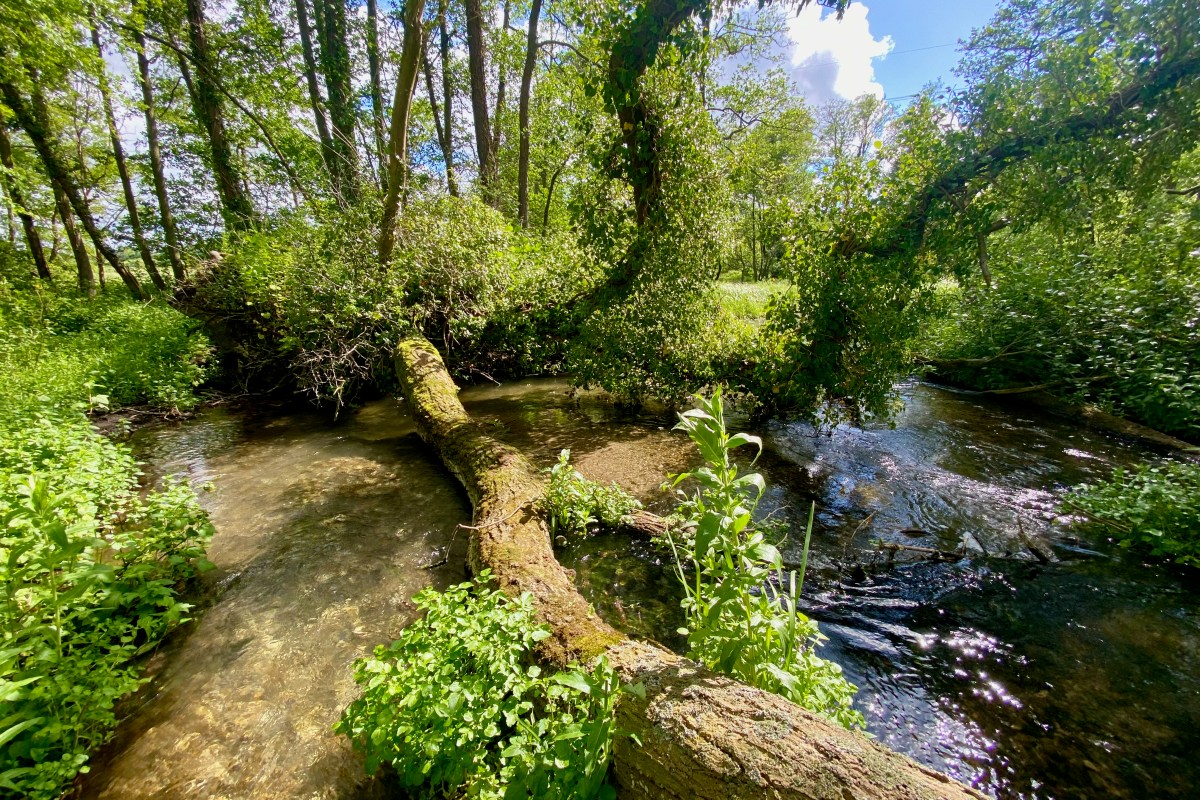
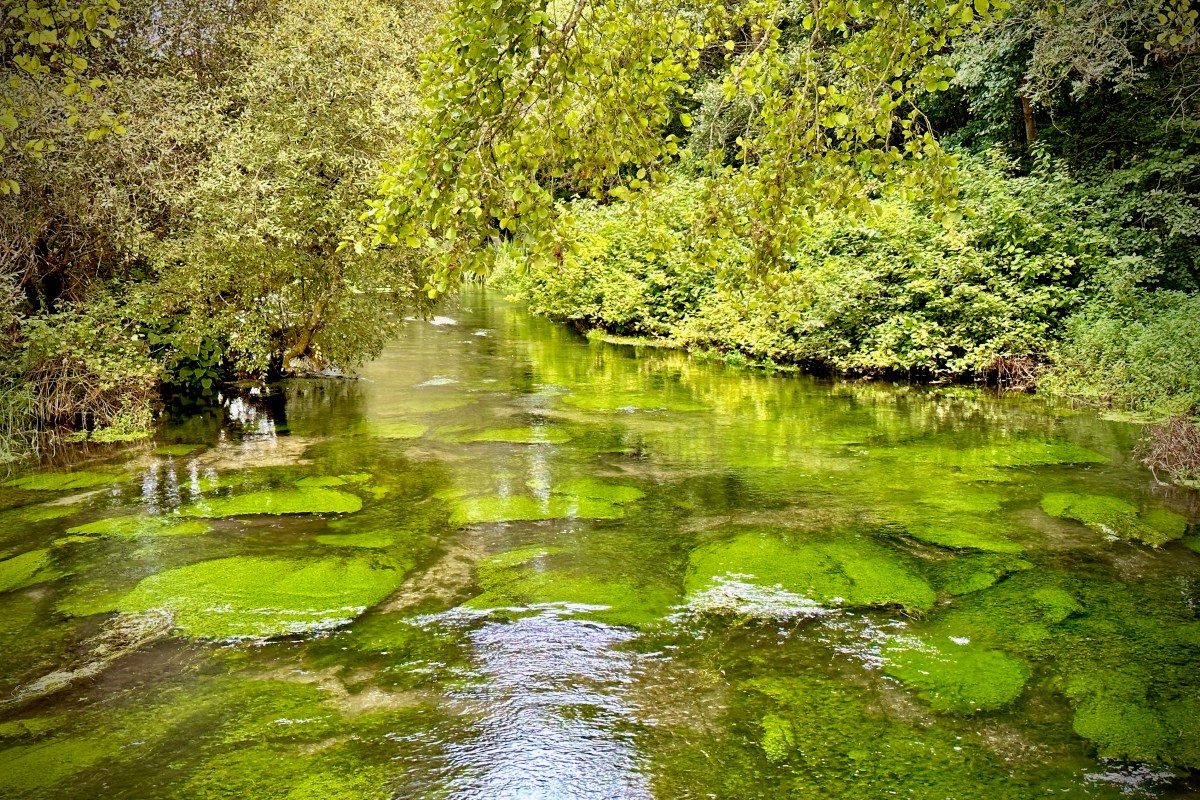
Chalk streams are the most bio-diverse of any British freshwater system. So, if the river corridor is the most biodiverse, or potentially biodiverse part of any given landscape, chalk stream and their floodplains must – ipso facto – be more biodiverse than any other part of the English landscape.
Chalk streams are a lowland, cold-water, spring-fed river system, occupied in their upper reaches by rheophilic species of flora and fauna. They are home to a number of threatened species, not least a genetically distinct race of Atlantic salmon that are unique to the Wessex chalk streams: also the southern damselfly, Desmoulins whorl snail, the white-clawed crayfish. They are a global hotspot for species of invertebrate adapted to ephemeral streams: the scare brown sedge and the winterbourne stonefly.
Chalk streams are globally rare and – of course – most chalk streams are in England.
However, they are inherently vulnerable, as described in section 5 of English Nature’s 1999 publication Chalk Rivers Nature Conservation and Management:
• they feature flora and fauna communities adapted to stable flow regimes that are easily disrupted by abstraction, development, agriculture
• they are low energy systems that are less able to self-cleanse or self-repair
• they are located in parts of England with lower then average rainfall and high population density, imposing intrinsically high pressure on water resources
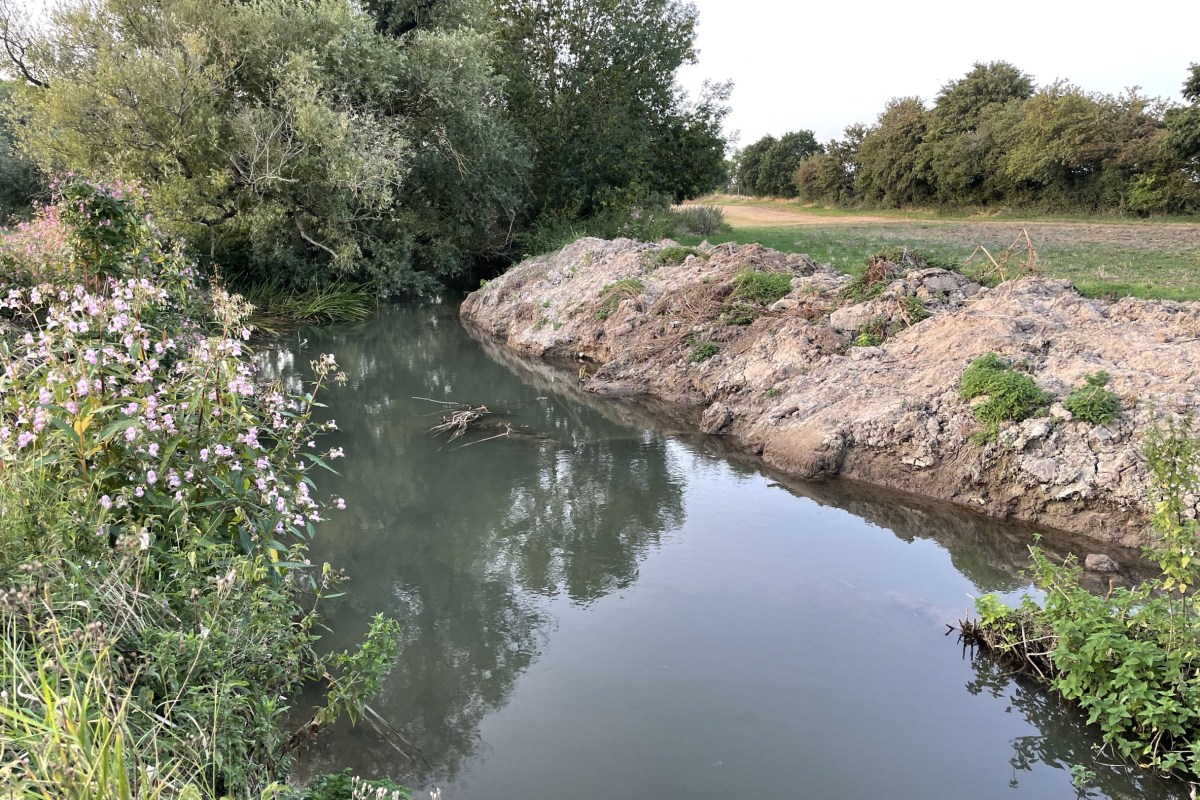
• historic management and development of chalk streams had left a legacy of modifications which can exacerbate modern environmental pressures
And by Sear et al in the paper Defining reference conditions for chalk stream and Fenland natural channels which shows that:
• the geomorphology and natural bed substrate of chalk streams are relics of processes which have long since retreated from our landscape.
• once gravel beds have been removed, there is an insufficient supply of gravel to replenish these through natural processes.
In other words, they are globally rare, biodiverse and home to threatened and rare species, but vulnerable to damage, and relatively incapable of self-repair, especially within time-scales that we can relate to. Once gravels are removed we would need to wait for another ice-age for the stream’s physical structure to be re-set.
What exactly constitutes an irreplaceable habitat has, unsurprisingly, sparked some debate, but there appears to consensus around the ideas that these habitats support rare or endangered species and provide critical ecosystem services, such as carbon sequestration, and flood prevention, while their loss or damage can result in significant, long-term, and sometimes irreversible negative impacts on local and regional ecosystems.
Again, you can’t do much better in those regards than to preserve and restore rivers, especially chalk streams.
A recent paper by Sear, Speck and Pears – Carbon storage in river and floodplain systems – shows that 18% of English peat is stored in the top 15cm of English chalk stream floodplains. Dig deeper and that % goes up: and you can dig deeper. At the river’s edge the peat is usually one meter deep in my experience on East Anglian streams, but up to three to four meters deep in certain parts of the catchments where marsh conditions once prevailed. Carbon storage in river floodplains is quantitatively comparable to other fens and marshes and need to be recognised as such. Carbon buried in floodplains is old, and in chalk streams, the oldest of all @ circa 11,000 years. It is sensitive to draining and drying. On the other hand, there is the potential to use floodplains, especially chalk stream flood-plains, to sequester and stably store carbon through the restoration of water-table levels, wet-woodland, calcareous fen and marsh: all exactly the kind of advanced river restoration prescriptions the chalk stream strategy is pushing for.
In other words, if we protect and restore chalk streams, surely we deliver the objectives of preserving and enhancing biodiversity and other ecosystems services about as effectively as it is possible to imagine?
***
Here’s a list of designated priority species supported by chalk streams and their riparian habitats (from EN chalk rivers conservation and management).
Plants
Ranunculion fluitantis
a) R. peltatus
b) R. penicillatus subsp pseudofluitans
c) R. fluitans
Oenanthe fluviatilis
Invertebrates
Austropotamobius pallipes (Crayfish)
Oulimnius troglodytes (Beetle)
Riolus cupreus (Beetle)
Riolus subviolaceus (Beetle)
Agabus biguttatus (Beetle)
Metalype fragilis (Caddis)
Ylodes conspersus (Caddis)
Baetis atrebatinus (Mayfly)
Paraleptophleba wernerii (Mayfly)
Coenagrion mercuriale (Dragonfly)
Valvata macrostoma (Snail)
Vertigo moulinsiana (Snail)
Pisidium tenuilineatum (Mussel)
Fish
Atlantic salmon (Salmo salar)
Bullhead (Cottus gobio)
Brook lamprey (Lampetra planeri)
River lamprey (Lampetra fluviatilis)
Sea lamprey (Petromyzon marinus)
Spined loach (Cobitis taenia)
Grayling (Thymallus thymallus)
Birds
Kingfisher (Alcedo atthis)
Cetti’s warbler (Certia certi)
Bewick’s swan (Cygnus columbianis)
Green sandpiper (Tringa ochropus)
Reed bunting (Emberiza schoeniclus)
Water rail (Rallus aquaticus)
Lapwing (Vanellus vanellus)
Snipe (Gallinago gallinago)
Redshank (Tringa totanus)
Mammals
Otter (Lutra lutra)
Water vole (Arvicola terrestri)
Water shrew (Neomys fodiens)
Daubenton’s bat (Myotis daubentonii)

 Chalk-Streams