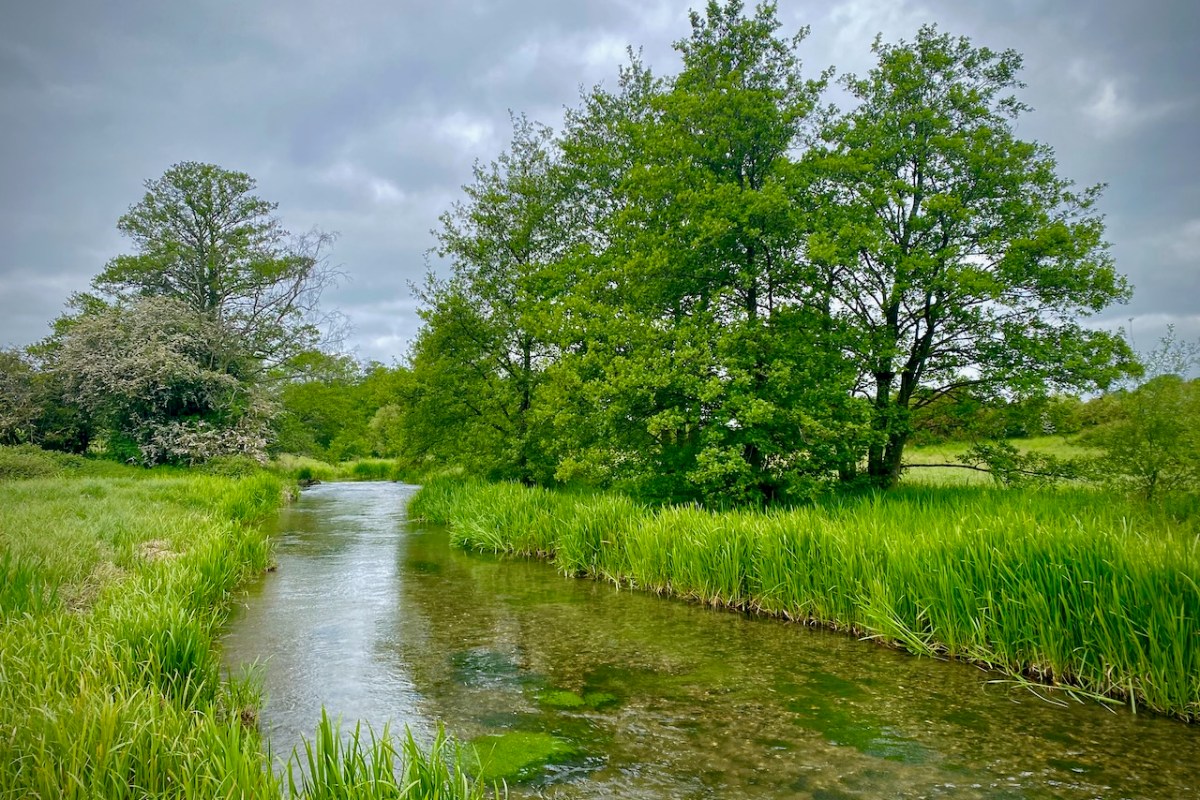
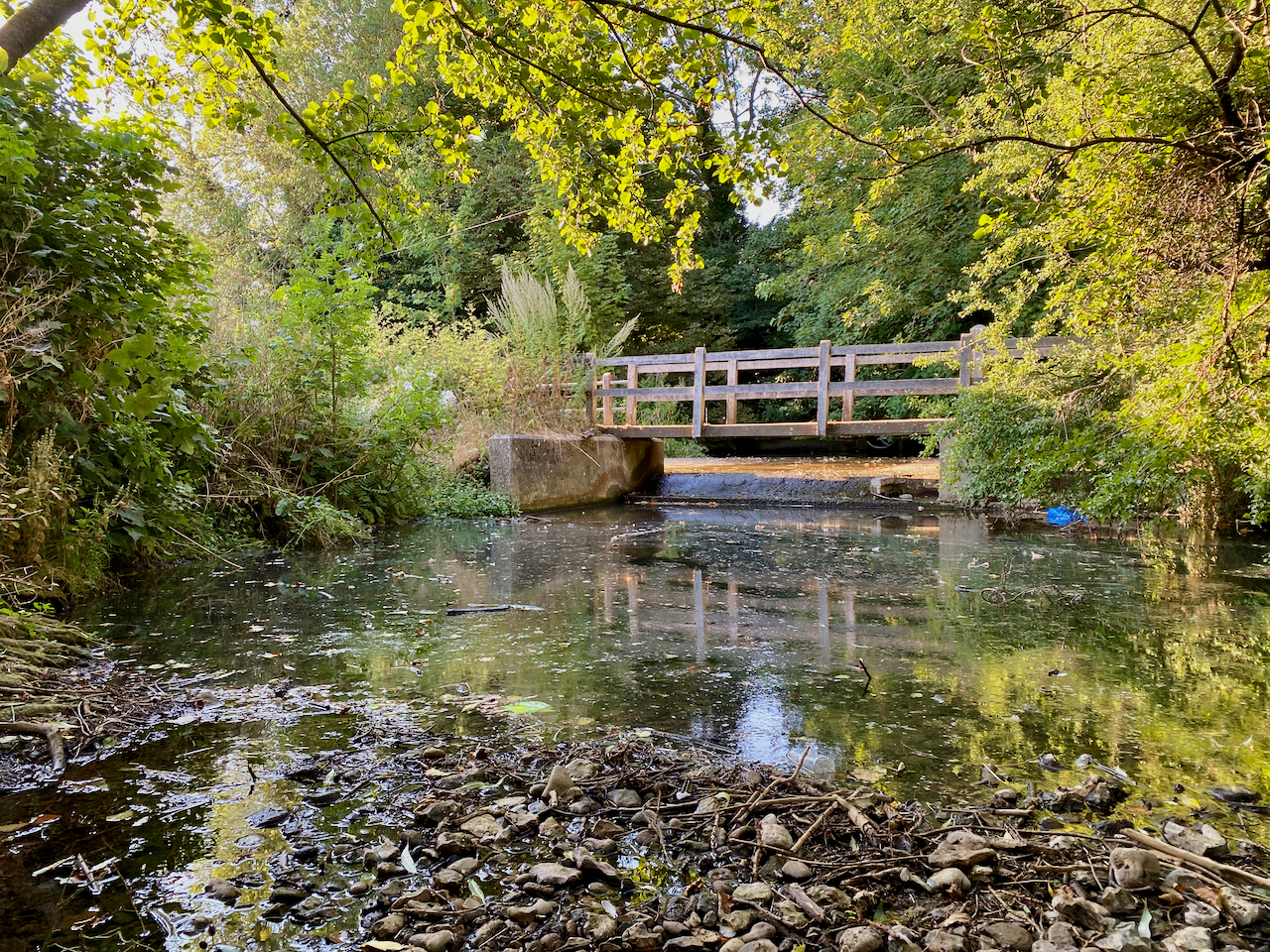
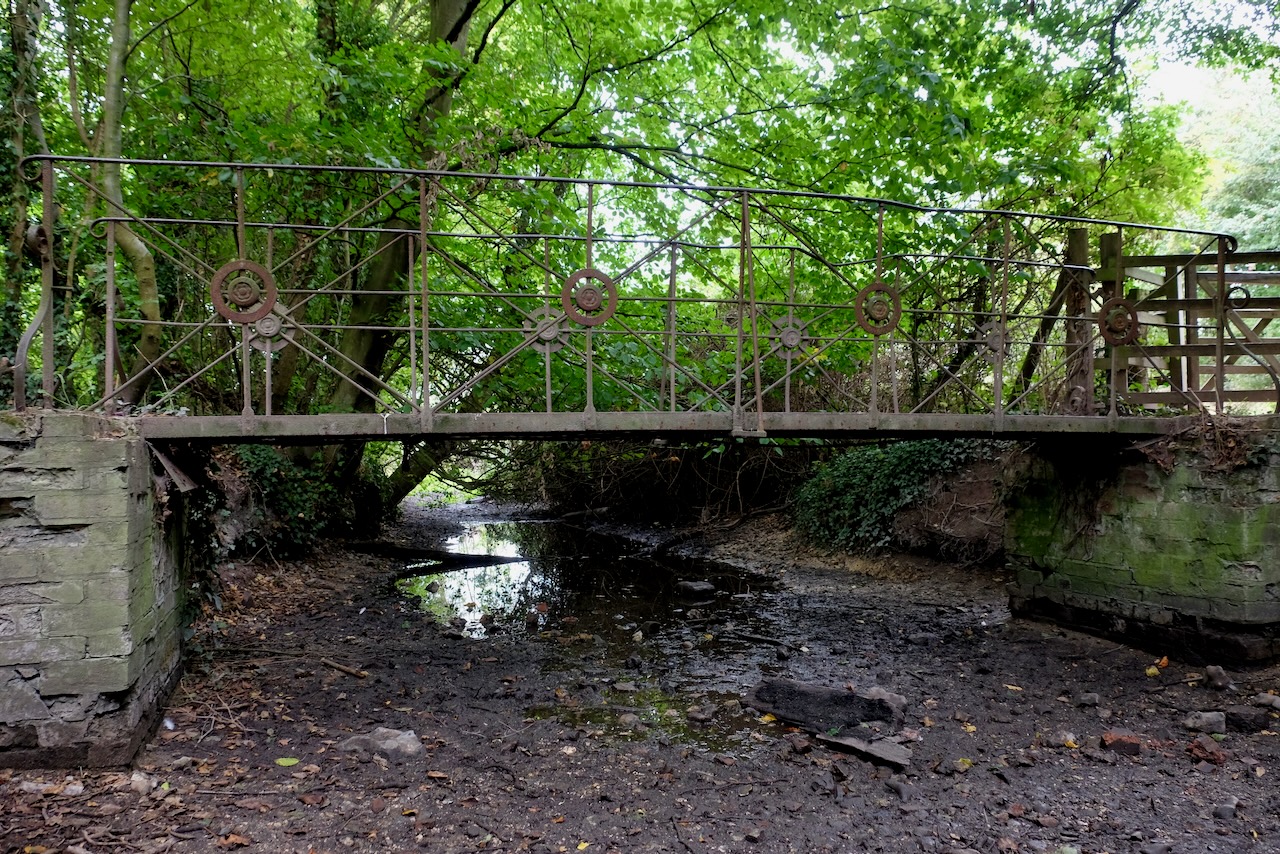
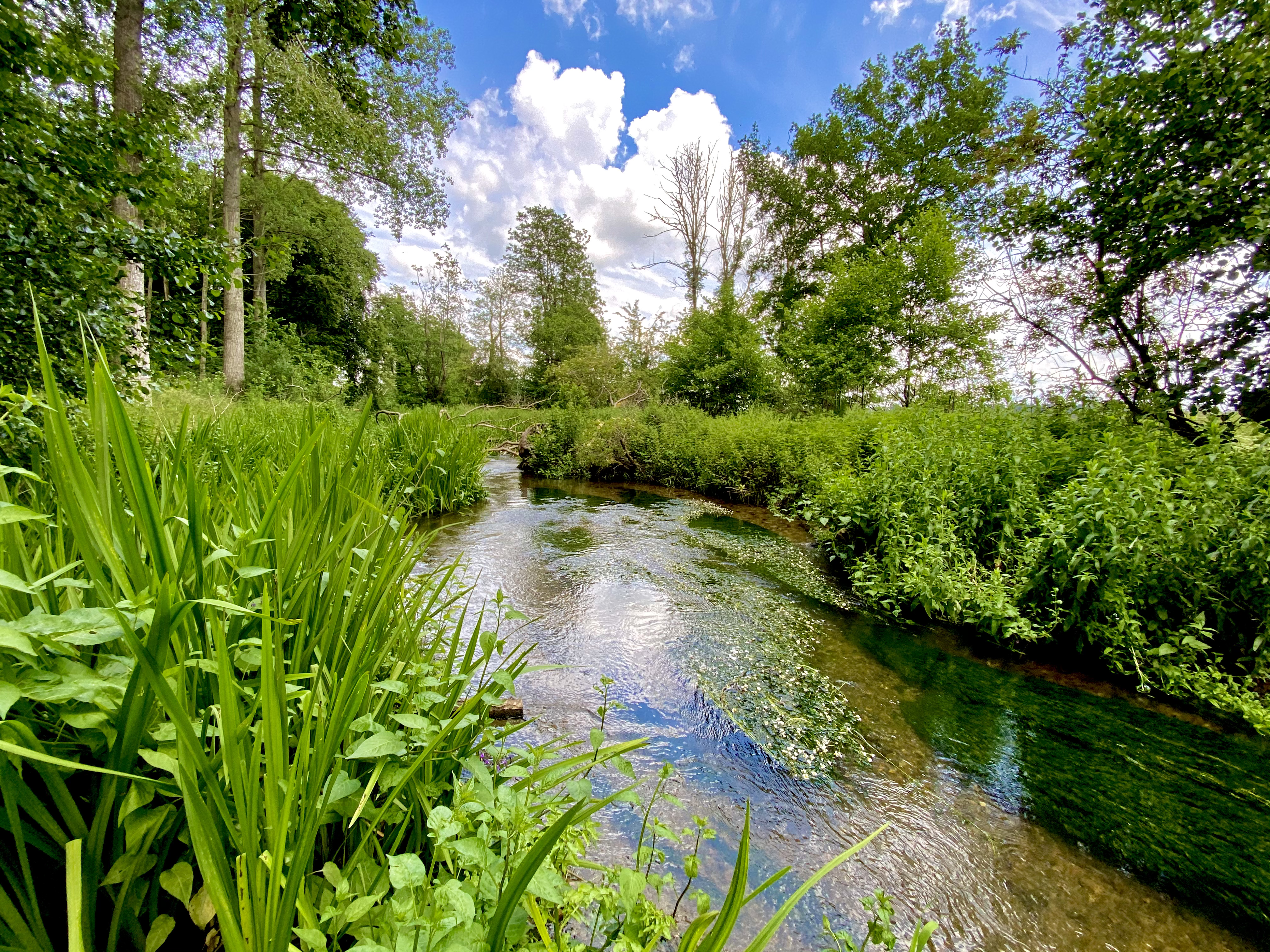
Today we had the official launch of our / your chalk stream strategy implementation plan at Watermen’s Hall in London, generously supported by The Fishmonger’s Guild. This iterative plan will – over time – help us make chalk streams look more like the main image and less like the first three.

This is what I said to introduce the day:
Thank you everyone for coming along today to launch the Implementation Plan for the recommendations in the chalk stream strategy. It’s fabulous to see such support and interest.
Before I go any further I would like to thank the Fishmonger’s Company for so generously sponsoring this event, and the Watermen’s Company for this magnificent and almost eponymous setting of Watermen’s Hall. We are very privileged to be here.
This is something of a first – or several firsts – in the now long history of action plans, charters and reports about the state of our chalk streams.
It’s the first Implementation Plan, for a start. There will be others in the future, reflecting progress, highlighting shortfalls, outlining commitments and timetables.
It is the first time that all parties – regulators, industry, NGOs and stakeholders – have debated, agreed and signed up to delivering the recommendations in a national strategy to restore good health to our chalk streams;
It’s the first time that following through on those recommendations has been built into the process, so that we can all hold the delivery to account;
And it’s the first time – in my view – that we have been forensic, realistic and pragmatic about the actions required, how long these will take to enact, and how iterative the process is.
All of which adds up to a strategy and plan that is more likely to yield results than anything we have seen before. Not that we haven’t seen progress before now, but the pace has been achingly slow and the process mostly adversarial. We say this. They say that. All standing in for actual change.
Protest has its place. But at some point, if you want to make things better, you’ve got to sit down with those who you disagree with and start trying to agree with them. This can be uncomfortable – for all sides. Some of us have to lower our ambitions. Some of us need to raise them.
But it can be done and it is the vital first step.
I can’t emphasise this enough, because there is an impatience and anger about the state of our rivers, which can be a potent and noble force for good, but which can also become an addictive substitute for actually doing something: a stance, not an action.
A few days after many of us last met in October 2021, at the launch of the chalk stream restoration strategy on the banks of Hertfordshire’s lovely River Mimram, that chalk stream turned a vivid and alarming shade of purple. Not for long. Half an hour later the stream had cleared and happily, if puzzlingly, there was no apparent damage to the river life or remnant of the cause.
But of course, a photo of the purple chalk stream hit social media in a big way. Some saw it as a certain portent of the futility of our work: “fine words devoid of intent, delivering even less” was one damning phrase, “liked” 6,294 times.
I saw the purple Mimram as something else entirely, however: this was surely an all too vivid demonstration of exactly why we need a chalk stream restoration strategy.
Because people are careless around rivers and pour stuff into them without thinking, for a start.
But also because people are cynical. They’re fed up with what they see as irredeemably careless regulators, and a rapacious water industry. They’ve given up believing that – short of some imagined Damascene moment of delivery – things will ever get better, as much as they have started to believe they have never been worse.
This pessimistic mindset is not, in my view, a true reflection on the state of things, albeit it is a seductive one.
In part it is built on a naive belief in the possibility of instantaneous recovery and therefore a frustration with the incremental, sometimes almost invisible process of stitching back together the death by a thousand cuts chalk streams have been subjected to.
There is no silver bullet that will fix chalk streams. Which is hard to take, when you so desperately want there to be one. It’s Sisyphus rolling his rock up the hill … again and again.
In fact, it’s a thousand of us, all as Sisyphus … rolling our rocks, again and again.
This despair is also built on a lack of historical perspective. Anyone who thinks chalk streams are generally worse now than ever in history was not paying attention in 1989, or is not basing their opinion on facts. There may be a few streams at their nadir in 2023, but not many.
Without for a moment suggesting things are good enough, it is nevertheless true that against a 1990 baseline, groundwater abstraction is lower, phosphorus concentrations are lower at least d’stream of larger sewage works and long-term trends in river insect communities show a general improvement, especially in urban areas.
And finally this pessimism is, of course, built on repetition. The damnation of our efforts to unite and fix these lovely streams was “liked” by far more people than contributed ideas on how to fix them.
But isn’t it far, far better to light a candle than to curse the darkness?
The chalk stream strategy and the implementation plan which we launch today are about lighting that candle: to illuminate what is broken, to identify how we fix those things with solutions that are simple, pragmatic and almost unarguable, and to hold us to the task of actually going ahead and fixing them.
Take abstraction as one example:
I’ve been involved in campaigns against over-abstraction for at least thirty years. In the 1980s and 1990s when groundwater abstraction was its height, it was generally disputed that abstraction had much impact on flows in chalk streams, or even if there was some impact the subject was too complex to be summarised by simple cause and effect. Protesters, including me – who knew but didn’t have the means to prove this was nonsense – railed. Abstractors said further studies were needed.
To get beyond this opposition between protest and procrastination we needed to think more about solutions than arguments. This requires dialogue, collaboration and reciprocal understanding of the other point of view: recognition on the one hand that water is a vital resource for society and that we can’t just turn off the taps and on the other hand that taking water from the environment in the convenient, careless way we have done has a now completely unacceptable impact on the natural world.
We can then find common ground in pragmatic, targeted schemes that enable us to source water from places where it causes minimal environmental harm and reduce the pressure on places that are ecologically special: like the chalk streams.
Recycling water from Birmingham sewage via the Grand Union Canal, for example, will give us at least 100 Ml/d of headroom, for a relatively modest cost, allowing abstraction in the Chilterns to be reduced to sustainable levels. The restored flows will create extra water in the lower reaches of those chalk catchments and this can also go back into the system.
And thus by 2030 we should see a large part of the reductions in abstraction needed to re-naturalise flows in the Colne’s chalk stream tributaries: the Misbourne, Chess, Bulbourne, upper Gade and Ver. And for the the upper Lea and its tributaries, while delivery takes longer we will see over half the reductions by 2035 and all by 2050.
This isn’t a pipe dream: no pun intended. This isn’t a scheme “devoid of intent”: this is happening as a result of processes that the Chalk Strategy has tuned into and significantly influenced precisely because the CaBA panel was collaborative, pragmatic and persuasive.
Over time the Implementation Plan will set out timelines and goals relating to all the recommendations in the strategy. It is designed to be re-published regularly, to reflect progress where it has happened and highlight lack of it, where it hasn’t.
The plan is designed to make all this simple and transparent, with colour-coded progress symbols that indicate if a given recommendation has been delivered, if it’s a work in progress whose outcome is uncertain or likely, or if the recommendation simply hasn’t got anywhere yet.
These are all grouped under the structure of the trinity of chalk stream health, which emphasises that to achieve the best value for money the improvements we make need to be integrated.
No doubt you will hear more from others today, but recommendations that have been either delivered or are very much underway include:
- more work to prioritise abstraction reduction in ecologically vulnerable chalk streams;
- defining all chalk aquifer water regions as water-stressed – enabling the roll out of metering;
- defining chalk streams as high-priority alongside other designated sites in the government’s Stormwater Reduction Plan;
- a national network of flagship catchment restoration projects;
- a PhD (funded by Anglian Water) into the pre-anthropogenic conditions of chalk streams to better inform our efforts at physical restoration;
as well as commitments in the Plan for Water to:
- address the impact of agricultural pollution on chalk streams by considering chalk streams in the development of its Environmental Land Management schemes;
- review the impact of private sewerage systems on chalk streams.
That’s all good news. This collaborative and ambitious work is only just at the beginning, but … at least it is underway.
We know what to do. We just need to do it.
Thank you.


Well done, progress is indeed being made and full marks for persistence. I have a local interest in the state of the rivers Burn, Stiffkey and Glaven in relation to the possible impact of pollutants and sediment released into the N Norfolk MPA. There are concerns regarding the state of water quality, and accretion of sediment, in the creeks and harbours of NN and the impacts this is having on sensitive habitats and species and Longshore fisheries.
Keep up the good work.
Peter
LikeLike