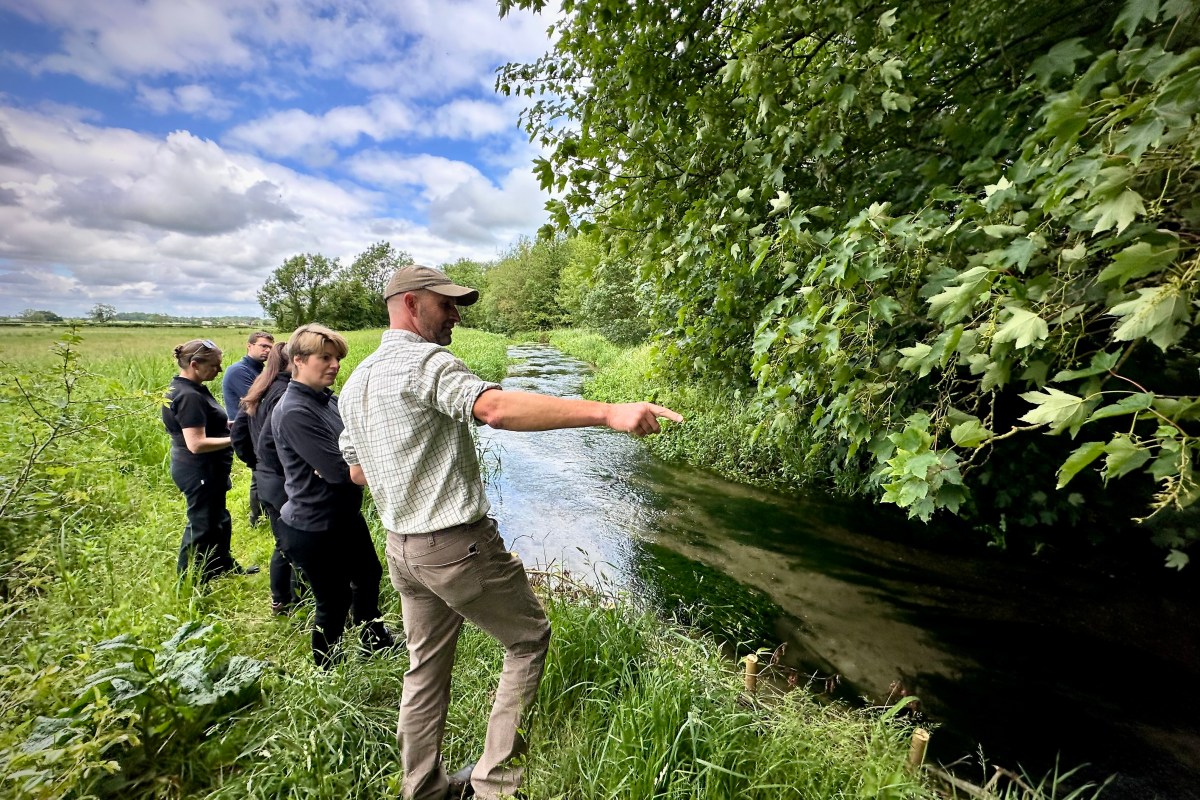
Ali Morse – chair of the CaBA chalk stream group – has written a letter (see PDF below) to Minister Emma Hardy (pictured above with the Yorkshire Wildlife Trust beside the Foston Beck) encouraging her to support measures to restore and protect chalk streams, but also expressing disappointment that the water White Paper and NPPF have not given us the promised assurances that chalk streams will get the “recognition and protection they deserve.”
Some time before the last election – and sensing, without any great gifts of foresight, a change of government – I spoke with Daniel Zeichner, the Cambridge Labour MP, about how important it would be to continue our chalk stream restoration work beyond the election, to harness the momentum gained from a strategy that had been signed up to by all sides. I might have been naive (though not as naive as those firebrands who correlated conservation nirvana with a change at Westminster) but Zeichner agreed wholeheartedly. He said that Feargal Sharkey – who was vigorously campaigning for Labour at the time – would hold them all to account if they didn’t do something.
And yet in spite of all that, the responses of the new(ish) government to repeated pleas for the greater protection of chalk streams have been underwhelming, to say the least. Having filibustered the progress of Minister Pow’s promised Chalk Stream Recovery Pack, Defra used the election as a means to nudge the pesky document under the carpet and finally to bury it altogether.
But when I met Minister Hardy last summer on the banks of Yorkshire’s Foston Beck, I met someone who I felt was motivated – as Minister Pow had been – to help chalk streams. She seemed genuinely keen to listen and help. Genuinely flabbergasted by some of the anomalies in existing environmental law that, for example, drive ever more expensive sewage treatments to works where the benefit to wildlife is minimal, while ignoring those places that need it most. But I also sensed a hesitancy to commit. Having worked for a year with Defra trying to midwife the Recovery Pack I knew why. Trying to persuade that unelected part of government to do anything differently is like pushing water uphill, whether you’re a Minister, an eNGO or individual citizen.
As Ali points out in her excellent letter, during the passage of the Planning and Infrastructure Bill we saw consistent and strong cross-party support for measures to protect chalk streams. We heard ministerial assurances from the despatch box that effective chalk stream measures would be included in upcoming policies.
But we haven’t seen much of substance, thus far.
No surprise, perhaps. There is no Damascene moment in conservation. I’ve been banging on about chalk stream protection since the dark days of the late 1980s when abstraction was at its peak, when cattle poached the riverbanks to bits, when land drainage engineers ruled the waterways, when zero phosphorus was removed from sewage and when “restoration” of rivers was an eccentric form of guerrilla resistance. Things are better than that now, though sometimes it may not feels as if they are.
To that end, Ali has extended to Defra the hand of continuing cooperation backed by the wealth of expertise now assembled under the umbrella of the CaBA chalk stream group, very ably managed by Alison Matthews. And I have invited Minister Hardy to come and visit the River Chess to meet with the River Chess Association and the Chilterns Chalk Stream Project and see first hand how collaboration and persistence can bring about the recovery of a chalk stream.
Fingers crossed. As ever.
 Chalk-Streams