It’s a great thing that our salmon stocks are now registered as endangered by the IUCN. Well done @wildfish. But there’s a ton of muddled information out there about the causes and as a result unrealistic or aimless ideas about what we should do.
Britain will not be the first place to lose salmon. They’re much more likely to go from Spain and France first. They’ve already disappeared from much of the USA and long ago they disappeared from North Africa. This is because THE overarching factor in their population abundance is the temperature of the planet in general and the North Atlantic in particular and the increasing length of the perilous journey from their natal streams to their feeding grounds – which are moving north as the sea warms.
Their endangered status is not the unique fault of the water industry, the government and farming. This idea is spread by the usual suspects on Twitter who are using the designation to serve their own agendas, either because they just want a stick to hit with or because catastrophism makes them relevant. The trouble with blaming in the wrong degree or place is you don’t get to the right answers.
Finally, saving our British and especially English salmon is not just a question of acting now, it’s a question of acting wisely. To do that we need to understand the causes of the decline, what we can and can’t influence and what we should do in the light of that knowledge.
By far the biggest cause of Atlantic salmon’s decline in Britain is the warming north Atlantic, which has natural cycles of temperature over which is now a general warming trend caused by climate change. This impacts south-west stocks (chalk streams, Devon and Cornwall and Wales as well as France and Spain) more extremely than north-east and Scottish stocks, because the south-west salmon have a longer journey to their feeding grounds off Greenland than the north-east salmon which feed in the ocean off Norway, Iceland and Russia. But the warming trend of the Atlantic impacts them all and generally it drives the salmon north.
The North Atlantic multi-decadal oscillation plus global warming: the biggest overarching impact on North Atlantic salmon abundance is ocean temperature. Credit to: Nour-Eddine Omrani / Ellen Viste
The next most significant impact are barriers to migration: as the late Steve Marsh-Smith said, if you have wild trout but no salmon, you have a barrier. We put many of our physical barriers up in the middle ages (over 5000 mills by 1066) and through the industrial revolution. We haven’t taken many of them down. There are tens of thousands of miles of nursery habitat in English and Welsh rivers which are not currently accessible to salmon.
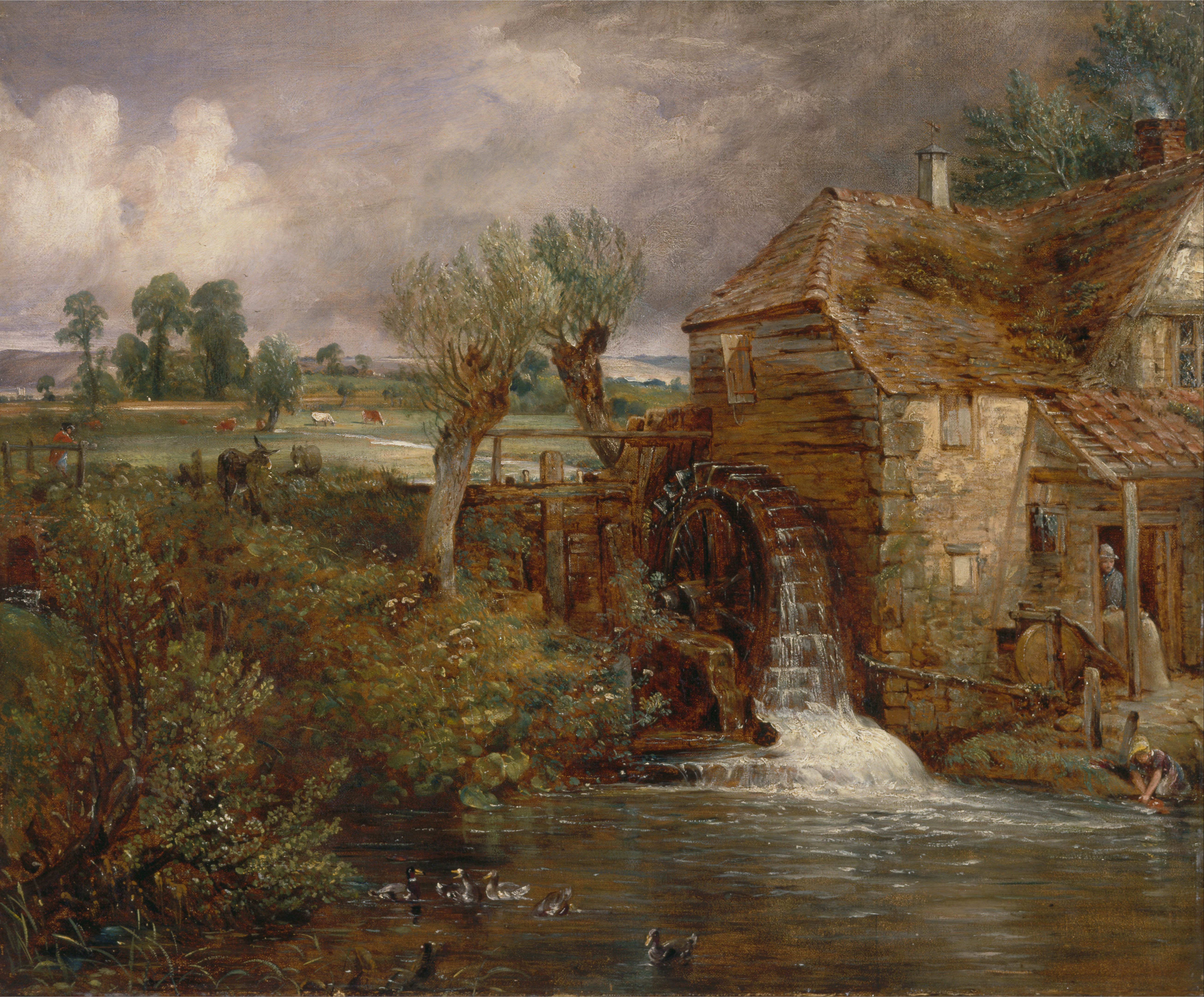
Mills: we built over 5000 and shut salmon out of hundreds of English rivers before William invaded in 1066.
Barriers can also exist in the form of water quality. Through the industrial revolution we barred salmon from dozens of rivers with industrial pollution and sewage. The massive nutrient enrichment of the River Wye today, in conjunction with a warming river, is almost certainly creating a new barrier. Generally there are probably fewer water quality barriers now than there were fifty or a hundred years ago, while the physical barriers remain.
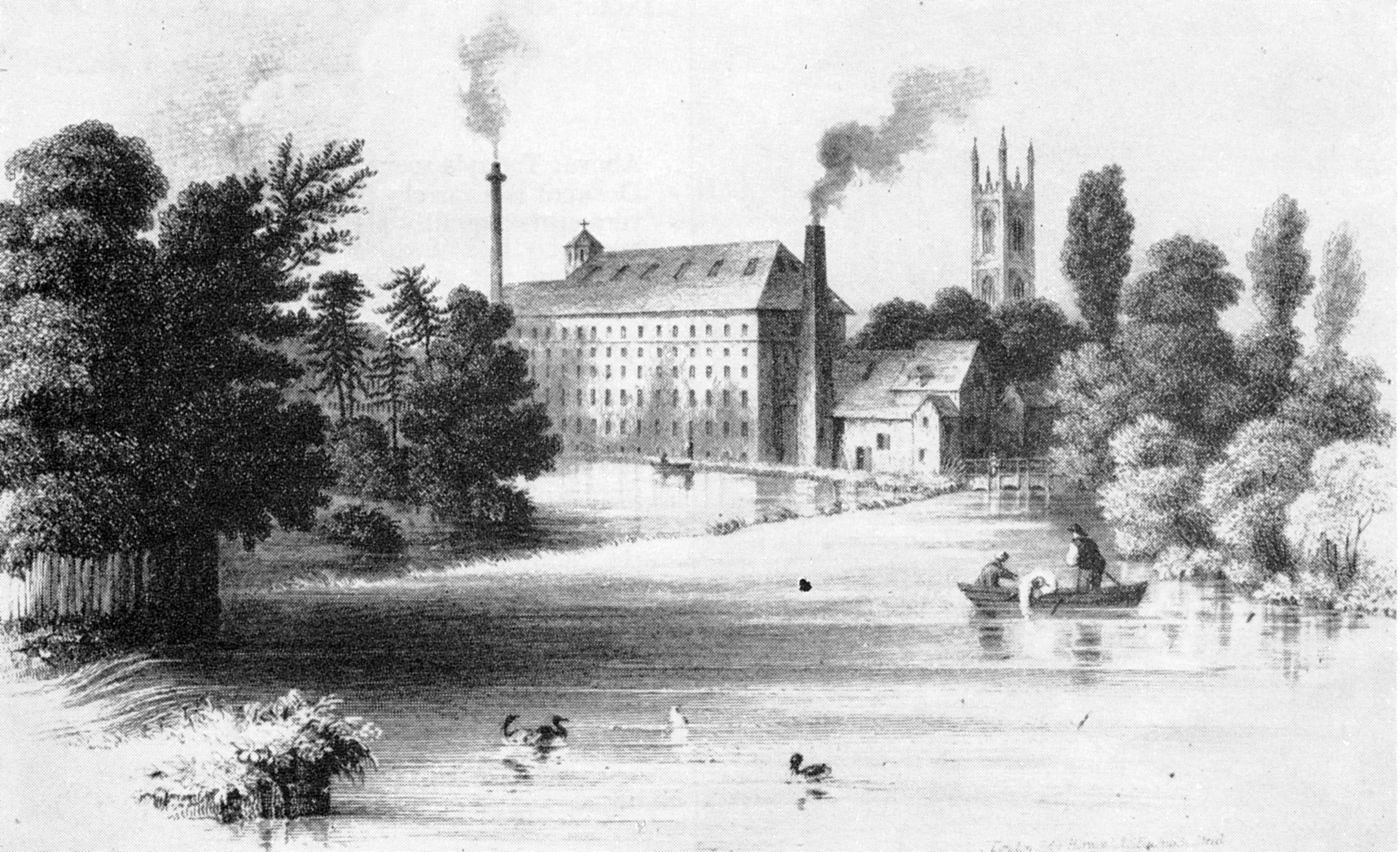
Then we built more mills through the Industrial Revolution: this was the very first silk mill built on the River Derwent, into which salmon are only just now returning, centuries later. But could they ascend the Derbyshire Wye? No.
We also create barriers by abstracting water. There are far more of those nowadays.
We create barriers with aquaculture, creating estuaries which are hostile zones full of sea-lice and toxins.
We create temperature barriers too, by dredging and widening rivers, by removing or limiting riparian vegetation and by increasing the residence time of water with mills and weirs and through abstraction.
There will be other impacts at sea and in the close coastal zone: overfishing and the northwards migration of important prey species will be having an impact. No doubt salmon are also caught as a by-catch of pelagic trawling. The bounce-back we saw during Covid lockdowns has to make one wonder if the by-catch is not actually quite significant.
Then there is the business of how we manage our rivers and streams, the salmon’s vital natal and nursery habitat, which obviously creates or eases localised impacts. This is where we can make a difference.
I find it weirdly ironic that some of the biggest self-serving finger waggers on the chalk streams run their fisheries like manicured zoos, blitzing the rough wildness with lawn-mowers and filling the rivers with robo-fish.
Certainly we could do a lot more to create rivers which salmon can thrive in: because what is obvious when you think about the scale of the impacts listed above, is that some of the biggest issues facing salmon are not going away any time soon: in the light of that knowledge the very best thing we can do is send as many fat salmon smolts to sea from the nursery streams of the British Isles as is technically possible.
I say “fat” because the survival rate of fat, strong juvenile smolts is way, way higher and far more come back as salmon. What makes salmon smolts fatter? Habitat quality. Look at the sizes of Pacific salmon smolts after the Stage-0 floodplain re-sets they have been practicing in Oregon: it’s unbeleivable how much better these young fish do in a naturally functioning and dynamic flood-plain than in canalised streams.
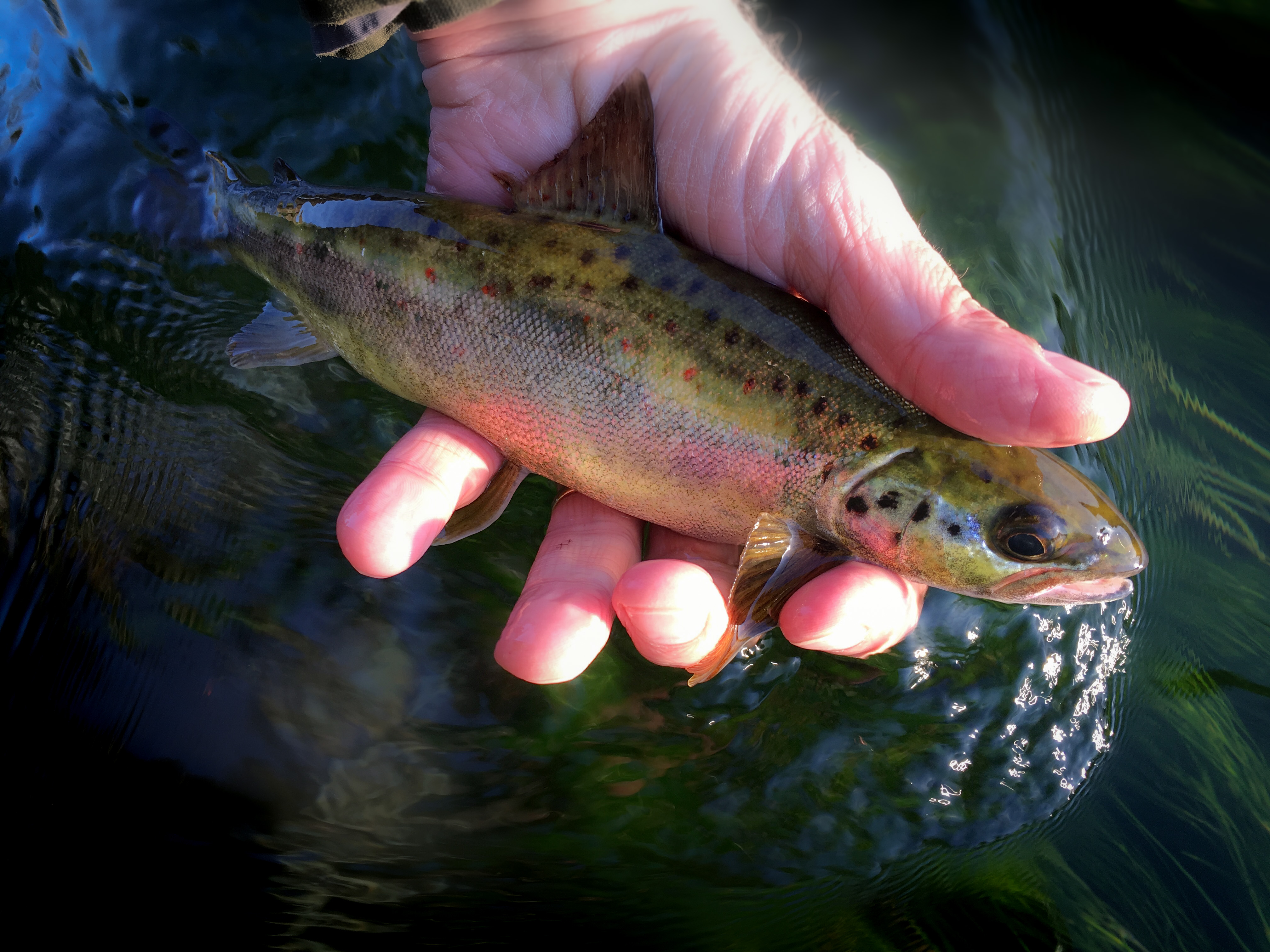
This fat fish is a salmon parr from Dorset’s River Stour: once renowned for its enormous salmon: the best way we can help to protect Wessex salmon like this one is to undo the damage done to these rivers by post-war dredging.
The newly endangered status of salmon is being used as a way to berate the government, the water industry and farming. By all means exhort all three to do a better job, but after a while endless blame becomes a form of avoiding responsibility: it’s like pointing at the litter instread of picking it up. It feels like you’re part of the solution, when actually you’re part of the problem.
Light a candle! Don’t curse the darkness.
So, looking to what we can do if we “act now” … we can restore our rivers and the landscapes which support them through all the measures advocated – for example – in the chalk stream strategy: by restoring the wild, wet, dynamic roughness of healthy habitat. Restoring meanders, floodplain connectivity, wet woodland, gradient. As well as – of course – lessening abstraction and pollution.
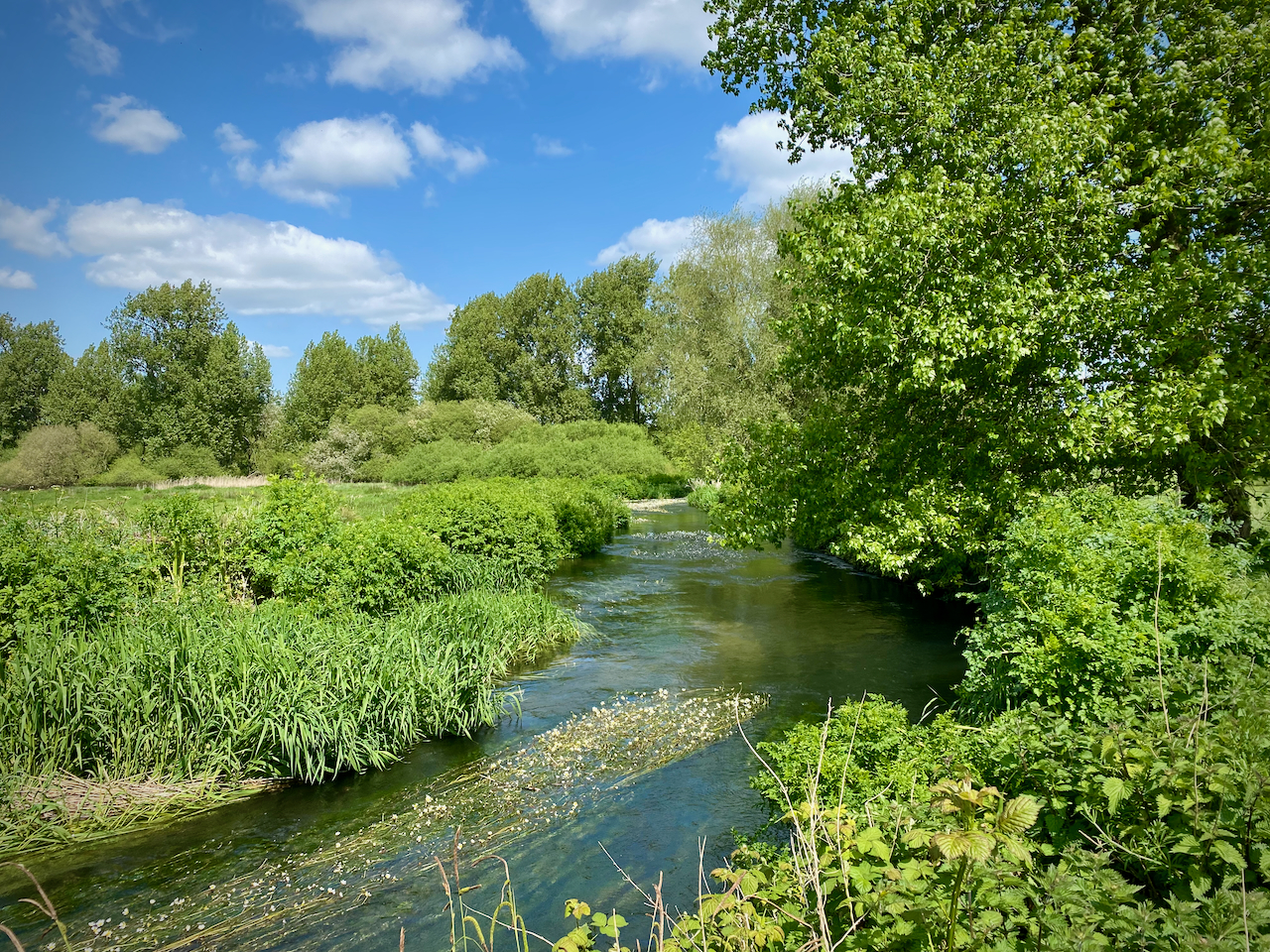
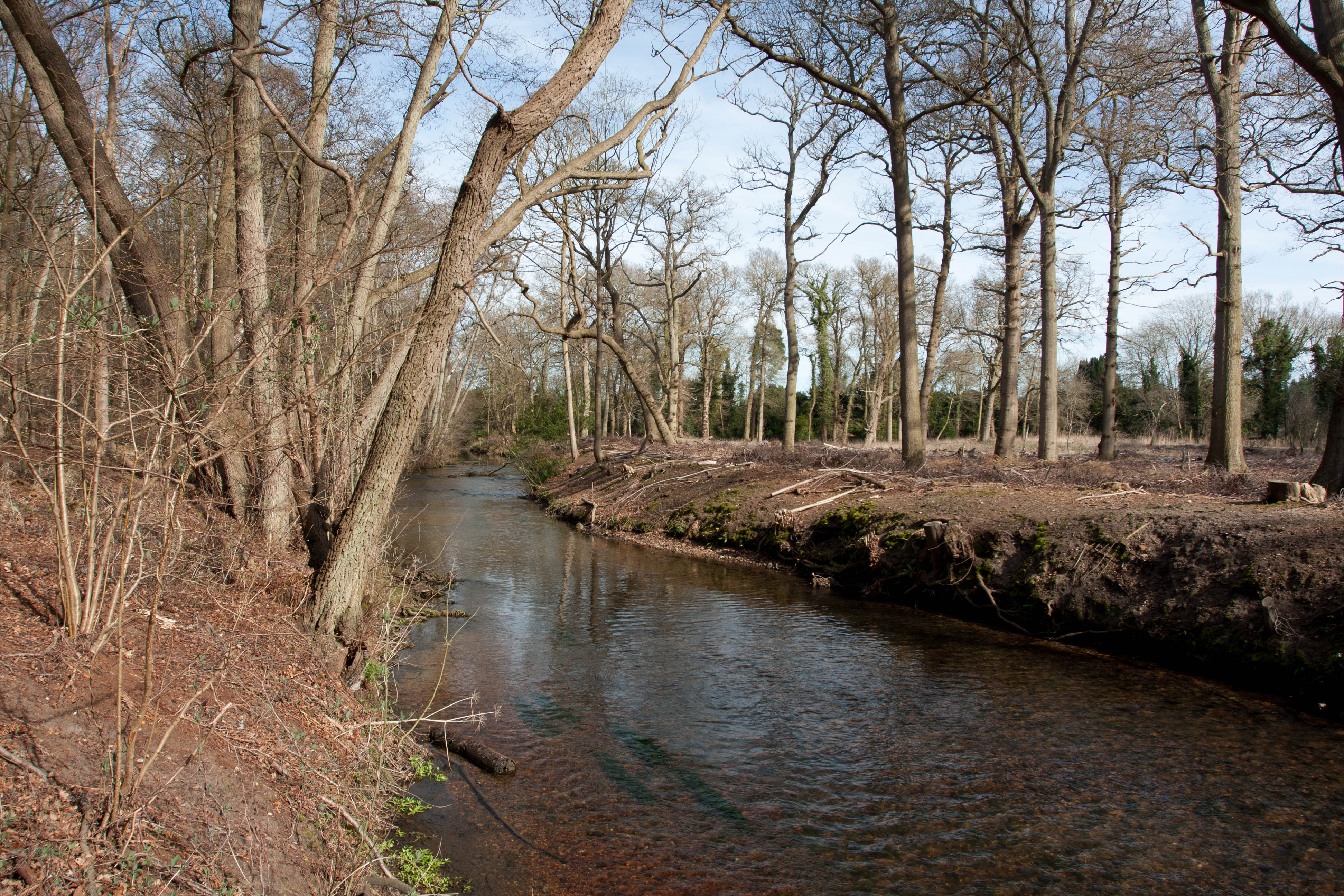
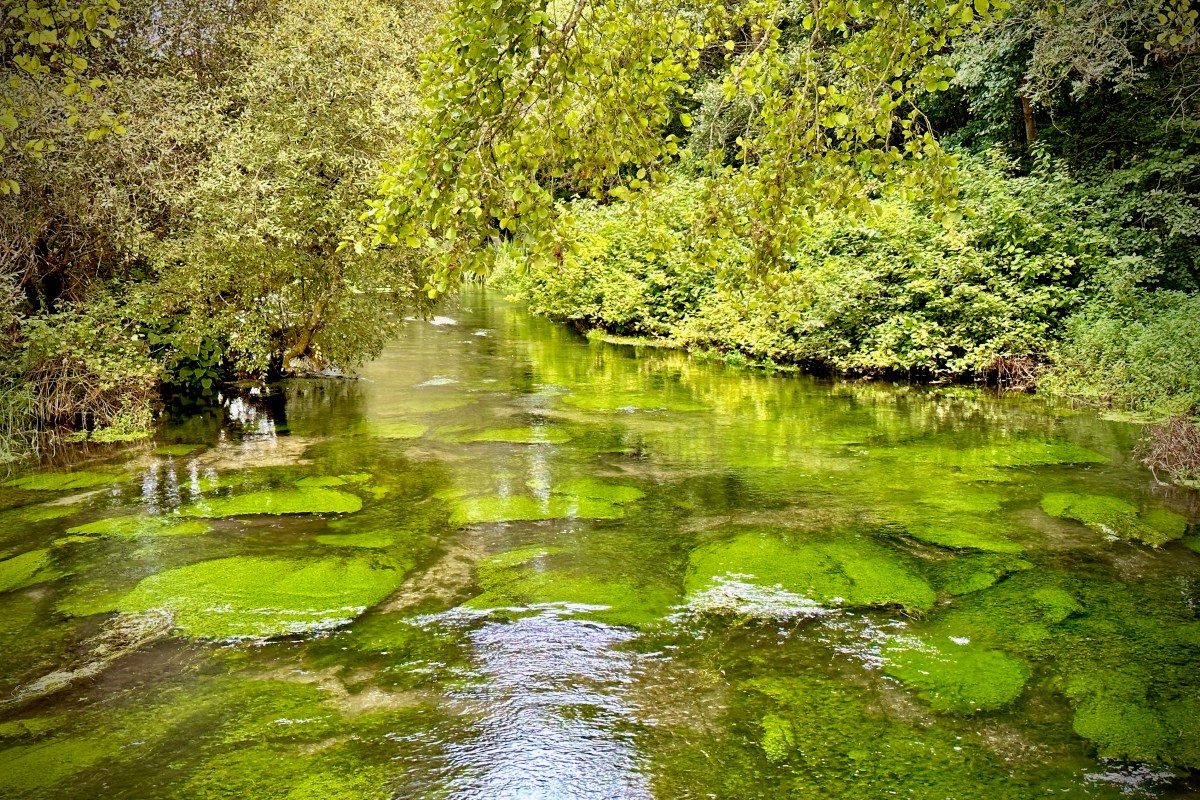
This is the sort of chalk stream habitat young salmon could thrive in, if only the adult fish could reach it. Five years ago, it looked like the stark riverscape pictured top left.
The unique chalk stream salmon, perhaps our most ancient (as in how long it has been here) native animal is right in the crosshairs of all those adverse impacts of climate change and mills and overfishing. The species deserves actual action on our part, as opposed to self-serving nowt-but-protest ersatz action.
Re-meandering the River Stiffkey in North Norfolk: this project and others like it create freshwater habitat fit for salmon: if they can reach it. The river here had been locked inside a ditch for hundreds of years: which was definitely not the fault of the current government.
We shouldn’t just hold the line in habitat restoration either, focussing on the streams where salmon still exist: we should be restoring salmon to the chalk streams from which we barred them over 1000 years ago. En masse all these spring-fed streams could – if properly restored and managed – become a vital arc for the endangered English salmon.
It doesn’t look like a lot of work, but it is … I’ve spent quite a few hours updating the index of English chalk streams, catalysed by an enquiry from the author Adam Nicholson: “exactly how many chalk streams are there?”
It’s not an easy question to answer (you’ll have to read to the end to get it), because where do you stop counting? Take a single, obvious main chalk stream: it is fed by many springs, in the river bed and valley sides. Some will be nameless rills and becks in their own right, perhaps only a few yards long, perhaps longer. I can think of springs and a small beck in the upper Piddle valley that in a different setting would be a “stream” in its own right. As it is, that little combe of chalk stream habitat is subsumed into the overall River Piddle: one chalk stream.
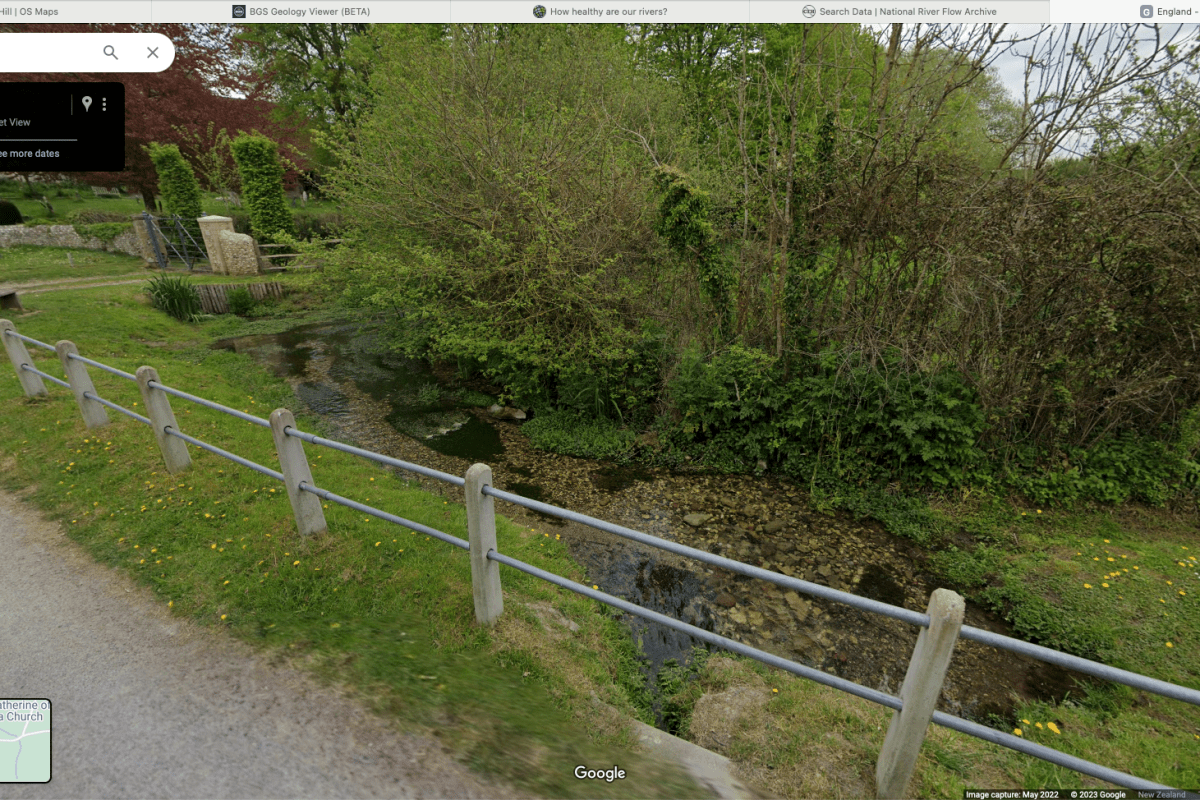
That different setting could be the scarp-face of the chalk in the Chilterns, Sussex (see the featured Image of a Sussex scarp-face chalk stream thanks to Google Street View), or Yorkshire where hundreds, if not thousands of tiny rills emanate from the chalk where it presses down on impermeable layers of older geology beneath: the water seeps as it would from a wet sponge placed on slate. But the valleys are truncated and rarely long enough for a stream to develop: not until that accretion of flow has stepped off the chalk onto clay, greensand and mudstone, and the bosky, incised streams that result are nothing like a chalk stream: though they may be chalk influenced.
Take another setting: north and east of Stevenage, at the edge of the retreating glaciers following the last glacial maximum, periglacial rivers dumped vast plains of gravel, sand and clay over a bedrock of chalk. Along the low ridge-back of chalk that runs from Hertford to Hunstanton and north under the Wash you get chalk streams. The superficials are thinner here and the streams – generally quite short – have a high base flow index and look like chalk streams: the Oughton, Hiz, Ivel, Shep, Mel, etc. But drift east and you range through what I would describe as a spectrum of chalk influenced rivers towards streams that – whilst they flow above chalk bedrock – are very incised, flashy and not at all like a chalk stream as we understand the concept. The very upper Lark, for example, is fed by what is essentially a gravel aquifer. Only downstream of Bury St Edmunds does it become hydrologically connected with the chalk. The Lark is certainly a chalk stream, but the Yare, the Tas, the Tud … what about these rivers? With baseflow indices of 0.60 they are certainly not at all like the Itchen, Test or Kennet.
Baseflow – which I have included in this index where I can find it – is the proportion of flow that derives from groundwater, as opposed surface run-off. If you look at the correlation between my proposed typology of chalk streams and their baseflow numbers, you’ll see it’s a pretty good indication of the “degree of chalkiness”.
What I have called classic Type A1 (I’ve added subclasses to the typology that I developed with Dr Haydon Bailey which appeared in the WWF 2014 report and the CaBA chalk strategy) streams rise almost exclusively on chalk and flow down the slope face of the chalk: so there is a very high degree of hydrological connectivity with the chalk aquifer. Their baseflow numbers are often over 0.9. Streams like the Itchen are 0.95. I have proposed a 0.85 cut-off.
Below 0.85 there is generally a greater degree of influence from superficial layers, which provide a measure of quickflow and surface run-off. These superficial layers also subtly change the landscape across which the chalk stream flows: the River Stiffkey or Bure, for example, flows from and through deep lenses of gravel. They are more incised and notably flashier than the purer chalk rivers Babingley or Nar to their west. I have proposed that these streams – with base flows between 0.70 and 0.85 are Type A2, slope-face streams.
Type A3 … these are the chalky streams like the aforementioned Yare, Tas, Tud etc. I would question whether we can describe them as true chalk streams, but I have called them Type A3.
Type B are the mixed geology rivers like the Frome, Avon, Kentish Stour, Darent. Generally they have greensand in their upper reaches, which makes them more flashy (baseflows of 0.80+/-) and it means they will have much higher phosphorus readings, as the sandstone doesn’t mitigate P as chalk does.
Finally the Type C are the scarp-face streams: they can also have very high baseflow numbers (indistinguishable from Type A), where the valley pushes far enough into the chalk for a stream to develop. I have counted all those I could find with names on the OS maps (ancient and modern). I have now included the most significant Sussex streams (identified by the late Nigel Holmes) and a few more north of the Chilterns (thanks to Allen Beechey and Richard Meredith-Hardy), as well as all the Yorkshire ones which I added to the WWF map in 2014.
This index is still – and will probably always be – a work in progress, but I hope fellow chalk stream nerds will appreciate this 2023 edition of the chalk stream index. I will be following it up with a really good map at some stage when I can find the time.
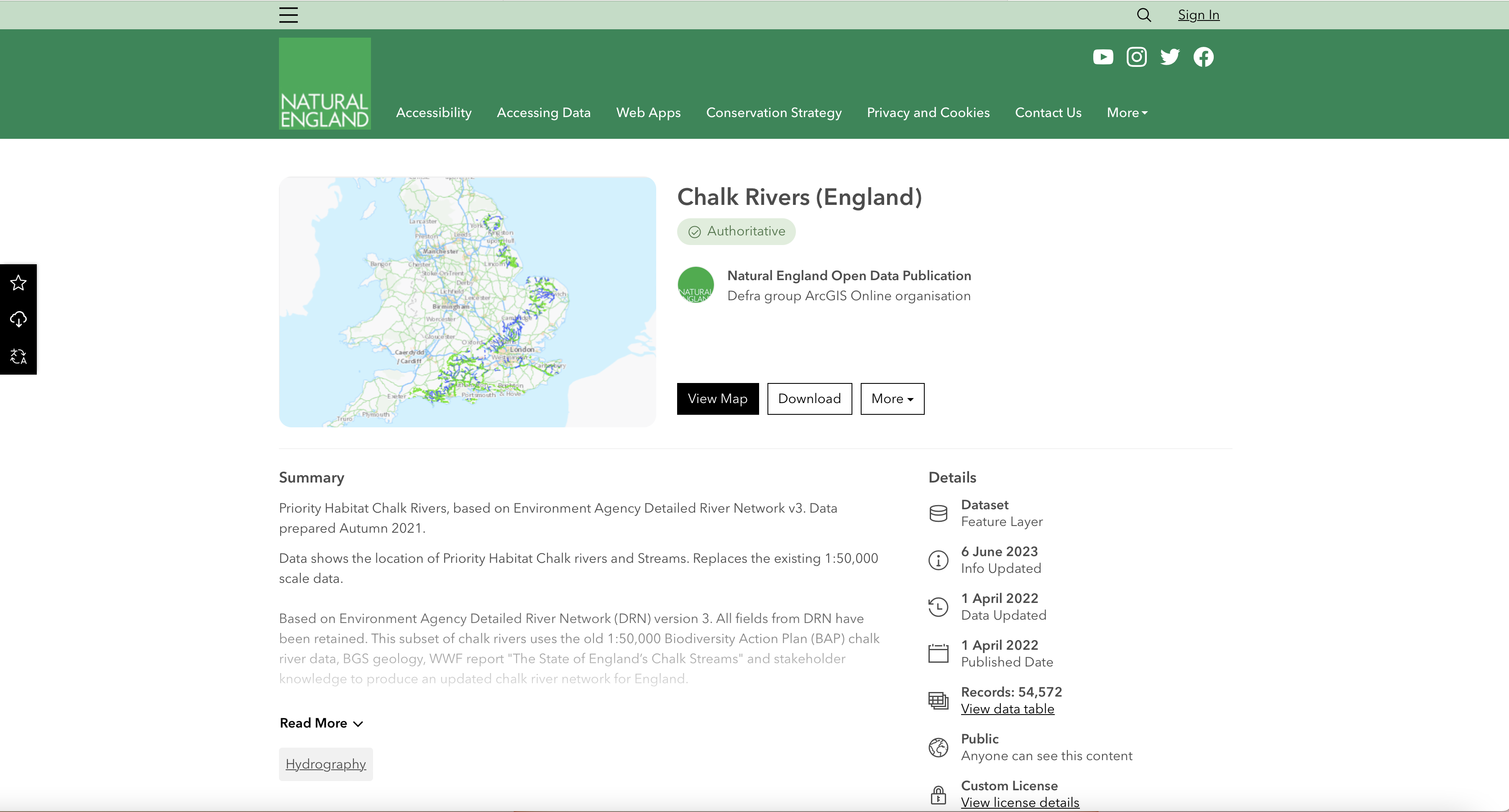
Meanwhile there is the Natural England map (link on the homepage), although that doesn’t actually name the rivers!
This index reads in such a way as to show were a stream is in the catchment, upstream to downstream, with the tributaries offset by column, first order, second order etc. It’s all pretty obvious.
If there isn’t an EA waterbody code, then the stream isn’t an EA waterbody. If there are several codes in one box, the single-named stream is divided into several waterbodies. I have stopped adding waterbody codes where I deem the stream is no longer a chalk stream (the Cam downstream of Cambridge for example, or the Bure downstream of Aylsham).
I don’t suppose anything could underline the importance of looking after chalk streams than the idea that we can lose them altogether.
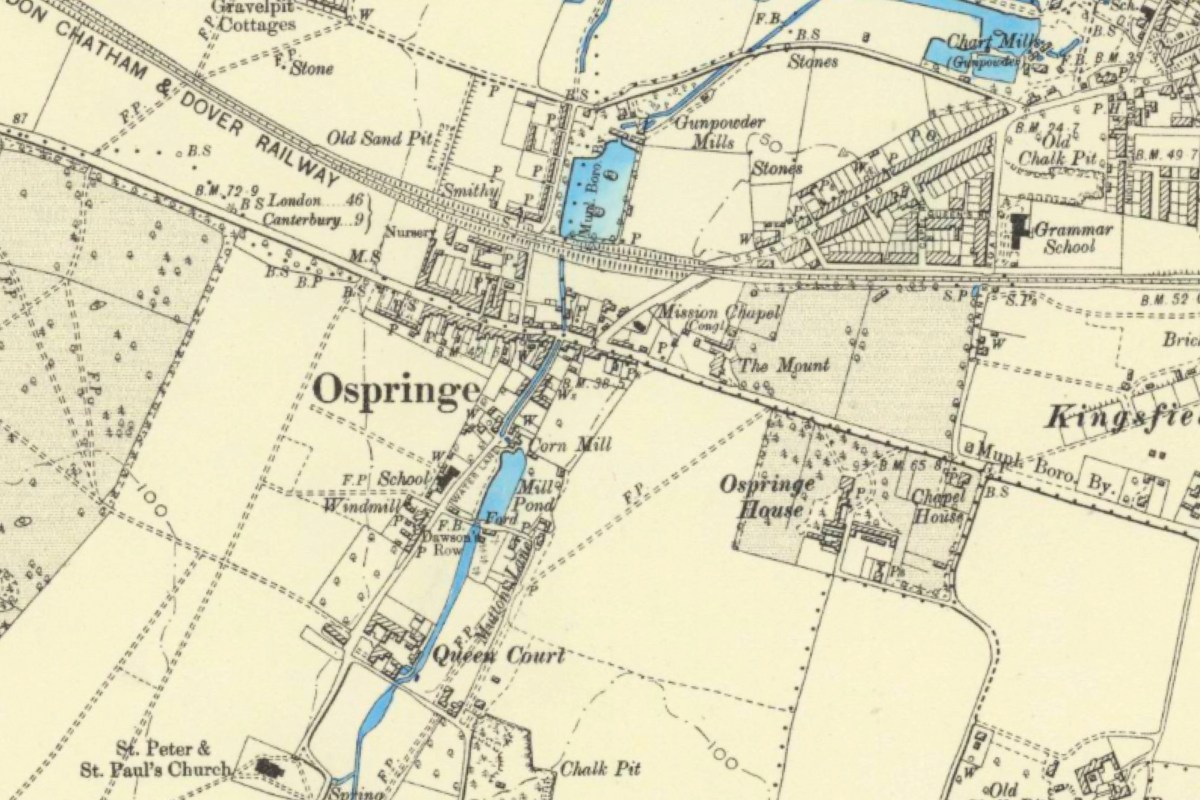
I get emails now and then, notifying me of rivers I might have missed off the chalk stream map. One highlighted a little stream near Faversham in Kent: it rises only once in a blue moon now and wets a few pavements with its surprising flow. Once it turned several mills and formed a maze of waters … as the 19th century ordnance survey map shows.
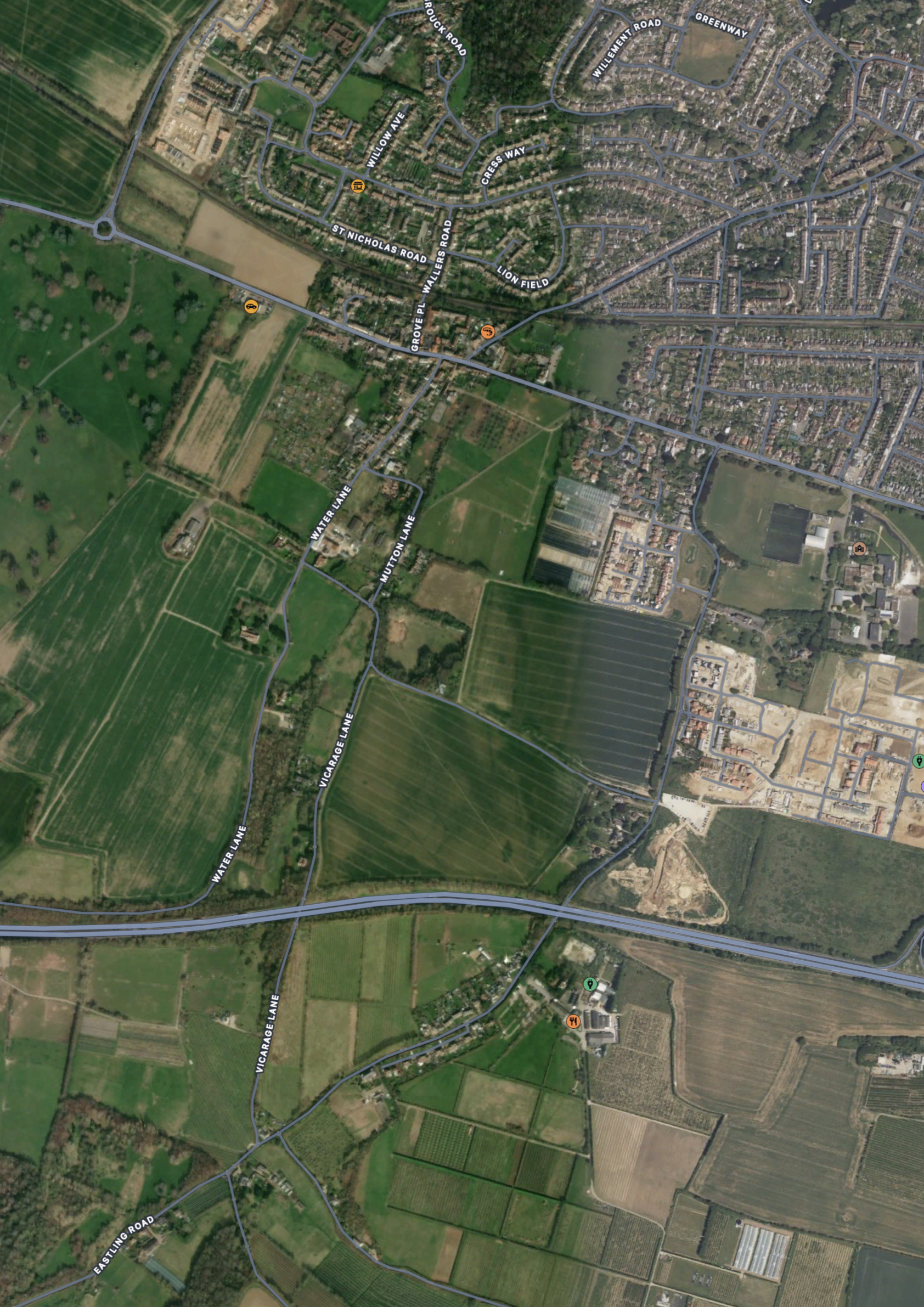
Compare that to the modern satellite image which is devoid of any trace of water. As is, more worryingly, the modern ordnance Survey map.
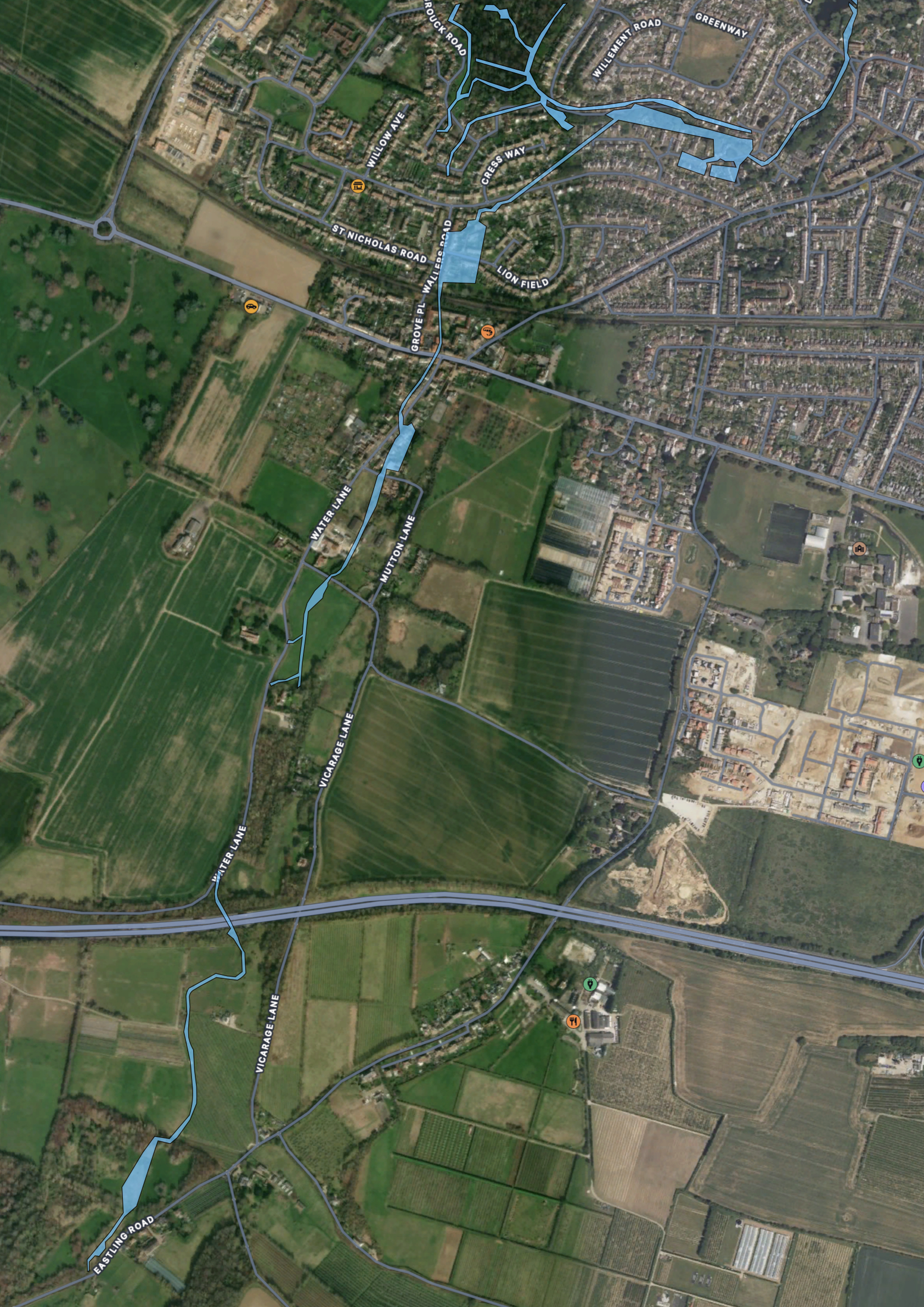
I have overlaid the 19th watery web over the dry modern landscape to show what we have lost at Ospringe. It’s going into my index, anyway.
PS. I have redone the maps in the light of Matthew’s note below, to show the full length of the lost stream.
Why “just” enforcing existing laws and litigation to compel that enforcement is one way, but is certainly not “the only way” to go about trying to restore and protect our rivers.
Though they are members of the CaBA chalk stream restoration group (CSRG) Wildfish nevertheless reserves the right to criticise our work. Personally, after slaving away at our chalk stream restoration strategy, I find it a bit of a downer when Wildfish pick holes in it from the sidelines. But stepping back and taking the more rounded view, I know that contrary and critical voices are essential.
Here’s mine.
Wildfish has written twice now dismissing the amendments some on the CSRG have worked hard to include in the Levelling Up and Regeneration Bill. They say that these amendments won’t really do anything to add protection to chalk streams: a literal and pedantic viewpoint, in my view, though it may be motivated by the desire to clip the wings of claims that these amendments are THE whole of the greater protection we have all been looking for.
To be clear, we’ve never made those claims. I certainly haven’t. The amendments are one more incremental action along the way: they are one of the thousands stitches needed to heal the death by a thousand cuts our chalk streams have endured.
Of themselves, the amendments simply cite that protecting chalk streams from the impacts of abstraction and pollution is one example of the ways in which environmental outcome reports (EORs) may be drafted and aimed.
However, no matter which way up I turn the text in the bill (see the tail of this blog for the wording), no matter how hard I squint, or how peevish I try to make myself, I just can’t see a problem with the fact that the protection of chalk streams is now cited on the face of the bill as THE example of the kinds of outcomes the EORs might seek to specify.
As the notes make clear: “The proposed amendments add chalk streams into the definitions of ‘environmental protection’ and ‘natural environment’, making it clear that when setting the outcomes that will drive the new regime, the Government may set explicit outcomes as to the protection of chalk streams”.
Protecting chalk streams in the planning and delivery of new development was a specific recommendation of the CaBA chalk stream strategy that Wildfish agreed with. So it is hard to discern why they would have such a problem with the LURB amendments now. Especially given that following the publication of their first critical blog on the matter back in the summer and before the government’s response amendment had been finalised I asked Guy Linley-Adams (Wildfish’s legal expert and author of the critiques) to lend his expertise to our responses to the drafts. The invitation was ignored.
This goes to the heart of what seems to me a unnecessarily unary approach to addressing the restoration and protection of our environment in general, chalk streams in particular. Guy ends his latest blog saying:
“The only way to protect chalk streams, and other rivers come to that, is for the Government to apply its existing arsenal of environmental legislation – which sadly lies under-used and under-enforced – to cut pollution and abstraction.”
The “only way”? Really?
Education is quite a good way, surely. So are grants and incentives of various sorts. Actually going out there and restoring streams is pretty effective too. I know that from experience. It shows what can be achieved and exhorts others – including stakeholders like farmers, drainage authorities and even the water industry – to put their shoulders to the wheel. Wild trout don’t give a monkey’s who pays for the work or if it is driven by the law, benevolence or self-interest.
Not only is applying existing law not the “only way”, I have to wonder if it’s even a very effective way. These so-called arsenals of legislation have been only partially effective in the past. Why will they be any more effective in the future?
In early July, Wildfish brought this “just apply the law” refrain to the High Court over a different matter: storm overflows. Wildfish stated that they had “one simple ask of the Government: enforce the existing law to stop water companies dumping raw sewage into our rivers”.
Wildfish expanded on what they wanted the government to do:
“1. Enforce the law (in existence since 1994) and stop water companies from dumping raw sewage in rivers.
2. Get rid of the current plan for sewage pollution (known as the Storm Overflows Discharge Reduction Plan) which effectively allows water companies to continue to break the law for a further 27 years until 2050 and develop a plan that is in line with the existing law.
3. Ensure water companies foot the bill for any increased sewage capacity required by the law, not their customers.”
As a co-author of the 2017 WWF report – Flushed Away – that brought the issue of raw sewage discharges and lack of investment to public attention, I watched for news of this day in court with interest.
The Government’s Storm Overflows Discharge Reduction Plan had been much maligned. It set dates by when water companies had to limit stormwater overflows to no more than 10 spills per year, or fewer than 10 if ecological harm is still detectable. Ecological harm was defined. To measure the ecological impact, monitors would be installed up and downstream of all discharges. The criticism was that this implicitly legalised spills that were already illegal under both the Water Industry Act, and more specifically the Urban Waste Water Treatment Directive. Arguably, it also allowed water companies to address the infrastructure failings through increased bills.
But it was, at least, a plan. Which, even if flawed, was one whole plan more than we’d ever had before. It was probably better, therefore, from the point of view of a fish or a mayfly.
Wildfish says that the law (forbidding the dumping of sewage) has been in existence since 1994: so they’re referring to the Urban Wastewater Treatment Directive 1994 (UWWTD) which charged water companies to “secure the limitation of pollution of receiving waters due to storm water overflows” via measures such as “dilution rates or capacity in relation to dry weather flow, or … acceptable number of overflows per year”. Note, the UWWTD referred specifically to sewage treatment works over a given size (10,000), discharging to Sensitive Areas (eutrophic) (SAe) catchments (not all UK catchments).
Before this, a more wide-ranging Water Industry Act 1991 placed a duty on water companies “to further the conservation and enhancement of natural beauty and the conservation of flora, fauna” and to “take into account” the effect of sewage processing “on the beauty or amenity of any rural or urban area or on any such flora, fauna etc”. Before this, there was a similar Act in 1951.
In fact, polluting rivers with sewage had been against the law since 1876, and in the form of various edicts and injunctions deriving from common law, since long before that – all reflecting the fact that discharges of raw sewage and other noxious matter into British rivers has been a problem since … forever. As have the tribulations of policing the issue through the courts.
The 1876 Rivers Pollution Prevention Act was largely a response to the creation of vast city sewerage systems which, in dealing with one problem – human health – created another – pollution of the natural environment. Bazelgette might have chosen the wrong option (combined sewers – which are largely the origin of these raw sewage problems today) but anyone who thinks sewage discharges are worse now than ever before hasn’t read Thomas Rammel’s report to the General Board of Health into the supply of water to and the sanitary conditions of the inhabitants of High Wycombe, written in 1850.
This report is best not read on a full stomach. The poor of High Wycombe literally lived in shit. They shat into latrines dug yards away from drinking wells. They shat into the same stream from which they took water to drink. Open sewers ran through front rooms. People would sneak around town at night with boxes of shit and chuck it over walls to get rid of the stuff. More or less everyone who lived and worked in the furniture and factory districts suffered from what they called “low fever”, also known as cholera. Many died from it, or lived blighted lives.
The public health miracle of a working sewerage system came only slowly to High Wycombe. The wealthy councillors of the town were reluctant to spend the money. But nationally, sewerage systems progressively relieved the workers of the industrial revolution from living conditions that were inhuman, not to say lethal, by corralling all that shit through flushing latrines into pipes and washing it away downhill to rivers.
It’s easy to forget in 2023, disgusted as we are by the raw sewage scandal, that to the very same sewerage system can be attributed about half of the increase in longevity of the British people that occurred between 1850 and 1950.
But the 1876 Rivers Pollution Prevention Act didn’t really improve things for rivers. It was rather vague about what pollution was and vague about the mechanism of enforcement. The prohibition on dumping any form of pollution into a river was absolute except that an alleged offender could clear the charge by showing they had used the “best practicable and reasonably available” means to render their discharge harmless. With sewage, the “practicable” means were actually pretty ineffective, at least until the invention of filter beds in about 1900: the best of the preceding methods was the laborious privy pan system, which collected human poo and carted it away for use as fertiliser.
In his book The River Pollution Dilemma in Victorian England: Nuisance Law versus Economic Efficiency Leslie Rosenthal shows how the 1876 Act had been preceded for centuries by a common law, known as riparianism, based on the principle that owners of waterside property can make reasonable use of the stream so long as they do not reduce its quality or quantity for other users. Under that principle anyone dumping shit in a stream clearly violates the rights of other users downstream of them.
However, under a secondary principle (and if not ‘principle’ then practice), of the balance of convenience, polluters en masse (a civic authority, for example) might have based a defence on the fact that more people gained from the usage of the stream for carrying away sewage than the handful of private landowners who lost out due to the nuisance. English courts did not formally entertain balance of convenience arguments. But informally, Rosenthal argues, they effectively did. Judges were generally unwilling to apply remedies that would lead to economically inefficient outcomes: an example of such “inefficiency” (according to the way we value things) might might be compelling a city to spend millions of pounds in order to avoid harming the rights of one downstream river user.
The way judges avoided enforcing such so-called “inefficient outcomes” regardless of the rights and wrongs, was to prevaricate, allowing contingencies, postponements and delays which resulted, effectively, in a continuation of the pollution with only incremental improvements. They kicked the can down the road. The courts never decisively acted to stop an incidence of sewage pollution in its tracks.
Any of this sound familiar?
Basically, a far greater number of people derive economic value from being able to shit, flush and forget as cheaply as possible, than are adversely impacted by that balance of utility and economics. The same with abstraction and being able to turn on the tap and get clean water whenever you want it. That’s worth more to society – according to the ways we value things (just to be clear: I’m not saying I agree with those ways) – than a brimful chalk stream 40 miles away.
If the courts have acted in this way for several centuries, I’m not sure why anyone would think they’ll suddenly get out the other side of the bed and apply the law any differently.
I know little about the Wildfish day in court except what is reported on their blog. The government answered the charge that the Storm Overflows Discharge Reduction Plan implicitly legalises sewage discharges which are illegal by stating that it doesn’t refer to breaches of the 1994 law. This had already been made pretty clear anyway, in the Environment Act where it was stated that the new duty stood in addition to those in the Water Industry Act and UWWTD.
Wildfish believes this exposes the plan as “smoke and mirrors” and states, “OFWAT now has no choice but to get on and enforce the Urban Wastewater Treatment (England and Wales) Regulations 1994”.
We’ll see. But wouldn’t it be great if Wildfish aimed a complaint in the courts directly at a water company, on behalf of a downstream complainant?
Anyway, isn’t the government’s clarifying response a good outcome in that it confirms that the Storm Overflows Discharge Reduction Plan applies to ALL storm overflows, not just the ones which are operating illegally on sewage works serving over 10,000 people within UWWTD SAe catchments? Since all raw sewage discharges cause an ecological nuisance, a time-bound, functional plan to address them all according to a defined standard of ‘no adverse ecological impact’ is surely better than ONLY relying on the courts for redress under the existing laws, when history shows that is not working as well as we would like it to.
Why the image of Canute? His courtiers had flattered his power. He wanted to show them that even the power of kings was limited. Investing ALL in the courts is as foolhardy as commanding the tides. I’m not saying that we shouldn’t use the courts or that having robust environmental laws is pointless. I’m saying that “just” applying the law through the courts isn’t the “only” way, as some claim.
As for the amendments to the Levelling Up and Regeneration Bill, much will now depend on the EORs and we very much hope and expect to see “explicit outcomes as to the protection of chalk streams” in due course. I’m betting it’s more likely we’ll get them now, than it would have been had chalk streams not been cited. This won’t amount to VE-day for chalk streams, but it will help.
––––––
Notes ref the Levelling Up Bill:
The government’s amendment to the Levelling Up and Regeneration Bill, in relation to chalk streams reads:
Clause 143, page 172, line 3, at end insert ‘(including, amongst other things, the protection of chalk streams from abstraction and pollution)’
Member’s explanatory statement – This amendment clarifies that the definition of ‘environmental protection’ includes the protection of chalk streams from abstraction and pollution.
Clause 143, page 172, line 12, at end insert ‘(including, amongst other things, chalk streams)’
Member’s explanatory statement – This amendment clarifies that the definition of ‘natural environment’ includes chalk streams.
Purpose and effect of amendments
The purpose of an environmental assessment is to highlight the effects of development activity on the environment. Existing processes are derived from EU Directives and will be replaced by a new system of Environmental Outcomes Reports. Instead of reporting on the significance of an effect on the environment, EORs will instead report on the contribution of that plan or project to the delivery of the government’s environmental outcomes, which will reflect the government’s ambitions set out in the Environmental Improvement Plan. Regulations made by the Secretary of State under this Part (‘EOR regulations’) may specify outcomes relating to environmental protection in the United Kingdom. The amendment will mean that, the definitions of ‘environmental protection’ and ‘natural environment’ explicitly include reference chalk streams – raising their profile in the process of setting outcomes. A limited number of outcomes will be agreed across government and other outcomes are likely to cover matters such as air quality and biodiversity. These will be supplemented by outcomes specific to each of the 16 affected legislative regimes which range from forestry to marine plans. The proposed amendments would add chalk streams into the definitions of ‘environmental protection’ and ‘natural environment’, making it clear that when setting the outcomes that will drive the new regime, the Government may set explicit outcomes as to the protection of chalk streams. The amendment will enable the government to ensure the EORs suitably reflect our chalk stream interest when they are developed with DLUHC.
I’ve been updating my WFD table for flow and phosphorus.
This table shows
every chalk stream waterbody (that I know of) in the WFD assessment
the existing abstraction sensitivity band – these should almost all be ASB3 (by default if there are wild salmonids present, esp. migratory) and the banding is under review
the status for flow
the status for phosphorus
the presence of sewage works and whether or not they strip phosphorus
You can see just by scrolling through the table and watching the colours change (it starts in Dorset and ends in Yorkshire and London is kind of in the middle) the intensification of pressure around London and into Kent and Cambridgeshire. The pressure is much higher where there are more people. That’s a kind of “no shit Sherlock” observation, but it does also show – vividly – how the environment subsidises our water bills, in terms of supply and treatment.
97 out of 240 chalk stream waterbodies (40%) do not support good status for flow. But that % ranges from 16% in the Test and Itchen catchments to 80% in the Colne and Lea catchments.
88 out of 240 chalk stream waterbodies (36%) are at moderate, poor or bad status for phosphorus. But that % ranges from 0% in the Test and Itchen catchments to 61% in the Colne and Lea catchments and 51 % across the Ouse catchment chalk streams.
Googling “Natural England chalk stream map” or “chalk stream priority habitat map” or “map of chalk streams” has proved frustrating lately because a plethora of web pages, portals and digital oubliettes lie strewn about the ether. I have been told my blog is littered with broken links and so I tried a few times over the last few days to find out what’s where and rebuild.
I suggest that it is best to start with the narrative of how the map was put together. This captures the difficulties and uncertainties involved when computer mapping software picks up drains and ditches and not winterbournes, for example.
In some ways this mapping exercise would be more accurate if done in the old school way of actually drawing lines on a page, without relying on the turning on and off of layers of “dumb” data, including too much and too little. This digital form of mapping, for example, almost completely ignores the lost paleo channels that might only be discernible by looking at ancient maps, parish boundaries or satellite images. See my illustration of a Norfolk chalk stream above: only the darker blue lines of a man-made mill-leat would show up on any DRN derived mapping: the lighter blue lines show the natural river course. We want to restore these channels, where we can: it would be a great shame if some authority or edict down the line protected a drain because the map says it’s a chalk stream and precluded the restoration of a paleo channel, because the map says it isn’t.
Natural England has handled this difficulty by showing high and low certainty layers. The high certainty layer, the dark blue lines, pick up pretty much all of the named chalk streams we know of and is essentially the “official” map of the chalk streams.
The low certainty layer picks up any waterbody of any sort within a given orbit of outcropping chalk or a chalk stream. As the narrative explains “some of these will be natural chalk streams, some completely artificial drainage channels, and some channels fed completely by non-chalk water (e.g. from impermeable soils overlaying the chalk)”.
Use mindfully, therefore.
The next job in this mapping process will consist of incrementally ground-truthing both layers and picking out or pulling in erroneous inclusions or exclusions.
Mapping lost channels will also be an important exercise, as will mapping winterbournes.
Including names, base flow indexes, type (Type A pure chalk, Type B mixed geology etc), catchment size, average annual aquifer recharge and abstraction rates etc. will all add to the functionality.
• click here to view the chalk stream priority habitat map with both high and low certainty layers
• click here to read the Natural England narrative of the process of mapping the chalk streams
It’s taken me too long to publish news of this fascinating new paper from David Sear, Ben Pears and Immy Speck, the chalk team at Southampton University, also sponsored by Natural England.
CARBON STORAGE IN RIVER AND FLOODPLAIN SYSTEMS highlights the potential for C-storage in floodplain and river environments, and reviews the effectiveness of restoration actions in increasing carbon storage relative to current degraded states.
Fascinating factoids abound, but one is that almost 20% of English peat is stored in the top 15% of chalk stream floodplains. Another, that the carbon in this peat is very old (11,000 years) and that chalk stream floodplains are amongst the stable repositories because they are wet and they don’t move around much.
This paper should be a valuable tool for those making river restoration proposals and bids, especially if we think about hydrological connectivity and the restoration of the contiguous mosaic of wet habitats including spring flushes, calcareous fen and wet woodland, which support the chalk stream.
I’ve fielded a bit of correspondence lately because some people are confused about the status of chalk streams as a priority habitat. The confusion mostly arises out of the way in which the NE maps are published: there are several of them.
So, this is my attempt to bring a bit of clarity to the situation.
The original list of UK biodiversity action plan habitats was created between 1995 and 1999. Chalk rivers were the only riverine habitat. Other freshwater habitats included fens, machair, eutrophic standing waters and a few others.
The list was revised in 2007 in order to “ensure that the UK BAP remains focussed on the correct priorities for action and takes account of changes in the status of UK biodiversity in addition to new information and knowledge”.
The review added considerably to the list of priority habitats including other riverine habitats but the Report on the Species and Habitat Review made clear that in adding additional types of freshwater habitat, chalk rivers were not subtracted. Under the summary of major changes in Table 1 it clearly states under “rivers and streams – major changes”.
“New habitat, incorporating an existing habitat (Chalk Rivers). Further work by specialists is required to develop guidelines for the identification of river reaches which will be priorities for UK BAP action.”
That further work led to the current list of priority habitats HERE in the UK Biodiversity Action Plan Priority Habitat Descriptions – Rivers (Updated December 2011).
See the document for more detail but essentially the list of qualifying criteria in is:
1. Riverine water bodies of high hydromorphological / ecological status.
2. Headwaters (within 2.5km of its furthest source as marked with a blue line on Ordnance Survey (OS) maps at a scale of 1:50,000. Headwaters which have been significantly altered from their natural state are not included).
3. Occurrence of the EC Habitat Directive Annex I habitat (H3260 Watercourses of plain to montane levels with the Ranunculion fluitantis and Callitricho-Batrachion vegetation). The definition will include (but not be confined to) all river SACs designated for the feature.
4. Chalk Rivers (as given in the existing BAP definition).
5. Active shingle rivers. Data for this can come from River Habitat Surveys (Environment
Agency 2003) or indicator species of invertebrate (see criterion 7).
6. Areas or Sites of Special Scientific Interest designated for river species, riverine
features or fluvial geomorphology.
7. Species including:
i. Annex II Habitats Directive species 2
ii. BAP priority species
iii. Invertebrate species which are strongly indicative of river shingle
The BAP definition stated:
Chalk rivers have a characteristic plant community, often dominated in mid-channel by river water crowfoot Ranunculus penicillatus var pseudofluitans and starworts Callitriche obtusangula and C. platycarpa, and along the edges by watercress Rorippa nasturtium-aquaticum and lesser water-parsnip Berula erecta.
They have low banks which support a range of water-loving plants. This plan considers action required for the river channel and banks but not for the whole catchment or floodplain.
All chalk rivers are fed from groundwater aquifers, producing clear waters and a generally stable flow and temperature regime. These are conditions which support a rich diversity of invertebrate life and important game fisheries, notably for brown trout Salmo trutta, brook lamprey Lampetra planeri, salmon Salmo salar, crayfishAustropotamobius pallipes and otterLutra lutra are among the species listed on Annex II of the EC Habitats Directive which chalk rivers support.
Most chalk rivers have ‘winterbourne’ stretches in their headwaters. These often run dry, or partially dry, in late summer because of lack of rainfall recharging the aquifer. A characteristic range of invertebrates has adapted to these conditions, as is the brook water crowfoot Ranunculus peltatus.
The list of priority habitats has not changed since that date, but the mapping has slowly caught up with the definition and in that mapping lies some confusion.
There are several maps of priority habitats: the one you will find easily if you google “river priority habitat” is – as it clearly states in the summary HERE – the map “of rivers and streams that exhibit a high degree of naturalness”.
The map which you won’t find easily is the MAP OF CHALK RIVERS which, as it clearly states in the summary is a map of:
“Priority Habitat Chalk Rivers, based on Environment Agency Detailed River Network v3. Data prepared Autumn 2021.Data shows the location of Priority Habitat Chalk rivers and Streams.”
There is also another map HERE where you can toggle on and off the different layers for different priority habitat types.
Chalk rivers were the proto riverine priority habitat and when they were designated as such it was because they supported communities of ranunculus, starwort and berula, because their low banks and high water-tables support varied communities of riparian water-loving plants, and because they are spring-fed, altogether meaning they support a very large bio-diverse community of designated flora and fauna (see my previous post).
Biodiversity net gain is a new approach to development and land management which aims to protect the natural environment by ensuring it is measurably improved as part and parcel of any given development.
The National Planning Policy Framework (NPPF) states that development should contribute to and enhance the local environment, minimise impacts and provide net gains for biodiversity. Plans should:
‘promote the conservation, restoration and enhancement of priority habitats, ecological networks and the protection and recovery of priority species’.
The Environment Act sets out the key components of the biodiversity net gain system; essentially a minimum 10% net gain (assessed using a biodiversity metric) which may be delivered at or away from the development site, and which must be secured for a minimum of 30 years.
None of this changes or undermines existing legal protections.
Some habitats, however, are deemed to be too important for the principle of off-setting a loss via the net 10% gain that this processes entails.
Under the new system these special habitats will be called ‘irreplaceable habitats’. They have been defined in the NPPF as habitats that are ‘technically very challenging or time-consuming to restore, considering factors such as age, uniqueness, species diversity, or rarity’.
At the moment the “example” list of these habitats includes: ‘ancient woodland, ancient and veteran trees, blanket bog, limestone pavement, sand dunes, salt marsh and lowland fen’.
I very much hope when the final list is confirmed that chalk streams and their mosaic of supporting habitats – winterbournes, wet woodland, calcareous fen, spring-lines, peat-rich floodplains – will be on it. This would provide a higher level of protection and demand bespoke reports prepared as part of the planning application.
There is a very good case for putting chalk streams on the list, if not at the top of it.
Chalk streams are the most bio-diverse of any British freshwater system. So, if the river corridor is the most biodiverse, or potentially biodiverse part of any given landscape, chalk stream and their floodplains must – ipso facto – be more biodiverse than any other part of the English landscape.
Chalk streams are a lowland, cold-water, spring-fed river system, occupied in their upper reaches by rheophilic species of flora and fauna. They are home to a number of threatened species, not least a genetically distinct race of Atlantic salmon that are unique to the Wessex chalk streams: also the southern damselfly, Desmoulins whorl snail, the white-clawed crayfish. They are a global hotspot for species of invertebrate adapted to ephemeral streams: the scare brown sedge and the winterbourne stonefly.
Chalk streams are globally rare and – of course – most chalk streams are in England.
However, they are inherently vulnerable, as described in section 5 of English Nature’s 1999 publication Chalk Rivers Nature Conservation and Management:
• they feature flora and fauna communities adapted to stable flow regimes that are easily disrupted by abstraction, development, agriculture
• they are low energy systems that are less able to self-cleanse or self-repair
• they are located in parts of England with lower then average rainfall and high population density, imposing intrinsically high pressure on water resources
• historic management and development of chalk streams had left a legacy of modifications which can exacerbate modern environmental pressures
And by Sear et al in the paper Defining reference conditions for chalk stream and Fenland natural channels which shows that:
• the geomorphology and natural bed substrate of chalk streams are relics of processes which have long since retreated from our landscape.
• once gravel beds have been removed, there is an insufficient supply of gravel to replenish these through natural processes.
In other words, they are globally rare, biodiverse and home to threatened and rare species, but vulnerable to damage, and relatively incapable of self-repair, especially within time-scales that we can relate to. Once gravels are removed we would need to wait for another ice-age for the stream’s physical structure to be re-set.
What exactly constitutes an irreplaceable habitat has, unsurprisingly, sparked some debate, but there appears to consensus around the ideas that these habitats support rare or endangered species and provide critical ecosystem services, such as carbon sequestration, and flood prevention, while their loss or damage can result in significant, long-term, and sometimes irreversible negative impacts on local and regional ecosystems.
Again, you can’t do much better in those regards than to preserve and restore rivers, especially chalk streams.
A recent paper by Sear, Speck and Pears – Carbon storage in river and floodplain systems – shows that 18% of English peat is stored in the top 15cm of English chalk stream floodplains. Dig deeper and that % goes up: and you can dig deeper. At the river’s edge the peat is usually one meter deep in my experience on East Anglian streams, but up to three to four meters deep in certain parts of the catchments where marsh conditions once prevailed. Carbon storage in river floodplains is quantitatively comparable to other fens and marshes and need to be recognised as such. Carbon buried in floodplains is old, and in chalk streams, the oldest of all @ circa 11,000 years. It is sensitive to draining and drying. On the other hand, there is the potential to use floodplains, especially chalk stream flood-plains, to sequester and stably store carbon through the restoration of water-table levels, wet-woodland, calcareous fen and marsh: all exactly the kind of advanced river restoration prescriptions the chalk stream strategy is pushing for.
In other words, if we protect and restore chalk streams, surely we deliver the objectives of preserving and enhancing biodiversity and other ecosystems services about as effectively as it is possible to imagine?
***
Here’s a list of designated priority species supported by chalk streams and their riparian habitats (from EN chalk rivers conservation and management).