“Failed Protection”?

At the news the other day that the government had agreed in principle to draft an amendment in the Levelling Up Bill to specifically cite chalk streams as intended recipients of protection from the impacts of abstraction, pollution and damage to physical habitat, certain critics took less time than Usain Bolt does to cover 100 meters before trolling out the well-worn cavil that protection has “failed” to protect the existing SSSIs and SACs and is therefore a waste of time. On the grounds that you cannot win an argument on Twitter I’ve never bothered to pick an argument over what “failed” means in this context, or the fact that the “unfavourable condition” statistics cited in previous posts making the same argument have often applied to the whole assemblage of units, not just the river, or that the bar to favourable condition is generally much higher than good or even high WFD status or that it is empirical fact that abstraction rates are lower and phosphate stripping rates higher on designated streams or that the reasons a river unit might be considered unfavourable go well beyond the WFD tests and might include, for example (and completely off the top of my head) excessively stocking farmed fish, overly managing the riparian parts of the the river, and using impoundments to retain water levels etc.

Ali Morse, water policy manager with the Wildlife Trusts, did take that step, however and answered back with some excellent points which I repeat here for those sensible folks who avoid the flying monkey cage-fight that is now renamed as X.

To the post which read:

“There are already 11 chalk streams designated as either SSSIs and or SACs all of which has done absolutely nothing to protect any of those rivers, nothing! Not one of them is anywhere near being in ‘Favourable’ condition. The eNGO lobby getting played yet again by government.”

Ali replied:

Ok let’s unpick this one – a 🧵

Q: Are all designated #chalkstreams in good condition? A: certainly not. But does that mean protection has achieved ‘nothing’; is it worthless? (1/x)

Eleven chalkstreams are designated as SSSIs, four of which are further protected, at least in part, as SACs. As important sites, targets for these designated rivers are more stringent than those for other rivers. So how are they faring against these? (2/x)

Well, it’s hard to say. The River Kennet for example was recently assessed as unfavourable, but recovering. But most others – the Test, Itchen, Bere Stream, Nar – are awaiting new assessments. Prior assessments for some are now ~10yrs old. (3/x)

designatedsites.naturalengland.org.uk/SiteFeatureCondition

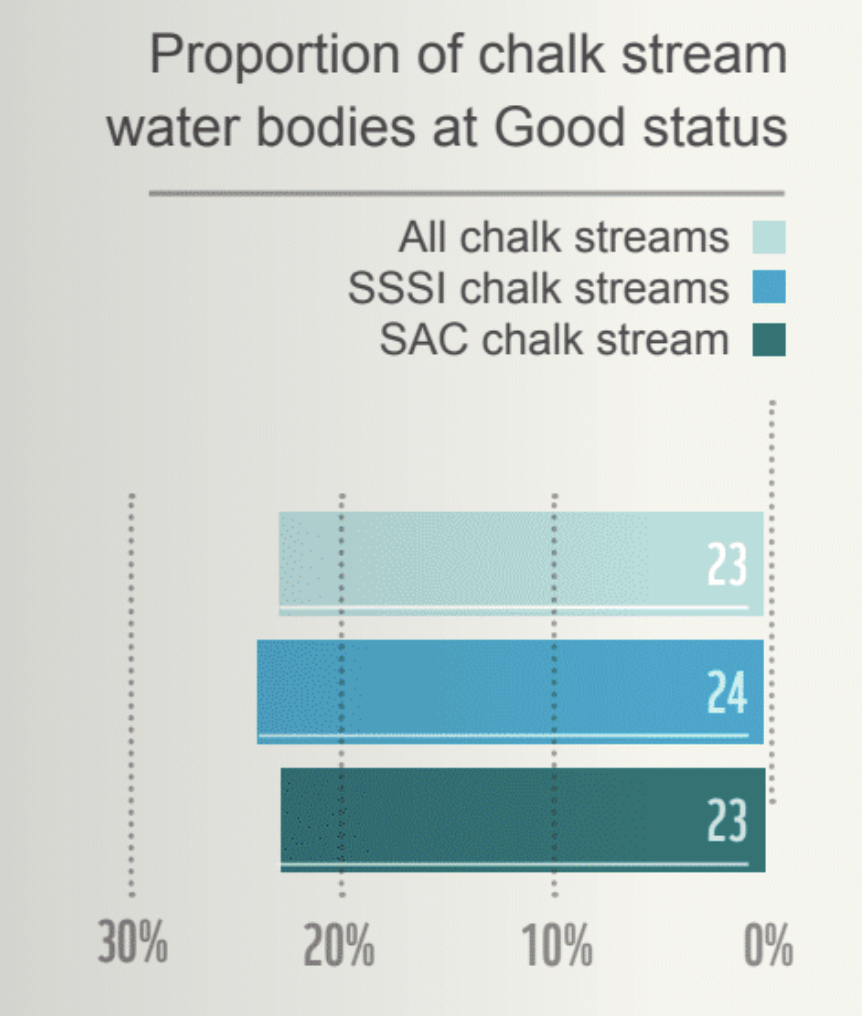
So are they at least in better condition than non-protected chalkstreams? Well, WWF’s 2014 report looked at whether chalkstream waterbodies were at ‘Good’ status (a Water Framework Directive classification) and found that designated rivers were no better off than others (4/x)

But that doesn’t show the whole story – a WFD status of Good can (rightly) only be awarded if ALL parameters are classed as good. For ecology, most English rivers (86%) fail this standard – but could protection mean that designated chalkstreams are closer to achieving it? (5/x)

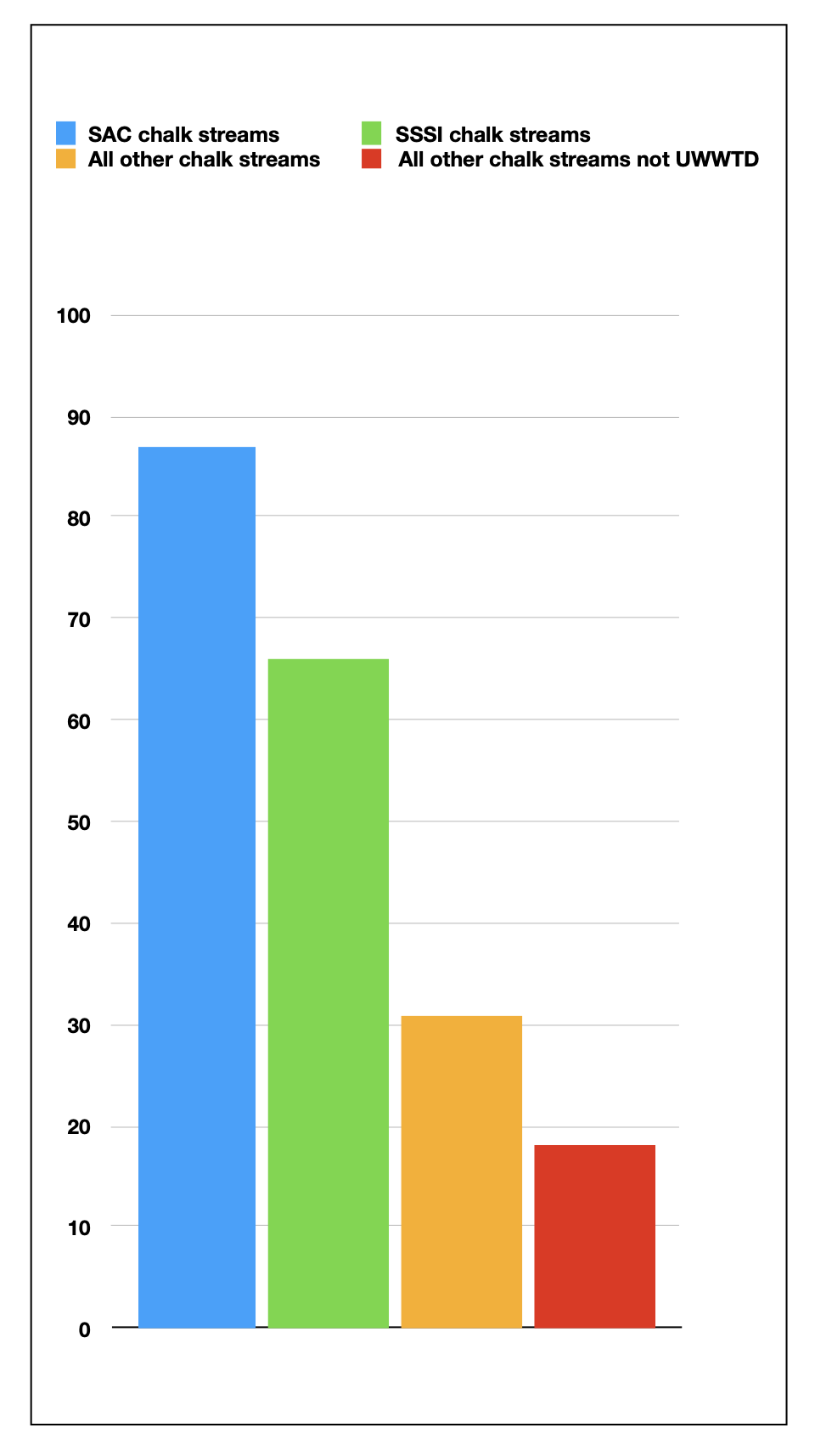
If we look at phosphate – the most common cause of WFD failures – does designation offer any merits? On some fronts, yes it does. For example, SAC chalkstreams have a higher % of sewage treatment works that strip phosphate, meaning cleaner discharges. (6/x)

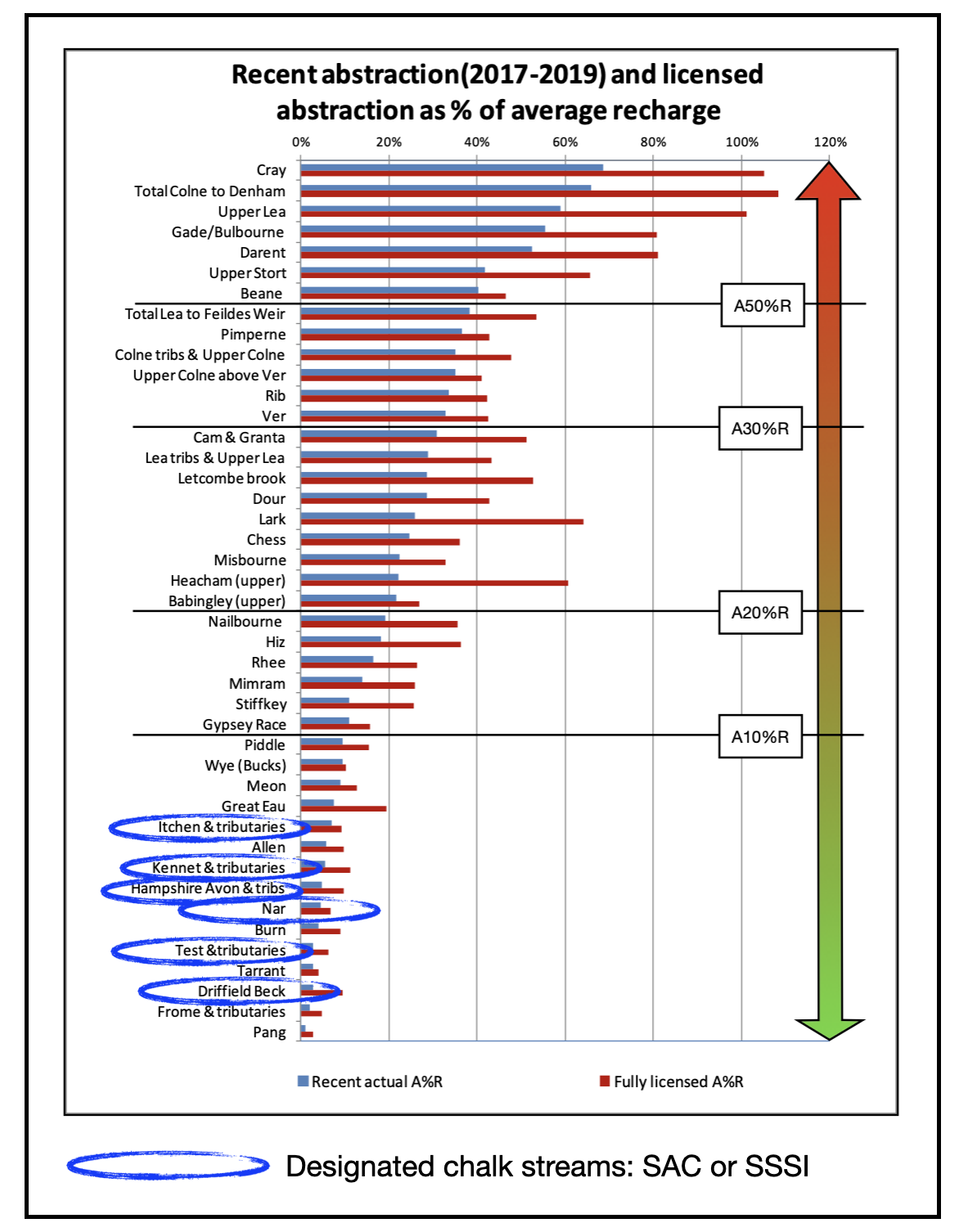
SSSI streams also benefit. Then those where the Urban Wastewater Treatment Directive dictates that P-stripping is required. So these protections have driven investment. Similarly, designated rivers fare better with abstraction, with reductions being prioritised here first. (7/x)

They are also often a target for habitat restoration, with the designation prompting investment from project funders and partners. See for example the Test & Itchen River Restoration Strategy https://youtu.be/Lq_w0FAccPI (8/x)

Yet the designation certainly doesn’t protect against everything. In particular, it can’t control what happens in the wider catchment. Runoff from farmland, pollution from urban areas, invasive species and other external pressures remain prevalent. So we need extra levers. (9/x)

Planning is one such gap, esp. as population growth & demand for new housing are high in the chalk counties of S&E England. Current rules don’t give chalkstreams adequate protection, whether harmed directly (at development sites) or indirectly (e.g. via water abstraction) (10/x)

I’m not sure how specific consideration of chalkstreams in planning decisions could be a bad thing – other than perhaps from the perspective of non-chalkstreams which won’t benefit. But we have to start somewhere. (11/x)

In theory the promised clause in the LURB will require that reports provide explicit info on harm & how it’ll be avoided / mitigated / compensated, giving Local Authorities the grounds on which to base decisions. We’re yet to see Govt’s wording but it’ll be a version of… (12x)

“protection for chalk streams…so as to reduce the harmful impacts of excessive abstraction & pollution and improve their physical habitat”. And if good decision making doesn’t follow, it will at least give others stronger grounds on which to challenge. (13/x)

Worth noting too that additional protections like consideration via planning rules will probably most benefit those ‘Cinderella’ chalkstreams currently neglected by designations – gems like the Meon, the Stiffkey, The Gypsey Race… (14/x)

…and that those protections, in whatever form, were the collective wish of stakeholders that contributed to the formation of the CaBA Chalkstreams Restoration Strategy – yes eNGOs but also fishing clubs, community groups, campaigners, practitioners, academics & others. (15/x)

So, maybe these new planning protections won’t be effective – but seems an odd thing to shout down. Surely our chalkstreams need every lifeline we can offer them? And this isn’t the only solution we’re demanding, not by a long way. (/End)

Thank you Ali. Very well put.

Levelling Up chalk streams

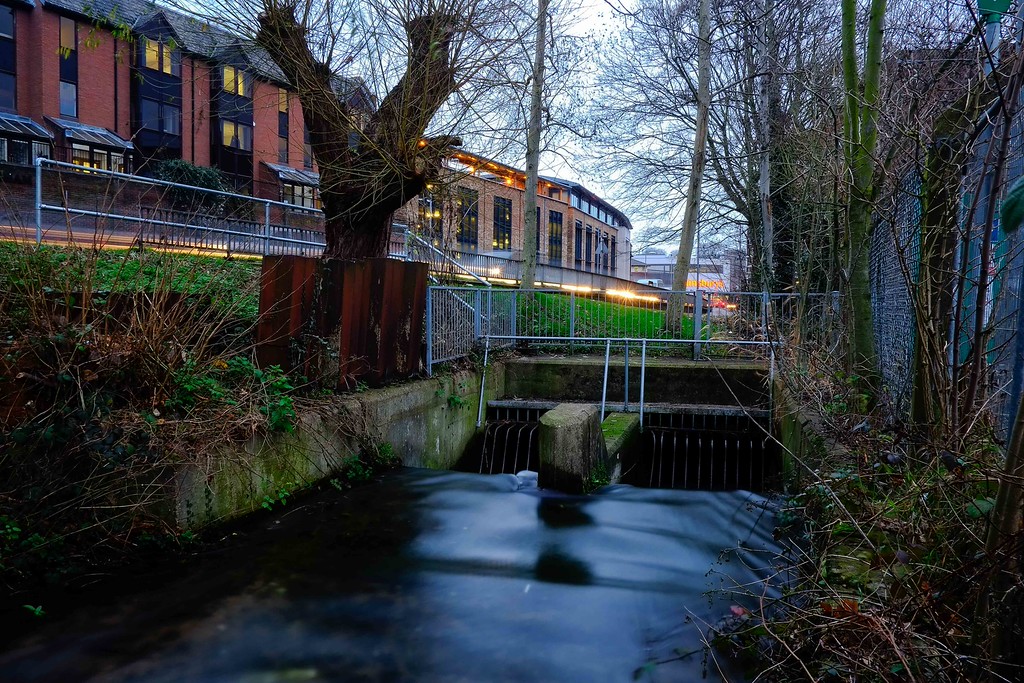
An update is long overdue following the wonderful news from Tuesday 18th July that the government has agreed to provide explicit consideration to chalk streams in the Levelling Up Bill. A bill designed amongst other things to restore a sense of community, local pride and belonging, especially in those places where they have been lost. The picture above is of the River Wye disappearing under the streets of High Wycombe: it shows exactly this kind of loss, poignantly and vividly.

This important campaign to Level Up forgotten chalk streams began when Nikki da Costa spoke with Richard Meredith Hardy about the plight of the River Ivel and chalk streams more generally. Nikki, as her page on gov.uk states, served as Director of Legislative Affairs for 2 Prime Ministers –  Theresa May and Boris Johnson – and is a recognised authority on the UK’s legislative and parliamentary processes. Her expert knowledge proved invaluable. Nikki pointed out the potential for the Levelling Up Bill to provide specific protection and a driver for improvements and restoration to chalk streams.

Richard put Nikki in touch with myself, Stuart Singleton-White (Angling Trust) and Lord Trenchard, a supporter of chalk streams. Between us we started on the case for a simple amendment to the Levelling Up Bill.

This amendment catalysed an excellent debate at 2nd reading of the bill in the House of Lords, during which it was clear that this issue had cross-party support and lots of it. With an assurance from Lord Benyon – also a passionate advocate for chalk streams – that the government would look into the matter, the amendment was withdrawn, as expected.

However, at 3rd reading on Tuesday 18th July, Lord Trenchard made a further impassioned and expert case for the inclusion of the amendment – it is worth reading this in full (copied below) – backed by cross-party support in the form of speeches by the Earl of Caithness, Baroness Taylor of Stevenage and Baroness Pinnock.

With the announcement by Minister the Rt Hon Rebecca Pow MP at the launch of the chalk strategy Implementation Plan on the 15th June that the government would start work on a Chalk Stream Recovery Package to be published by the end of 2023, it had become clear that this amendment to the LURB would provide exactly the kind of policy lever that package required. Lord Trenchard made this case most eloquently.

Lord Benyon replied, “having heard the views of this House on the importance of chalk streams, and especially the passionate arguments from my noble friend Lord Trenchard, I can confirm that the Government intend to support the principle of the amendment.”

With such a breadth and depth of cross-party support gathering pace across all parts of government, I feel optimistic we are truly getting somewhere.

Sir Oliver Heald’s press release states:

“The debate in the House of Lords on Lord Trenchard’s amendment 102 to the Levelling-up Bill to give protection for chalk streams in the planning process was held last night at 7pm. At the conclusion, Minister Richard, Lord Benyon, agreed to bring forward a Government amendment to provide this protection. The Trenchard amendment was drafted with help from Oliver Heald MP and Nikki Da Costa (Ashwell). Lord Trenchard is from Standon and the amendment was also signed by Labour’s Sharon, Lady Taylor of Stevenage.

This was a triumph for Lord Trenchard and chalk streams’ campaigners in Hertfordshire and elsewhere. Hertfordshire has 20% of the World’s chalk streams which are as important ecologically as rain forests. There are 8 chalk streams in North East Hertfordshire: Upper Rhee, Ivel, Rib, Quin, Ash, Beane, Mimram and the Lea. The local press previously covered Oliver’s meeting in April with Lord Benyon to press the case.

Commenting Oliver Heald said:

“I am delighted that Lord Trenchard has had this great success in persuading Government to put the protection of chalk streams in planning on a statutory footing. I also pay tribute to campaigners such as Charles Rangeley-Wilson and Nikki Da Costa for their help and briefing.”

The debate in full:

Moved by Viscount Trenchard 

102: Clause 143, page 172, line 9, at end insert—

“(e) protection for chalk streams in England so as to reduce the harmful impacts of excessive abstraction and pollution and improve their physical habitat”

My Lords, my Amendment 102 is identical to my Amendment 372ZA, which was debated in Committee on 18 May. I thank the noble Baronesses, Lady Taylor of Stevenage and Lady Bakewell of Hardington Mandeville, and my noble friend Lord Caithness, for adding their names in support of this amendment. I declare my interest as the owner of a short stretch of the River Rib in Hertfordshire.

I was heartened by the strong support I received from noble Lords on all sides of the House when I debated this amendment in Committee. I believe the case for special protection for our beautiful chalk streams was well made and widely supported then, and I will not repeat it at length today. I was also grateful for the support of the Minister, my noble friend Lord Benyon, for the aims of my amendment and for his absolutely clear commitment that further conversations would be had with myself and others about chalk stream restoration and how the Government could better make sure that it continues to be a priority.

I was less than wholly happy that the Minister stopped short of committing to bring back the Government’s own amendment to give chalk streams the protection they uniquely need. I am a little concerned at his statement that, given the need to capture the environment as a whole in these provisions, he hoped that I would accept that it would not be appropriate to draw out granular considerations in this definition.

I thank the Minister and his Defra officials for keeping their promise to meet me to discuss further why I believe it necessary to give chalk streams the special protection that inclusion in the Bill would provide. I do not think that many noble Lords disagree with the need to protect our beautiful chalk streams, which are unique to north-east Europe and of which some 85% are located in England. The Minister is a keen fisherman and I hope that, as he has been casting his fly over the last few weeks, he has pondered this question further. I know how supportive he has been of the tireless work done by Charles Rangeley-Wilson and others who developed Catchment Based Approach, a partnership with the Government, local authorities and other interested organisations.

As I mentioned in Committee, CaBA has developed a chalk stream restoration strategy, the primary recommendation of which was “one big wish”. This is supported by all the organisations, companies and agencies involved in the strategy’s development, and by the consultation responses from stakeholders. “One big wish” calls for:

“an overarching statutory protection and priority status for chalk streams and their catchments to give them a distinct identity and to drive investment in water-resources infrastructure, water treatment … and catchment-scale restoration”.

I remind your Lordships of the Government’s response to “one big wish”:

“Defra is currently looking for opportunities to deliver on this recommendation. The Retained EU Law (Revocation and Reform) Bill provides an opportunity to consider how stronger protections and priority status for chalk streams can fit into reformed environmental legislation”.

However, as I expect my noble friend Lord Caithness will tell your Lordships, on 23 June, the Minister said in reply to my noble friend that the Retained EU Law (Revocation and Reform) Bill is no longer being considered as a means to address this issue. He said that the Government continue to support the work of the chalk stream restoration group and are committed to looking for opportunities to deliver on the Defra-led recommendations in the strategy.

At the launch of the chalk stream strategy implementation plan eight days previously, on 15 June, my honourable friend Rebecca Pow announced that the Government’s response to this one big wish would be the creation of a chalk streams recovery package by the end of the year. She revealed that the exact identity and contents had yet to be determined, but essentially this package represents, as an answer to the one big wish, a collation of existing and potential or planned policies, levers and economic drivers that can be used to effect the restoration of chalk streams. The chalk streams recovery package, however, may not provide the clear designation and protection called for in the one big wish, but it is intended that it should have the same outcome by means of a more disparate range of levers.

I am sure that my noble friend the Minister recognises that the rejection of my amendment on the grounds that much is being done elsewhere would indicate that the Government are not entirely sincere in their commitment to the creation of a chalk streams recovery package within this year. Surely, my noble friend will agree that this amendment would provide exactly the kind of lever that the recovery package needs—in this case, specifically helping the restoration of chalk streams in those places where the Bill is designed to effect economic and especially social and natural recovery. In these circumstances, it is disappointing that my noble friend has not yet come forward with a different way to provide the specific priority status which the Government have recognised is needed. If the Government’s initial thoughts about how to do this are now no longer the chosen way to achieve what must be achieved, why do they not back my amendment or introduce their own similar one? I cannot understand what the downside is.

As your Lordships are aware, an important purpose of the levelling-up Bill is to restore a sense of community, local pride and belonging, especially in those places where they have been lost. These things are all captured by the relationship between the community and its river. Among many towns that have been identified by CaBA and which would benefit immeasurably from this amendment are Baldock, High Wycombe, Chesham, Rickmansworth, Hertford, Luton, Welwyn, Bishop’s Stortford, Crayford and Dartford, Ashford and Chartham, Dover, Bury St Edmunds, Fakenham, Horncastle, Louth, Driffield, Bridlington, Warminster and Croydon. Some of those towns are among the most socially deprived in the country—for example, Bridlington—and all are towns which, along with their wider environs, could be immeasurably enriched by a restoration of the green spaces and stream corridors of the potentially beautiful chalk streams that flow through them.

This amendment would require chalk streams to be considered specifically in a way that they simply have not been before, when there are major infrastructure projects or developments, and they deserve specific consideration because of their rarity and what has already been lost. We recognise that this amendment affects only a subset of major projects, but it is precisely those kinds of projects where the biggest damage could be done. If my noble friend argues that the broader environmental designation would require chalk streams to be considered anyway, there is no additional burden in accepting the amendment. I very much hope that my noble friend the Minister will have some good news to tell us when he replies to this debate. I beg to move.”

Baroness Taylor of Stevenage (Lab)

“My Lords, we find that we form some unusual alliances in your Lordships’ House, especially in relation to protecting our environment. On this topic, I was very happy to put my name to Amendment 102 in the names of the noble Viscount, Lord Trenchard, the noble Earl, Lord Caithness, and the noble Baroness, Lady Bakewell of Hardington Mandeville. The reason I did that was that I am lucky enough to have spent my life living in the wonderful county of Hertfordshire. For those of you who are not aware, Hertfordshire contains over 20% of the world’s unique and special, natural and precious chalk streams. The noble Viscount has already explained that this country is the custodian of the vast majority of this precious natural resource—more than 85%. To have 20% of that in my county is a real reason for doing all that I can to ensure that they are protected.

From the Rivers Chess and Colne in the west of Hertfordshire and the River Beane, which runs alongside my town, to the Rivers Lea, Stort and Ash in the south and east of the county, along with many others, we are blessed with what should be vital water resources, providing habitats for a huge diversity of species, from damselfly to salmon. Sadly, as we have heard, they are under increasing pressure from overextraction and pollution and, while progress is being made through the catchment-based approach mentioned by the noble Viscount, Lord Trenchard, they are still struggling and under pressure. We need to improve their health and focus on that through the chalk stream strategy. There is still much more to be done.

I am most grateful to the Herts and Middlesex Wildlife Trust, which does so much work in this area and has been incredibly helpful in providing information for me. Our precious monuments and ancient buildings have huge protection in the planning system through the mechanism of listing, but we do not seem to take these precious natural resources as seriously in this regard. I support the aims of the amendment in attempting to do that by ensuring that any development in the area of chalk streams explicitly considers the impact on them and sets out what mitigations will be needed. If our chalk streams were buildings, they would be UNESCO heritage sites. Let us protect them as though they were.”

The Earl of Caithness (Con)

“One of the problems that I raised during our debate on 18 May in Committee was the problem of surface water run-off from farms and roads, which was causing problems for our rivers. I am extremely grateful to and would like to thank my noble friend the Minister for the letter that he sent me on 23 June, in which he commented a bit more on the points that I raised. The interesting thing about that letter was his comment on the surface run-off from roads. He said that Defra was

“working with the Department for Transport to reduce the impact of the strategic road network and roads managed by local highways authorities on water bodies”.

It just shows what an important cross-government issue this is.

The difficulty that my noble friend has is that he has to work at one remove from the local authorities. The reason I stress the local authorities is that the next day, on 19 May, I was on the River Piddle, a lovely chalk stream, and at 3.30 pm the river was gin clear—it was what a chalk stream should be. We had quite a good thunderstorm and within an hour that river was chocolate brown; it was full of silt and run-off, and the roads were under water. There was run-off from the farmland adjacent to the river—the whole aquatic environment of the river was affected by that thunder- storm; it was a short-term disaster for the river, created by human behaviour. Something similar happened to us humans when we had the smog in the early 1950s. We tackled that problem; it was a manmade problem and we tackled it with the Clean Air Act. It is equally important that we now tackle the problems facing our rivers. It will take a major effort by the Government and across government to do that.

All our rivers are important, but why are the chalk streams just that bit more important? It is worth reiterating that 85% of the world’s chalk streams are in England; they are our equivalent of the rainforests. We have a special responsibility to those rivers, and if we do not give a lead to the rest of the world on such an important issue, we will not be doing nature justice.

There are three key indicators of the ecological health of rivers: water quality, water quantity and the physical habitat. The key to getting all of those right is management. The Government will need every single tool in the toolbox and every policy to be able to take the necessary action to fight off the vested challenges from all quarters that they will need to do to establish chalk streams to the standard that we expect and fulfil the one big wish, so rightly mentioned by my noble friend Lord Trenchard.

The Bill is about regenerative action and levelling up, and it is intended to give places a sense of identity. As my noble friend Lord Trenchard said, many of the rivers flow through towns as well as the countryside. The restoration of the rivers could bring huge opportunities and benefits to those towns and to the countryside for both nature and humans. If we do not take this opportunity, we will be letting nature and ourselves down.”

Baroness Pinnock (LD)

“My Lords, my noble friend Lady Bakewell of Hardington Mandeville is unfortunately unable to attend today, as she is not well. I will say a few words on her behalf.

First, I endorse entirely what has already been said about the environmental importance of chalk streams. I think it was David Attenborough who described them as one of the rarest habitats on earth. If David Attenborough says that, we must listen and listen carefully.

Secondly, I want to say something about pollution and about water extraction. The Environment Agency has responsibility for giving permission to water companies for the level of extraction, be it from rivers or aquifers. Indeed, there are aquifers in Yorkshire—not in my part, but in the East Riding—which Yorkshire Water extracts from. What I do know is that aquifers take a long time to refill after periods of extraction. I look to the Minister to respond on water extraction from aquifers. The amount of water taken from aquifers obviously then impacts on the flow in chalk streams, which is essential for their protection.

What I want to say about pollution from sewage overflow discharge is this. About 150 years ago there was a Conservative Prime Minister in this country who had a policy of sewage. That is exactly what this country needs now. A Conservative Government run this country, so perhaps they can adopt Disraeli’s policy of sewage. It would be a bit late, but it would not be before time if they did.”

The Minister of State, Department for Environment, Food and Rural Affairs (Lord Benyon) (Con)

“I am very grateful to the noble Baroness and others who have spoken. The noble Baroness should read our Plan for Water, which does exactly what she said. I refer noble Lords to my entry in the register.

I turn to Amendment 102, in the name of my noble friend Lord Trenchard. I defer to no one in the verbal arms race that usually takes place in these debates about who can be the greatest supporter of chalk streams. I am passionate about them, and I want to see our chalk streams, which are one of the most valuable ecosystems in these islands, restored to pristine health. I note the passion from across the House on the need to protect these habitats further.

The Government recognise that chalk streams in England are internationally important and unique, and in many cases in poor health. We are committed to restoring England’s chalk streams. We have recently reaffirmed this commitment in our Plan for Water, which I just referred to, which recognises chalk streams as having special natural heritage.

In last year’s implementation plan for the Chalk Stream Restoration Strategy 2021, we committed to review the National Planning Policy Framework to

“consider how to further reflect the value of chalk streams in planning”.

We agreed to develop and publish a chalk stream recovery plan by the end of the year. I am grateful to people such as the aforementioned Charles Rangeley-Wilson and others who have been involved in bringing forward the catchment-based approach, which is absolutely leading on this.

I turn to the substance of the amendment. Clause 143 draws on the relevant definitions in the Environment Act and includes protection of the natural environment from

“the effects of human activity”,

as well as

“maintenance, restoration or enhancement of the natural environment”.

The natural environment includes the habitats of plants, wild animals and other living organisms, and explicitly includes water. The Government’s initial view is that this provides sufficient scope to address issues affecting chalk streams.

However, having heard the views of this House on the importance of chalk streams, and especially the passionate arguments from my noble friend Lord Trenchard, I can confirm that the Government intend to support the principle of the amendment. However, there are some concerns with its exact drafting. We are concerned that, as drafted, it could cast doubt on the breadth of existing provisions that stem from the Environment Act and increase the risk of legal challenge to future EOR regulations—a situation we have worked really hard to avoid. However, I absolutely want to get to where my noble friend is and see the recognition of chalk streams in the Bill. I therefore undertake that the Government will bring forward an amendment at Third Reading to provide clarity and reassurance regarding chalk streams in the context of environmental outcomes reports.

I pay tribute to my noble friend for bringing this amendment forward. I hope he will continue to work with me to ensure it meets our shared intention of protecting England’s chalk streams.”

Viscount Trenchard (Con)

“My Lords, I thank the Minister for his extremely welcome reply, and I thank all noble Lords who took part in this short debate. I also thank my right honourable friend Sir Oliver Heald, who is in his place on the steps of the Throne, for his tireless work in supporting our chalk streams, of which I think eight flow through his constituency. We should also remember the late Lord Chidgey, who did so much good work campaigning for chalk streams.

I clearly should have placed more trust in my noble friend to bring back the right answer. I thank him warmly for his very welcome words; I take them to mean that he will table an amendment at Third Reading that is substantially the same as mine and that will recognise chalk streams as a different and specific part of the environment, deserving special protection. Taking his most welcome answer, for which I am most grateful, into account, I therefore beg leave to withdraw my amendment.

Amendment 102 withdrawn.”

Breaking ground

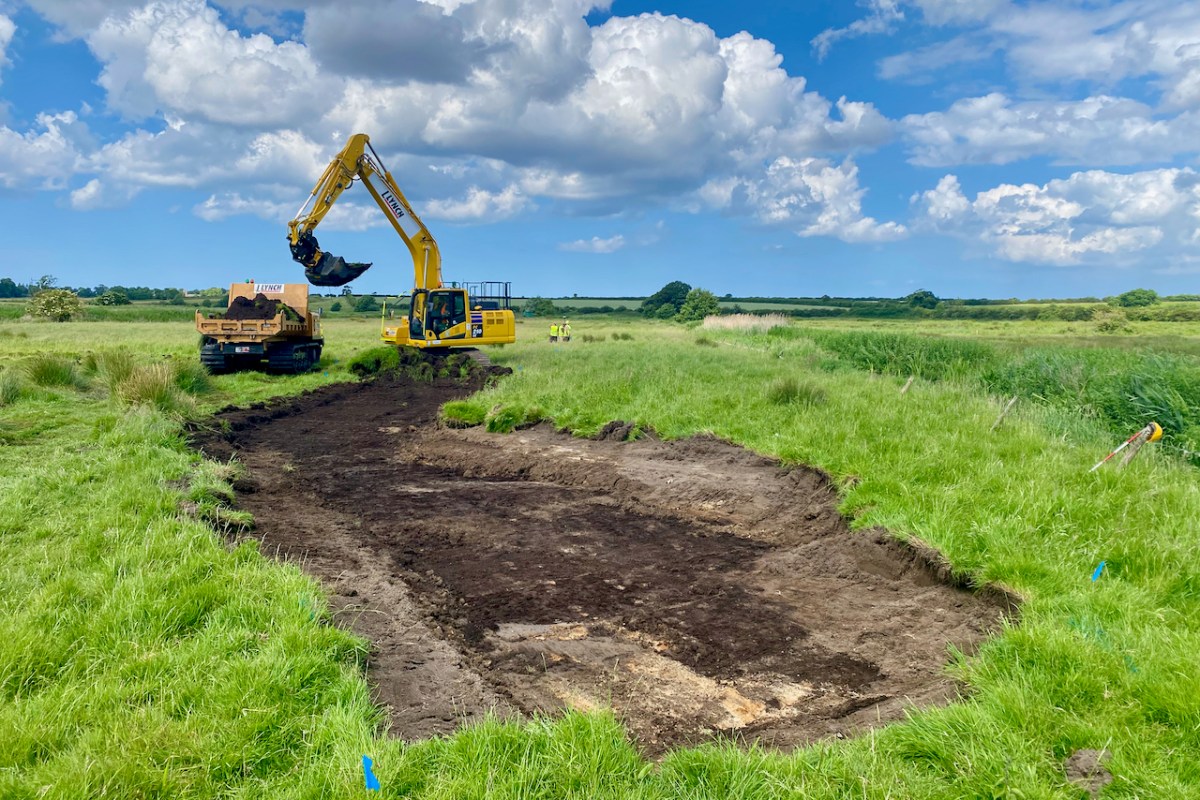
Delighted that we are finally breaking ground on a new re-meandering / re-wilding project on the River Stiffkey in North Norfolk. Boy has this one taken some shoving over the line. Welcoming – in due course – 3km of chalk stream back to a pathway it was moved from several centuries ago. Restoring linear and lateral connections between the river and floodplain, restoring the hyporheic zone, adding complexity to the flow pathways, capturing carbon, providing habitat to coastal and wading birds, improving habitat for resident and migratory trout and maybe one day … for salmon?

Watch this space.

Great to work with Holkham Conservation, Ant Gagan and the Norfolk Rivers Trust, Aquamaintain and with expert scientific advice from Professor David Sear, Immy Speck and the team at Southampton Uni.


The yellow line on the map below shows the modern course. The blue line the new (old) course.

Build it right and nature will a) find it and b) improve it beyond your wildest dreams!

Implementation Plan Press Release

Plan to protect and restore precious chalk streams formally launched at chalk stream conference

  • Actions to protect and enhance chalk streams discussed at today’s chalk stream restoration conference 
  • Event held to support delivery of the CaBA Chalk Stream Restoration Group’s Chalk Stream Strategy
  • An Implementation Plan, formally launched at event today, will showcase progress and highlight areas requiring further action 

Ongoing and future actions to protect and restore our nation’s chalk streams were the theme of a major event held in London today (Thursday 15th June), hosted by the Catchment Based Approach (CaBA) Chalk Stream Restoration Group*.

Attended by representatives from government, regulators and environmental groups, the conference was held to drive forward the implementation of a national strategy to restore our chalk streams to good ecological health.  

Chalk streams are a globally rare and valuable habitat, often referred to as England’s rainforest or Great Barrier Reef. 85% of all chalk streams are in England, mainly in the south and east of the country.  

Containing more than 30 recommendations relating to policy, regulation, investment and planning, the Chalk Stream Restoration Group’s Chalk Streams Strategy addressed pressures within the framework of what the group defined as the “trinity of ecological health”, namely: water quantity, water quality and physical habitat quality. 

The recommendations addressed such issues as:  

  1. water abstraction through prioritised planning, infrastructure investment, water transfers and demand management;  
      
  2. diffuse and point-source pollution through prioritising reductions in harmful sewage spills, re-setting cost-benefit assessments to weight investment towards headwaters; and addressing agricultural run-off; 
      
  3. physical habitat modifications like dredging and weirs via process-based physical restoration on a landscape scale, through – for example – the restoration of river meanders and the connection between the stream and the floodplain. 

The group identified the lead partners under each recommendation and tasked them with developing a timetabled plan for the delivery of that recommendation. That Implementation Plan, formally launched at today’s conference, will be updated regularly to demonstrate progress and to highlight areas where more needs to be done.  

Chair of the Chalk Stream Restoration Group, Charles Rangeley-Wilson, said: 

“There have been action plans in the past and they have helped to drive small improvements. But this is the first time a call-to-arms for our country’s beautiful and globally rare chalk streams has been agreed between all parties – regulators, industry and environmentalists – and the first time a way of holding the plan to account has been built into the process. There is no Damascene moment in river restoration: if undertaken with serious intent it must be seen a multi-decadal undertaking. This Implementation Plan marks a step-change in collaboration and planning in river restoration.” 
 

Progress made to date and reflected in the plan includes: 

  • Prioritisation of chalk streams in the National Framework for Water Resources – the forum wherein environmentally-focused abstraction reduction decisions are made. The Framework encourages water companies to open up new infrastructure to reduce reliance on chalk aquifers. 
     
  • Protections for chalk streams from sewage pollution through the designation of all chalk stream areas as high priority sites under the government’s Storm Overflow Discharge Reduction Plan. By 2035, water companies must improve 75% of overflows discharging to high-priority nature sites, including chalk streams. Moreover, the government’s Strategic Policy Statement for Ofwat makes it clear that water companies must make tackling pollution incidents a high priority.  
  • All water resource regions dependent on chalk-aquifers are now designated by default as water-stressed. This enables water companies to introduce wider water metering programmes where it is shown within their Water Resources Management Plans (WRMPs) that there is customer support and it is cost effective to do so. 
     
  • A national programme of flagship chalk catchment restorations, launched by water companies and driven by local communities. Scoping plans have been completed, whilst stakeholder engagement and catchment strategies are underway. Strategies for the programme are due to be published in early 2024. 
     
  • Investment of more than £1.5 million by the Environment Agency to support 53 chalk stream restoration partnership projects nationwide. Over the next year, the Environment Agency will contribute a further £1 million for 32 chalk stream projects with partners, including a river restoration scheme on the River Lark in Suffolk and a project to tackle low flows on the Upper Darent in Kent. 
     
  • Inclusion of modelling and investigation based on the Chalk Streams First proposal for re-naturalising chalk stream flows in the Colne and Lea catchments in Affinity Water’s WRMP 
     
  • A fully-funded (by Anglian Water) Southampton University PhD researching the pre-anthropogenic conditions of chalk streams in order to better inform future restoration efforts.  
  • The need to understand climate change impacts is highlighted in a collaborative research reporton chalk streams from Nottingham Trent University and the Environment Agency. This report presents evidence examining the effects of climate change on biodiversity in chalk streams, with the aim of informing the decisions that will support biodiversity in chalk streams. 

As part of their Plan for Water, the government has committed to: 
 

  • Increase investment into restoring chalk catchments – working with the Environment Agency to leverage £1 million investment in partnership projects each year starting in 2023 
  • Address the impact of agricultural pollution on chalk streams by considering chalk streams in the development of its Environmental Land Management schemes   
  • Review the impact of private sewerage systems on chalk streams 
  • Set up a new Water Restoration Fund, using money from water company fines and penalties – taken from water company profits, not customers – to support local groups and catchment projects like re-meandering rivers and restoring habitats. 


Minister for Environmental Quality and Resilience Rebecca Pow said:

“Chalk streams are both incredibly rare and a hugely important part of our environmental heritage – a true jewel in the crown of our environment. This Plan will help drive forward collective action across government, regulators, community groups and other key partners to protect and enhance them.

“Our Plan for Water sets out how we are taking a catchment-based approach to improve the water system, delivering increased investment, tougher enforcement and tighter regulation. Together, this will take the decisive actions needed to make a real difference for our chalk streams – now and for future generations.” Chair of Natural England Tony Juniper said:
“From the Gypsey Race in the Yorkshire Wolds to the Isle of Wight’s Lukely Brook, we are incredibly fortunate to have so many of the world’s precious chalk streams right on our doorstep.

“They are however facing numerous threats – from over-abstraction to pollution to physical modification. Addressing these through innovation and working in partnership through the Chalk Streams Restoration Group, we can not only improve the state of our chalk streams but unlock progress for broader Nature recovery too.” Chair of the Environment Agency Alan Lovell said:
“England is home to 85% of the world’s chalk streams and we have an enormous collective responsibility as custodians of these unique ecosystems.

“In partnership with local communities, the Environment Agency is investing millions in chalk stream restoration projects across the country to foster more sustainable abstraction, tackle pollution from agriculture and the sewage system, and restore more natural processes. Working together, we are focused on delivering a step change in the condition and prosperity of our chalk streams.” 

Chief Executive of the Rivers Trust, Mark Lloyd says: 

“Chalk streams are globally rare and nearly all of them are in England.  It’s our responsibility to halt their degradation and restore them to good health as fast as possible. I hope this plan represents a turning point for these magical rivers.  It’s also an exemplar in collaborative working and greater accountability, with important lessons for how we could all work together better on other rivers as well.”

Chair of Blueprint for Water, Ali Morse says: 

“Our world-famous chalk streams are on their knees due to farm pollution, sewage and excessive abstraction. So this implementation plan should be considered a report card, used to hold to task those who must act to tackle the demise of these quintessentially English rivers. While much action is underway – and this should be congratulated – public patience is running out. Delivering against this plan is an opportunity for all parties to demonstrate that they’re serious about chalk streams, and about securing a future for the wildlife that calls these rivers home”


*The launch event, held at Watermen’s Hall has been generously sponsored by
The Fishmonger’s Company.

Notes for Editors 

  • The Catchment Based Approach is a forum for all stakeholders to come together and agree a way forward for the conservation and restoration of rivers and catchments. 
  • In October 2021, after more than 12 months of research, discussion, and consultation with experts and stakeholders the CaBA (stands for Catchment Based Approach) Chalk Stream Restoration Group (CSRG) published a national strategy for the restoration of the country’s chalk streams to good ecological health.

Launching the Implementation Plan.

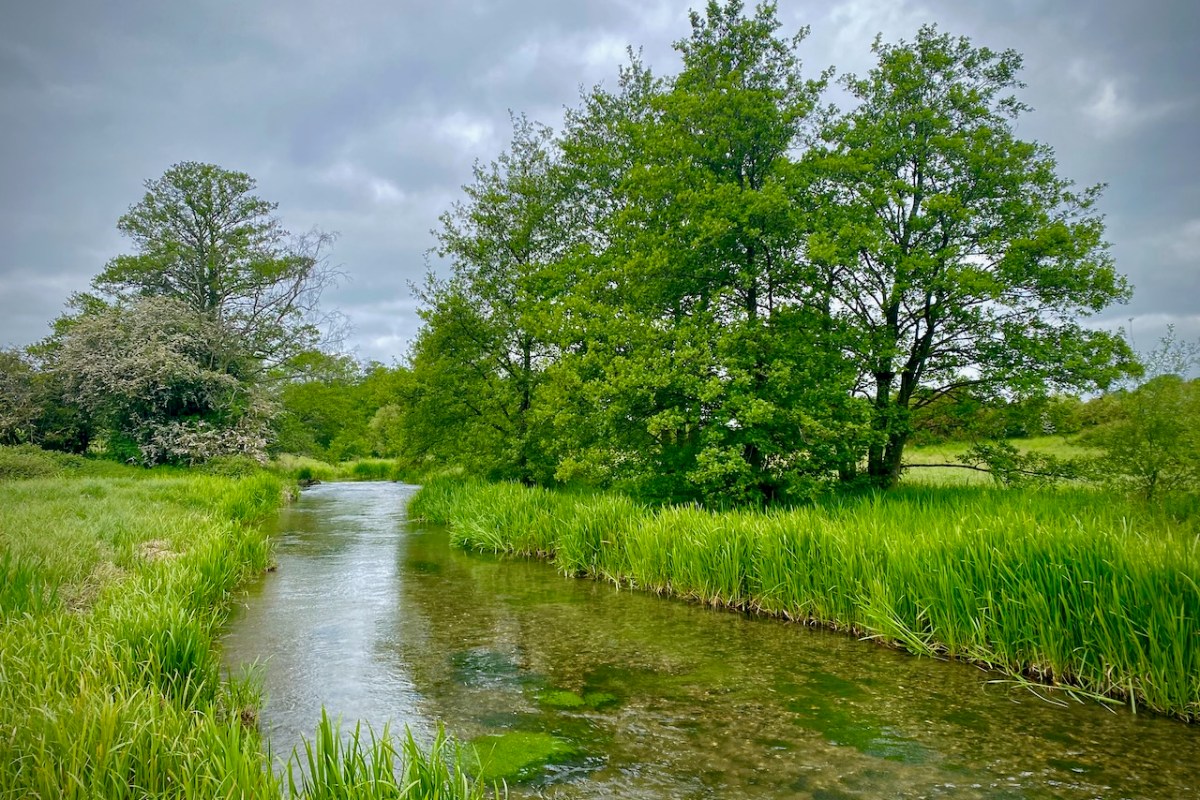
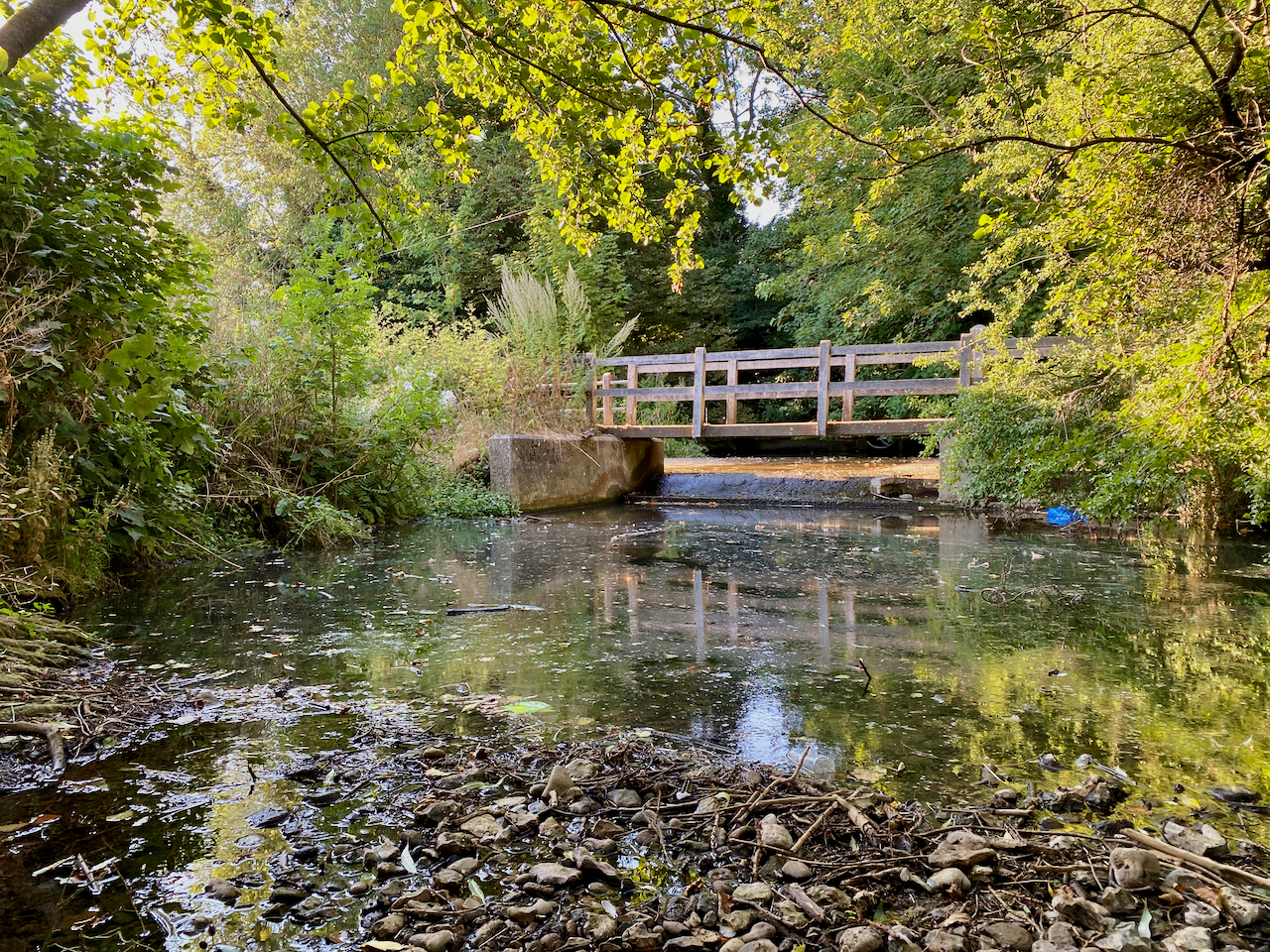
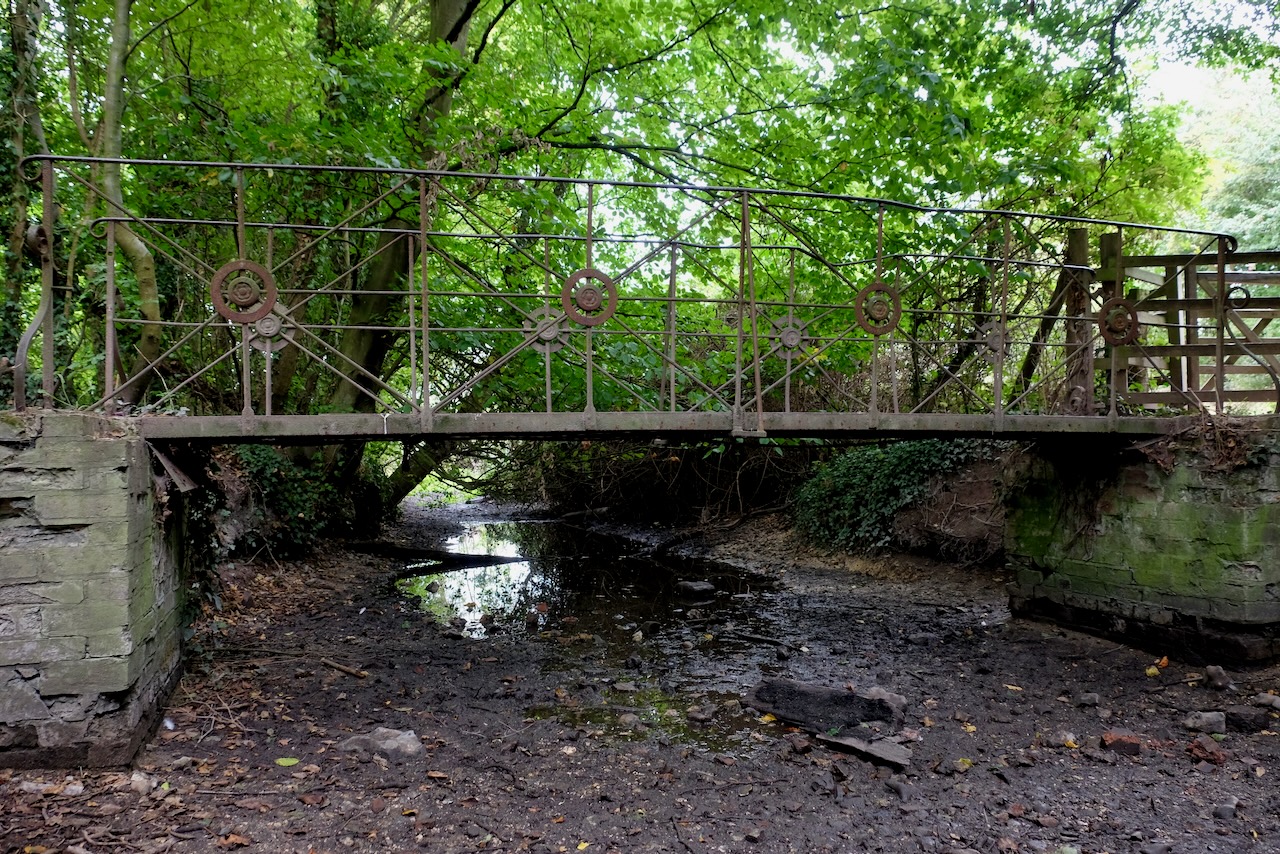
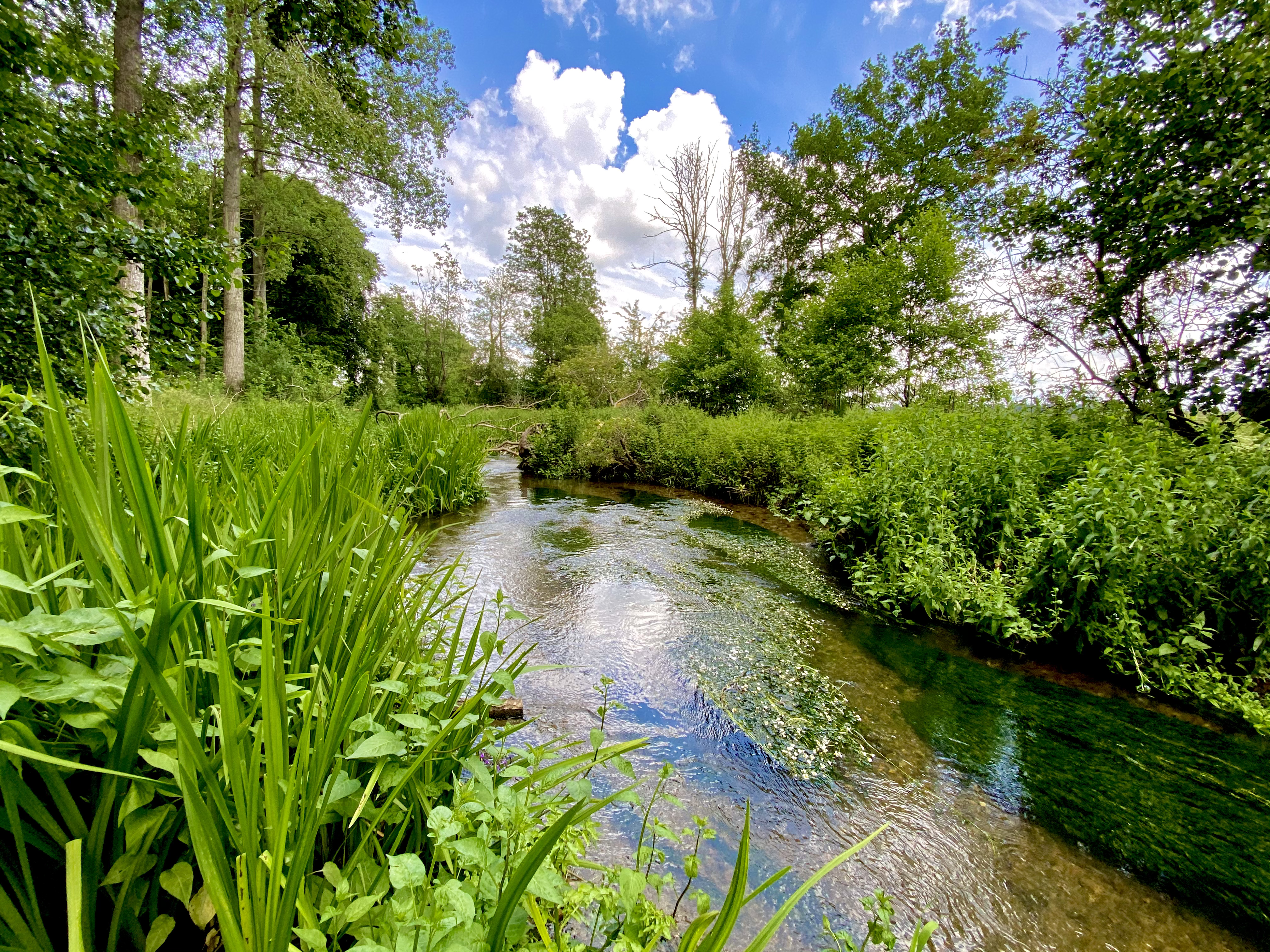
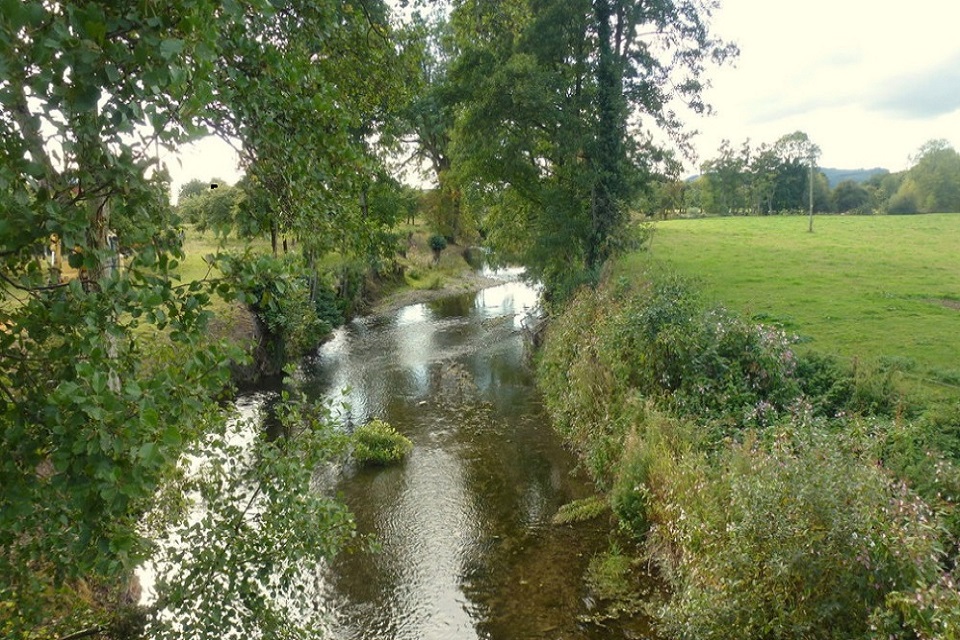
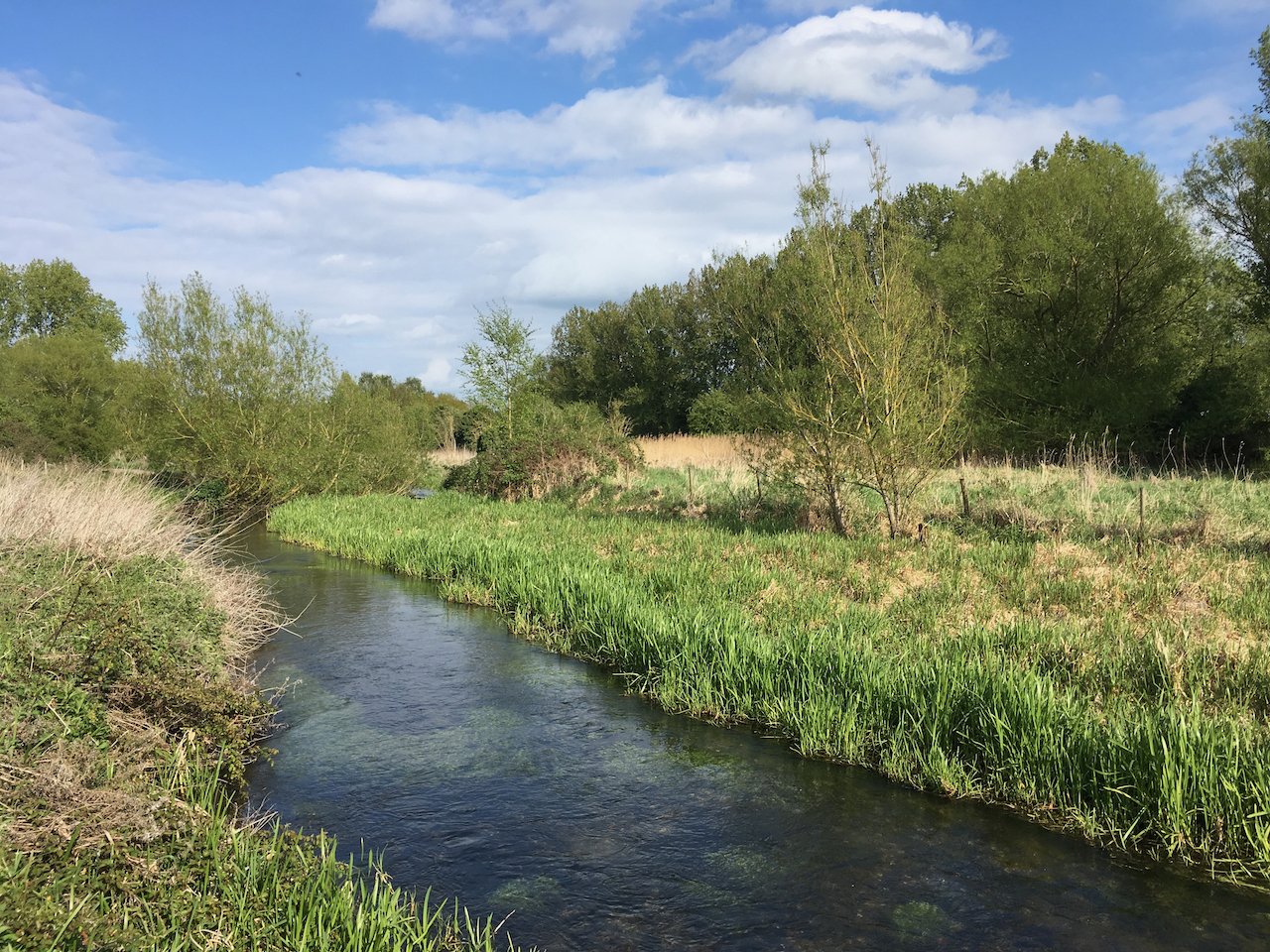
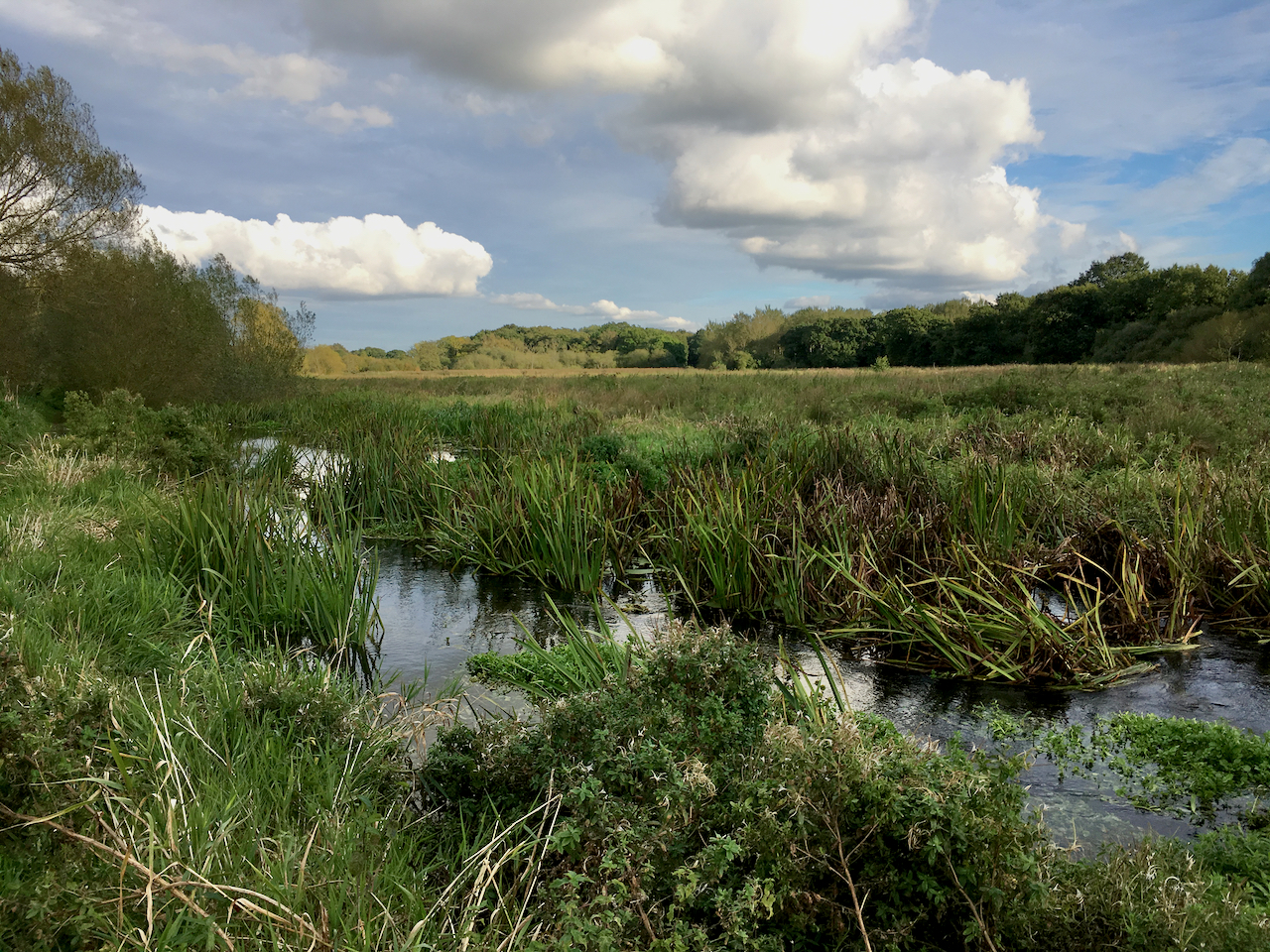
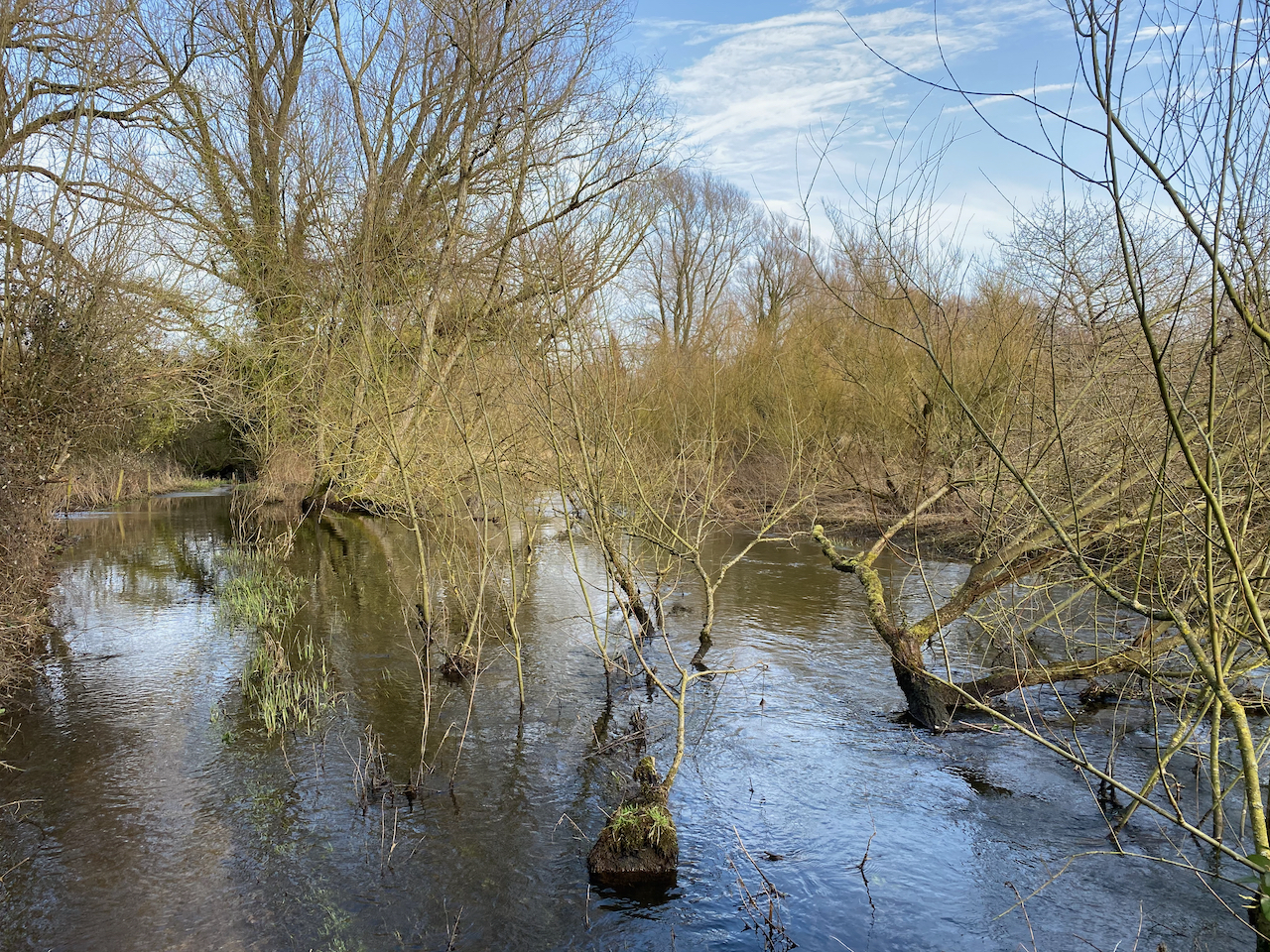
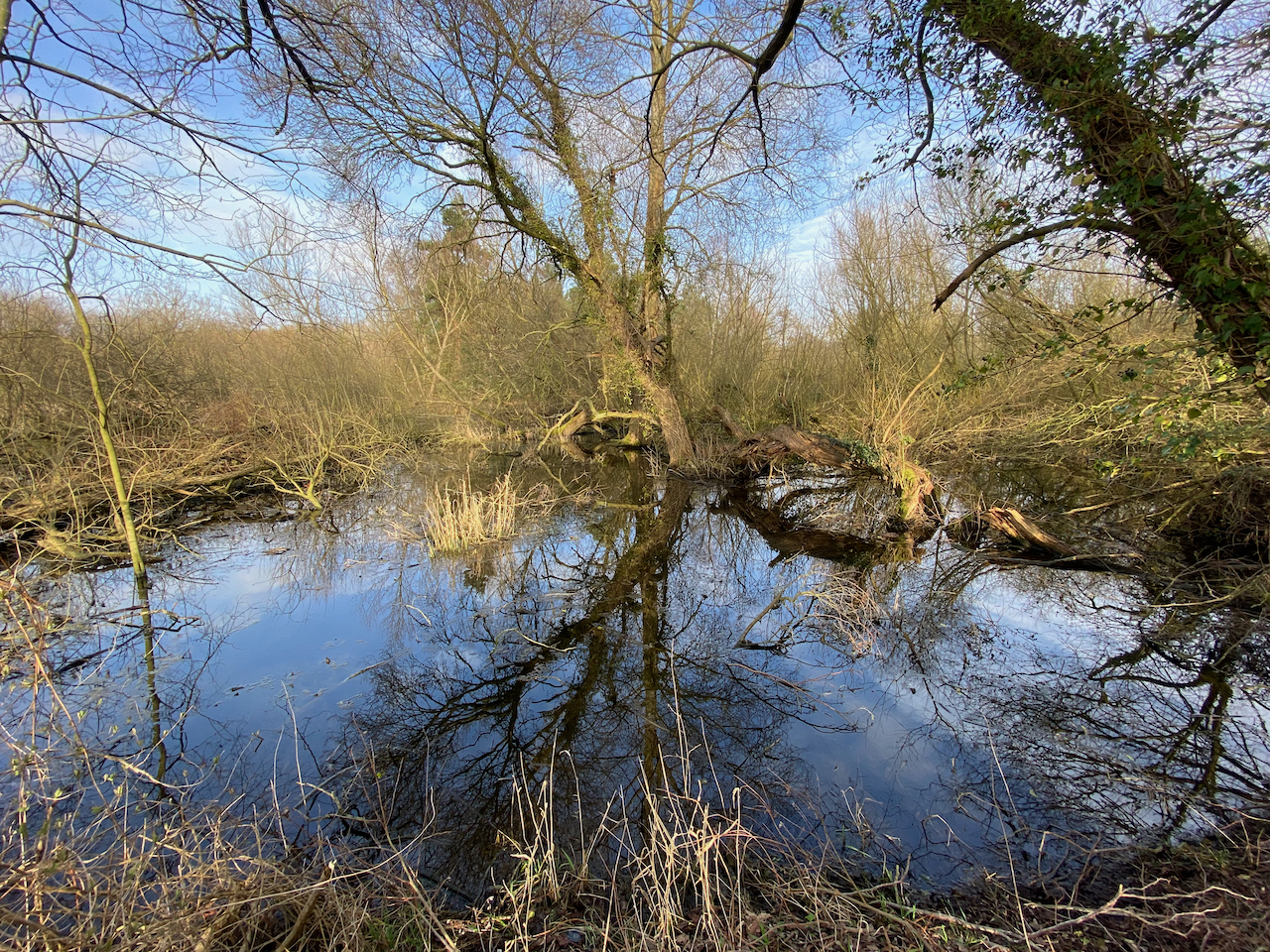
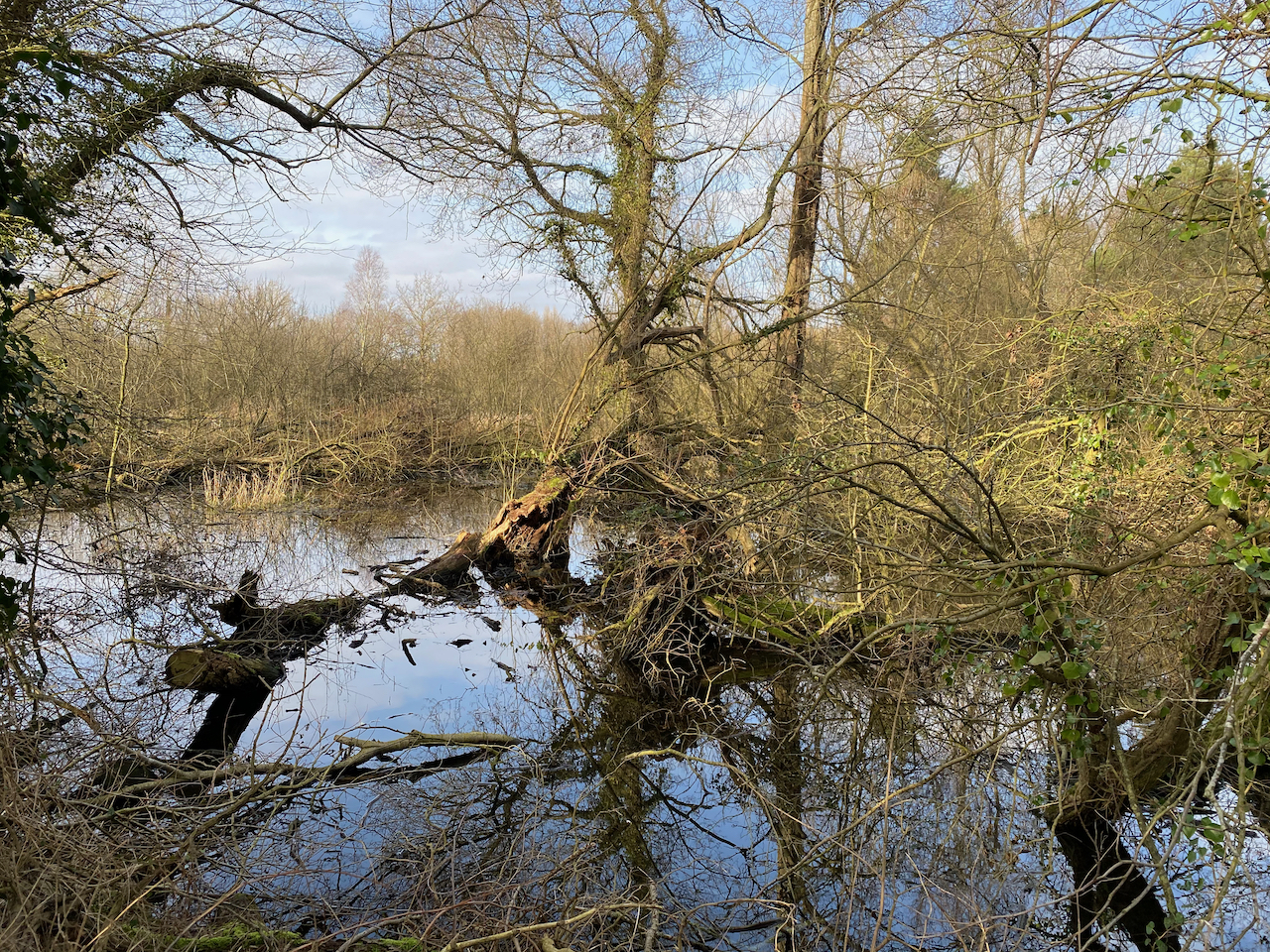
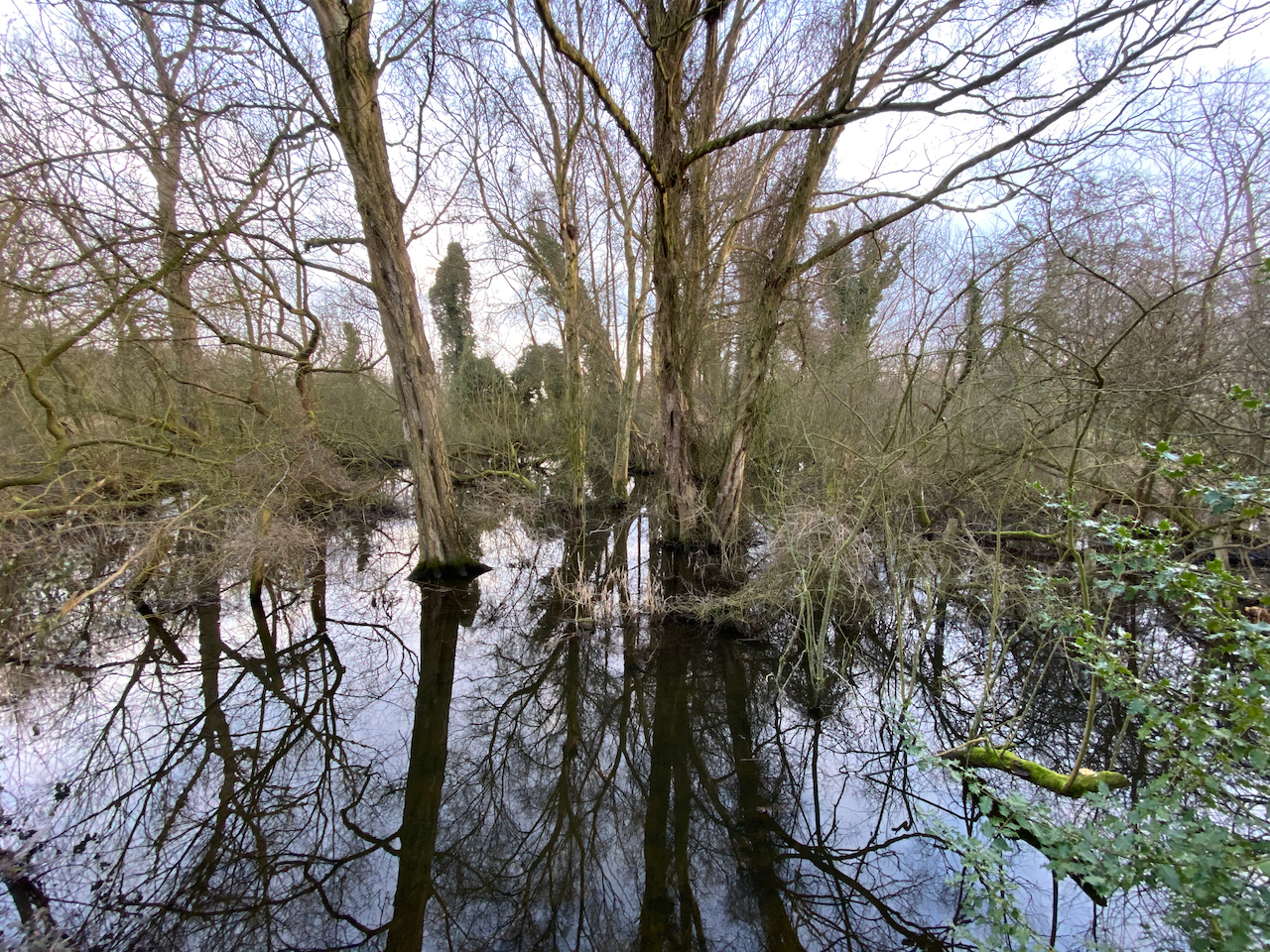
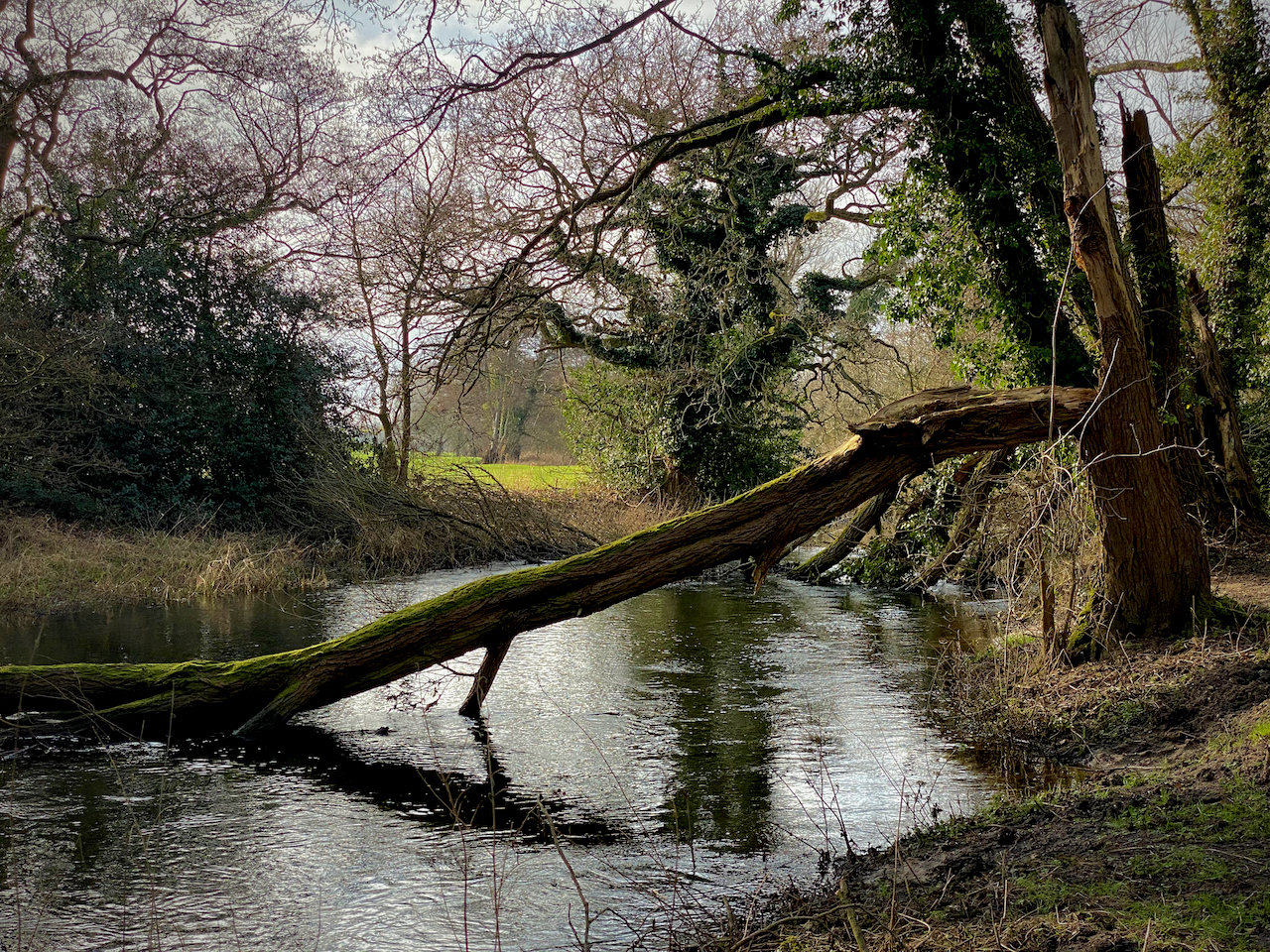
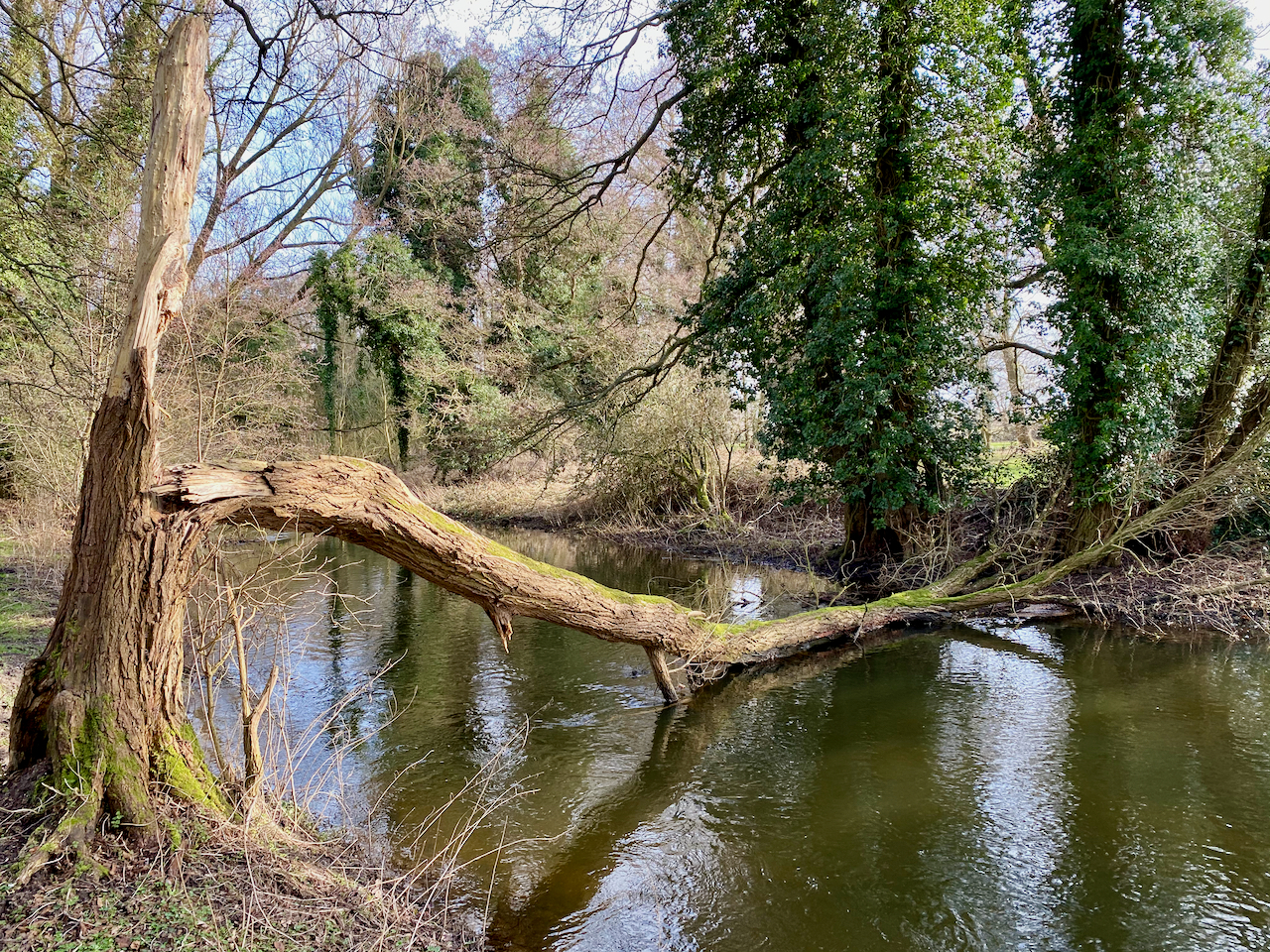
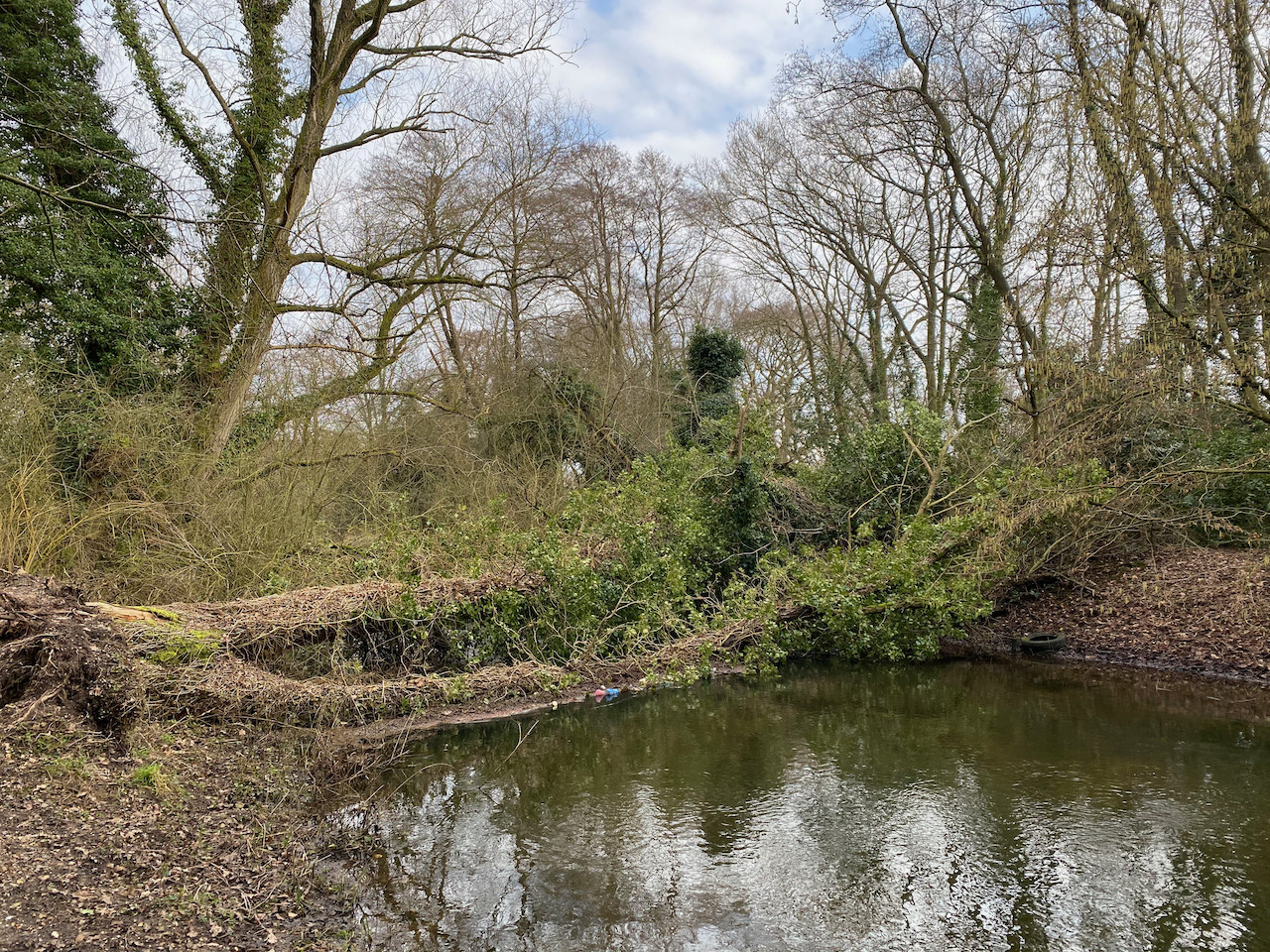
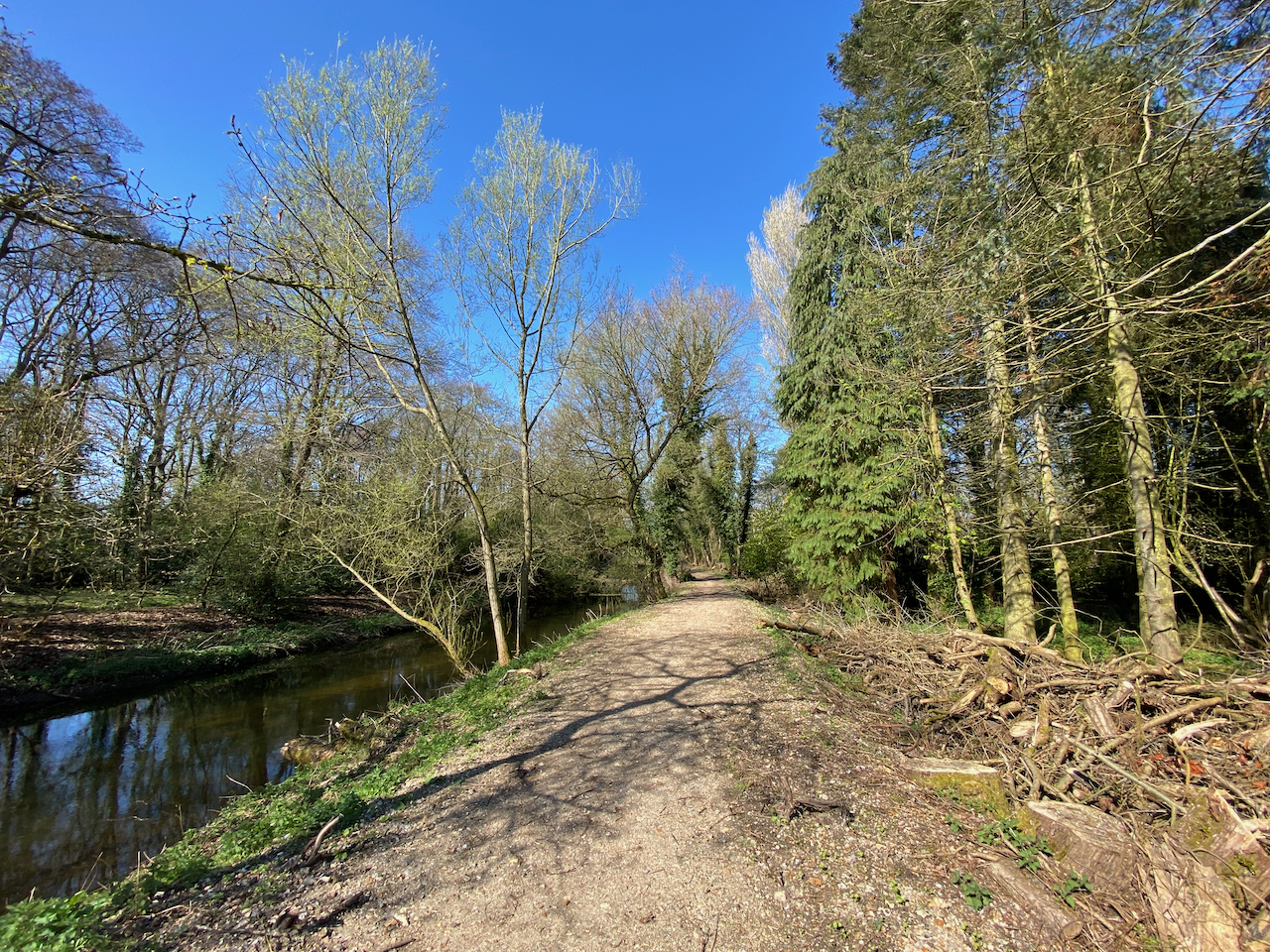
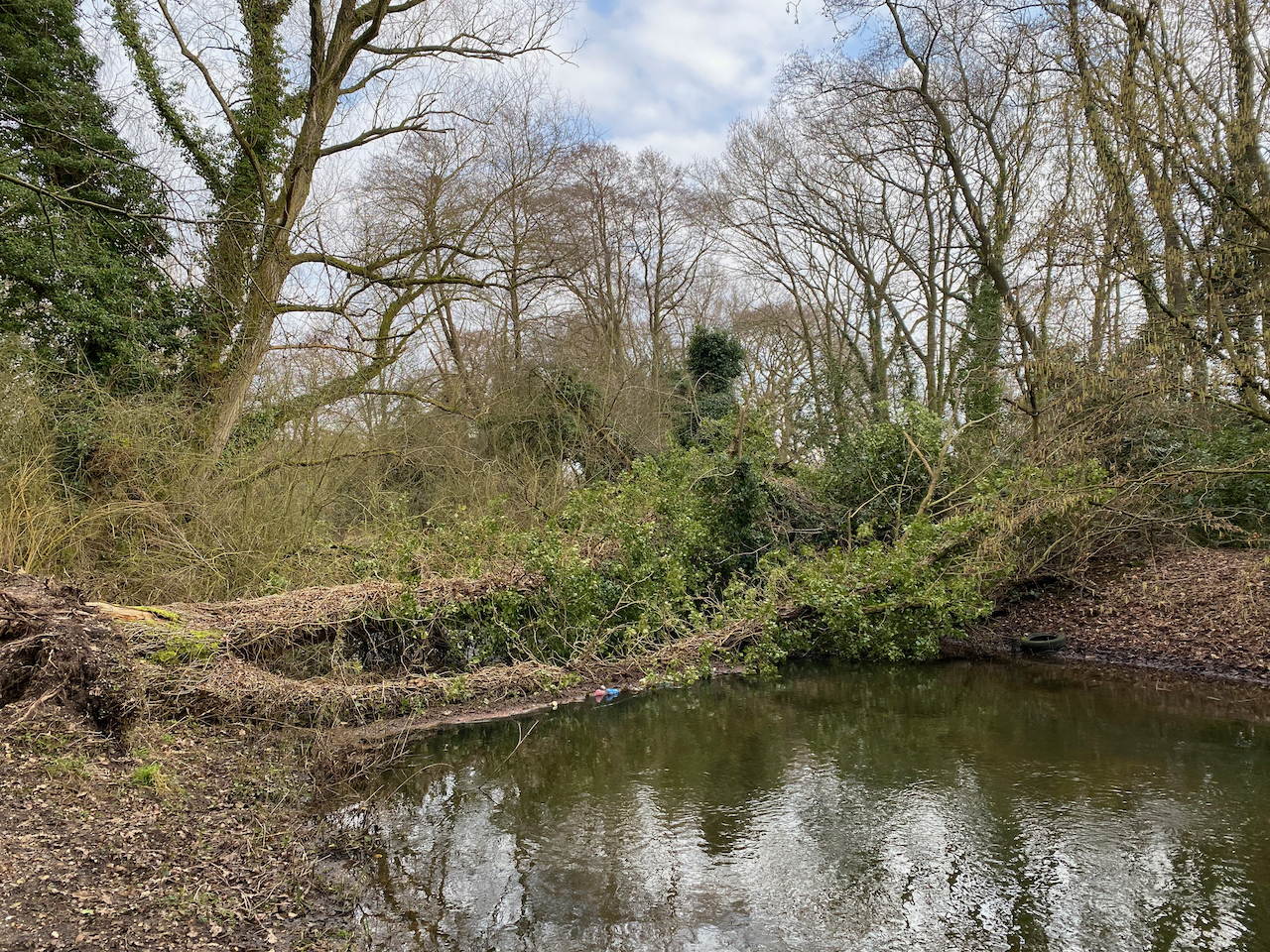
Today we had the official launch of our / your chalk stream strategy implementation plan at Watermen’s Hall in London, generously supported by The Fishmonger’s Guild. This iterative plan will – over time – help us make chalk streams look more like the main image and less like the first three.

This is what I said to introduce the day:

Thank you everyone for coming along today to launch the Implementation Plan for the recommendations in the chalk stream strategy. It’s fabulous to see such support and interest.

Before I go any further I would like to thank the Fishmonger’s Company for so generously sponsoring this event, and the Watermen’s Company for this magnificent and almost eponymous setting of Watermen’s Hall. We are very privileged to be here.

This is something of a first – or several firsts – in the now long history of action plans, charters and reports about the state of our chalk streams.

It’s the first Implementation Plan, for a start. There will be others in the future, reflecting progress, highlighting shortfalls, outlining commitments and timetables.

It is the first time that all parties – regulators, industry, NGOs and stakeholders – have debated, agreed and signed up to delivering the recommendations in a national strategy to restore good health to our chalk streams; 

It’s the first time that following through on those recommendations has been built into the process, so that we can all hold the delivery to account; 

And it’s the first time – in my view – that we have been forensic, realistic and pragmatic about the actions required, how long these will take to enact, and how iterative the process is. 

All of which adds up to a strategy and plan that is more likely to yield results than anything we have seen before. Not that we haven’t seen progress before now, but the pace has been achingly slow and the process mostly adversarial. We say this. They say that. All standing in for actual change.

Protest has its place. But at some point, if you want to make things better, you’ve got to sit down with those who you disagree with and start trying to agree with them. This can be uncomfortable – for all sides. Some of us have to lower our ambitions. Some of us need to raise them. 

But it can be done and it is the vital first step.

I can’t emphasise this enough, because there is an impatience and anger about the state of our rivers, which can be a potent and noble force for good, but which can also become an addictive substitute for actually doing something: a stance, not an action. 

A few days after many of us last met in October 2021, at the launch of the chalk stream restoration strategy on the banks of Hertfordshire’s lovely River Mimram, that chalk stream turned a vivid and alarming shade of purple. Not for long. Half an hour later the stream had cleared and happily, if puzzlingly, there was no apparent damage to the river life or remnant of the cause. 

But of course, a photo of the purple chalk stream hit social media in a big way. Some saw it as a certain portent of the futility of our work: “fine words devoid of intent, delivering even less” was one damning phrase, “liked” 6,294 times. 

I saw the purple Mimram as something else entirely, however: this was surely an all too vivid demonstration of exactly why we need a chalk stream restoration strategy. 

Because people are careless around rivers and pour stuff into them without thinking, for a start. 

But also because people are cynical. They’re fed up with what they see as irredeemably careless regulators, and a rapacious water industry. They’ve given up believing that – short of some imagined Damascene moment of delivery – things will ever get better, as much as they have started to believe they have never been worse. 

This pessimistic mindset is not, in my view, a true reflection on the state of things, albeit it is a seductive one. 

In part it is built on a naive belief in the possibility of instantaneous recovery and therefore a frustration with the incremental, sometimes almost invisible process of stitching back together the death by a thousand cuts chalk streams have been subjected to. 

There is no silver bullet that will fix chalk streams. Which is hard to take, when you so desperately want there to be one. It’s Sisyphus rolling his rock up the hill … again and again.

In fact, it’s a thousand of us, all as Sisyphus … rolling our rocks, again and again.

This despair is also built on a lack of historical perspective. Anyone who thinks chalk streams are generally worse now than ever in history was not paying attention in 1989, or is not basing their opinion on facts. There may be a few streams at their nadir in 2023, but not many. 

Without for a moment suggesting things are good enough, it is nevertheless true that against a 1990 baseline, groundwater abstraction is lower, phosphorus concentrations are lower at least d’stream of larger sewage works and long-term trends in river insect communities show a general improvement, especially in urban areas.

And finally this pessimism is, of course, built on repetition. The damnation of our efforts to unite and fix these lovely streams was “liked” by far more people than contributed ideas on how to fix them.

But isn’t it far, far better to light a candle than to curse the darkness? 

The chalk stream strategy and the implementation plan which we launch today are about lighting that candle: to illuminate what is broken, to identify how we fix those things with solutions that are simple, pragmatic and almost unarguable, and to hold us to the task of actually going ahead and fixing them.

Take abstraction as one example:

I’ve been involved in campaigns against over-abstraction for at least thirty years. In the 1980s and 1990s when groundwater abstraction was its height, it was generally disputed that abstraction had much impact on flows in chalk streams, or even if there was some impact the subject was too complex to be summarised by simple cause and effect. Protesters, including me – who knew but didn’t have the means to prove this was nonsense – railed. Abstractors said further studies were needed.

To get beyond this opposition between protest and procrastination we needed to think more about solutions than arguments. This requires dialogue, collaboration and reciprocal understanding of the other point of view: recognition on the one hand that water is a vital resource for society and that we can’t just turn off the taps and on the other hand that taking water from the environment in the convenient, careless way we have done has a now completely unacceptable impact on the natural world. 

We can then find common ground in pragmatic, targeted schemes that enable us to source water from places where it causes minimal environmental harm and reduce the pressure on places that are ecologically special: like the chalk streams.

Recycling water from Birmingham sewage via the Grand Union Canal, for example, will give us at least 100 Ml/d of headroom, for a relatively modest cost, allowing abstraction in the Chilterns to be reduced to sustainable levels. The restored flows will create extra water in the lower reaches of those chalk catchments and this can also go back into the system.

And thus by 2030 we should see a large part of the reductions in abstraction needed to re-naturalise flows in the Colne’s chalk stream tributaries: the Misbourne, Chess, Bulbourne, upper Gade and Ver. And for the the upper Lea and its tributaries, while delivery takes longer we will see over half the reductions by 2035 and all by 2050. 

This isn’t a pipe dream: no pun intended. This isn’t a scheme “devoid of intent”: this is happening as a result of processes that the Chalk Strategy has tuned into and significantly influenced precisely because the CaBA panel was collaborative, pragmatic and persuasive.

Over time the Implementation Plan will set out timelines and goals relating to all the recommendations in the strategy. It is designed to be re-published regularly, to reflect progress where it has happened and highlight lack of it, where it hasn’t.

The plan is designed to make all this simple and transparent, with colour-coded progress symbols that indicate if a given recommendation has been delivered, if it’s a work in progress whose outcome is uncertain or likely, or if the recommendation simply hasn’t got anywhere yet.

These are all grouped under the structure of the trinity of chalk stream health, which emphasises that to achieve the best value for money the improvements we make need to be integrated.

No doubt you will hear more from others today, but recommendations that have been either delivered or are very much underway include: 

  • more work to prioritise abstraction reduction in ecologically vulnerable chalk streams;
  • defining all chalk aquifer water regions as water-stressed – enabling the roll out of metering;
  • defining chalk streams as high-priority alongside other designated sites in the government’s Stormwater Reduction Plan;
  • a national network of flagship catchment restoration projects;
  • a PhD (funded by Anglian Water) into the pre-anthropogenic conditions of chalk streams to better inform our efforts at physical restoration;

as well as commitments in the Plan for Water to: 

  • address the impact of agricultural pollution on chalk streams by considering chalk streams in the development of its Environmental Land Management schemes;
  • review the impact of private sewerage systems on chalk streams.

That’s all good news. This collaborative and ambitious work is only just at the beginning, but … at least it is underway. 

We know what to do. We just need to do it.

Thank you.

Dredging makes flooding worse.

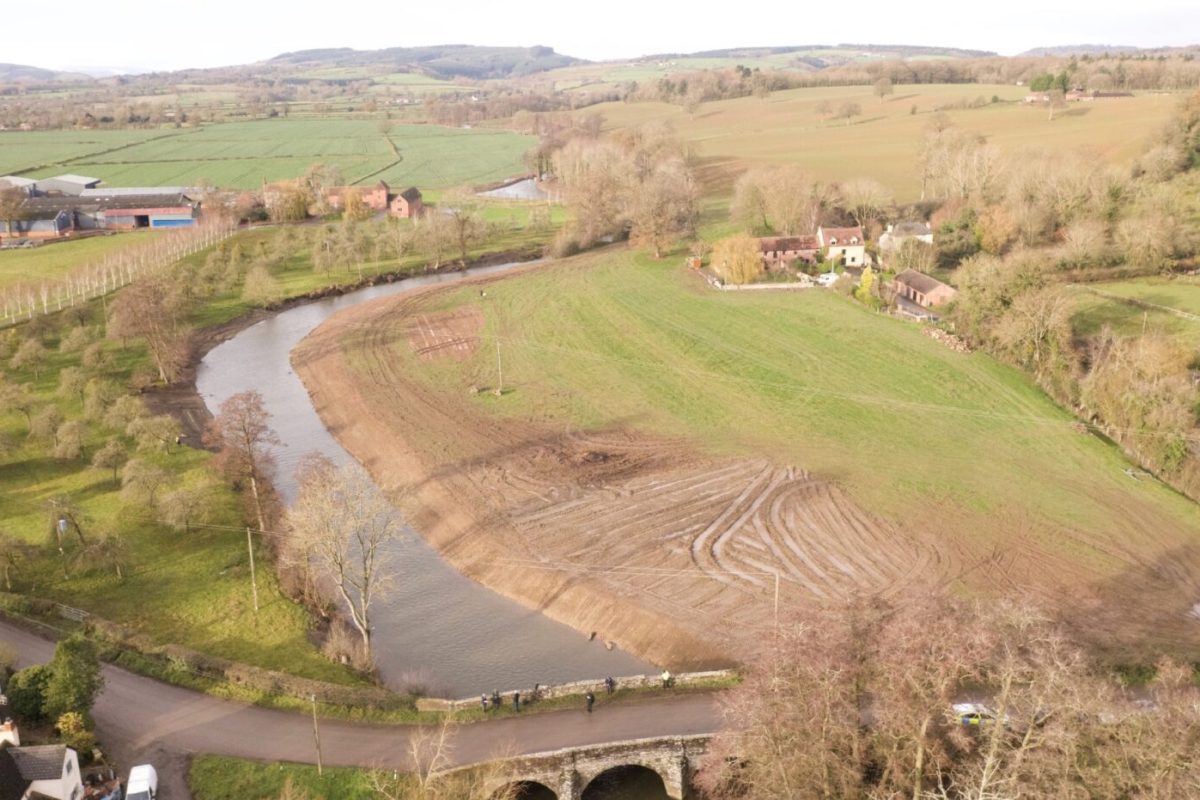
Photo above: The River Lugg after Mr Price’s illegal dredging operation. Photo credit: Defra

What’s the country coming to, asks Camilla Tominey in The Daily Telegraph, when a farmer is sent to jail for dredging a river?

Answer … its senses?

There seems to be an idea riding downstream on a flood of protest, that Mr Price, who has been sentenced to a year in jail for dredging almost a mile of the River Lugg in Herefordshire, was performing an act of civic good.

The Lugg is not a chalk stream, but chalk streams are the river type most severely damaged by dredging – historic and current – (because they take the longest time to self-heal) and the ignorance that drove this farmer’s environmental vandalism and that fuels the public debate about it and dredging more generally, is a threat to all rivers.

“Mr Price clearly went too far,” writes Tominey, “but it says something about the state of the Environment Agency that it came to this.”

Would we really have the Environment Agency not bring this action? This was environmental destruction on an industrial scale and it’s the EA’s job to protect the environment, after all. They should be congratulated for pursuing this case and – more to the point – encouraged to do it more often. Environmental laws, which almost all people approve of, mean nothing if they aren’t used.

Of course, knocking the Environment Agency is a national pastime at the moment, in large part because of their apparent reluctance to bring water companies to court for crimes of equal or greater severity. But now the EA’s reputation is in such tatters, even when they do the right thing they are attacked.

Which brings us to the second bit of misunderstanding in CT’s editorial: the river was emphatically not in any kind of mismanaged state due to “the public sector’s awful productivity”. It didn’t need dredging. It didn’t need any of Mr Price’s misguided work. 

“What does it say about the Environment Agency and Natural England [NE] that a man who has lived along that stretch of river all his life had to resort to such drastic measures in the apparent belief that nobody else was willing to protect his flood-prone community?”

It says this: that the EA and NE have not yet managed to educate the public about the real causes of flooding and how these can best be mitigated, based on science and not supposition. Mr Price wasn’t protecting his flood-prone community. He was making it more likely his local community would suffer from flooding.

This seems to be a very hard idea to get across to the good folk of this rain-swept isle, but managing flooding has very little to do with the volumetric capacity of the channel – how big you make it by dredging – and much more to do with the capacity of the channel to convey water, and the rate at which the water pours down the catchment. Think for a moment about the size of the River Lugg catchment: 885 square kilometres. An inch of rain landing one wet Welsh afternoon on 885 sq. km. equates to 22 million cubic meters of water, which – because of the way we ditch and drain our landscape – will all be trying to reach the sea in a hurry.

You simply can’t make the channel of the Lugg wide enough to take that peak flow. It has to spill onto a floodplain somewhere. That’s how rivers work: the main channel, the bit we consider to be the river, is actually only a part of the river: the bit that can take most flows, but not really high flows. The rest of the river is the floodplain (it’s in the name) and this is the bit nature has designed to accommodate those really high flows. The floodplain is the pressure relief valve and without them rivers would become immensely more destructive and lethal.

Now, consider that many of the photos of Mr Price in the media show him standing on a bridge at the downstream end of the reach he dredged: even if you could turn the entire floodplain upstream of this point into a massive empty hole ready to accommodate those 22 million cubic meters of water – in which case he wouldn’t be farming it – what are you going to do about the bridge? Or the next bridge? Or Hereford?

In rivers, flood escape rate is mostly controlled by these relatively immovable, man-made pinch points and not the size of the channel between them. Think of bridges and weirs as road-works and lane closures on motorways. That’s why flooding often hits towns and cities: they are very significant pinch points.

On the basis that you cannot actually prevent peak flood-flows from spilling out of the banks of the main channel, the question then becomes where do you want that flooding to occur and where would you rather it didn’t occur? Answer: I don’t see any houses on Mr Price’s meadows! The best we can do to prevent flooding of our homes is to allow flooding onto the floodplains in the upper catchment. What we should absolutely NOT do is drain the upper catchment so the rain all arrives at downstream pinch points in a hurry.

I’d have thought all this is obvious – I mean my dog more or less knows she can’t get a big stick through a narrow door – but year after year the media just totally fails to get it.

What does it say about our justice system, that Mr Price has been sentenced to 12 months in jail.

That it works, occasionally? There’s already an appeal crowd-funder and petition against his sentence. Emily Naylor, who’s started that petition said that Mr Price “did the most amazing job” in clearing the banks and dredging the bottom of the River Lugg.

The River Lugg before Mr Price “improved” it. Photo credit: Defra

CTs editorial, and much of the subsequent commentary like this, just doesn’t really seem to acknowledge or take any trouble to imagine the environmental destruction involved in what Mr Price did. The river banks he excavated will have been home to water voles, a protected species and as is so oft quoted, Britain’s most endangered mammal. The trees will have been home to protected bats and no doubt owls and other birdlife. The gravels on the river bed will have been home to white-clawed crayfish: another protected species, increasingly rare. The gravels were also spawning grounds for Atlantic salmon, also protected and also hanging on for dear life in the south-west England and Wales. It will take years for this section of river to recover, decades for the trees to re-grow.

Mr Price had form, so it seems from the reports. He had allegedly done this kind of work before and had been warned not to on several other occasions. It would appear that he thought he knew best. Which he didn’t. His destruction of the river was wanton.

The science of river morphology and flow is reasonably complex and some of it is counter-intuitive. The fact that the local community felt that old-school dredging protected them from flooding is no justification of the work: there are wrong if they think that, and to say as much isn’t at all from a lack of sympathy for those whose properties are flood-prone. Mr Price’s old school land management is the problem, not the cure.  

Was the sentence too harsh? It was a tough one, but the judge has sent a warning shot across the bows of other land managers and not before time. Hopefully they will think again before emulating Mr Price.

For too long we have been pointlessly tidying the potentially wilder fringes of our landscape – like rivers – and nuking the habitats of British wildlife, all the while cooing over nature documentaries shot in other parts of the world. Surely Attenborough’s new series, which he wouldn’t have been able to film at all if the nation’s rivers were managed by Mr Price, has taught us to value the wild and the wet in our own backyards?

Fallen trees are valuable ecological engineers.

I’ve known this bit of river since I circled the entry in John Wilson’s Fishing in Norfolk. Definitely since before I could drive. I would cadge a lift there when my parents went to the open-air market in Fakenham. Early 1980s then, maybe even late 1970s. The river in those days, according to memory, was broad, tidy and fishless. My fly-angling skills were not that developed but I was handy with an upstream worm. And yet I never caught much more than a few dace. The trout Wilson had promised were very few and far between. Not so in more recent years: trout have been far more numerous.

There will be a number of correlations: water quality, no doubt, which will be generally better now that the Wensum is a Special Area of Conservation (SAC) and privileged by reasonably high standards of sewage processing. But the most significant correlation, I am certain, will relate to that word “tidy”. The river isn’t tidy anymore and therefore the trout have been allowed to thrive.

Back in those darker days of the late 1970s, with the Common Agricultural Policy at its economic height, the Wensum was dredged to destruction. And every time it reared its almost lifeless head off the canvas, it was dredged some more. To be honest, I was amazed the Wensum was ever designated an SAC, as a more physically ruined chalk stream you will not find. Trout find it hard to get along in a dredged, straightened and impounded river that is razed to its silty bed once a year.

But an SAC the Wensum became and perhaps partly for that reason, but mostly because the flood defence teams of the NRA/EA/IDB, have been far less zealous in the last couple of decades, the gentle-natured Wensum has been clambering back slowly, at least onto its knees, if not yet its feet. Trees have been left in the stream. Reeds have been allowed to encroach. The process of self-repair has started.

In fact, that process had contrasted intriguingly with the accelerated “repair” enacted in the name of river restoration on other parts of the stream. I have been watching, for example, the startling difference between the reach 100 yards below the sewage outfall in Fakenham (left-hand image below), where the riparian reeds have encroached on a gravel bar and recreated a natural, meandering channel, with the reach 200 yards below the old railway viaduct (right-hand image below), where a “riffle” (aka weir) made of outsized flints has been installed, impounding the river drastically, causing a massive drop-out of silt and bank to bank accumulation of burr-reed.

The lesson being, nature knows best.

Rather the reason why the likes of David Sear and others have been questioning so hard exactly what we mean by “river restoration”, especially when it comes to chalk streams. They are such gentle rivers: what we do to them stays done for many years. We ought to make sure we get it right, therefore. I certainly made sure we used the CaBA Chalk stream strategy to broadcast that message loud and clear: chalk stream restoration should be about the restoration or facilitation of natural process and not the imposition of arbitrary anthropogenic concepts of riverine form (many of which actually stall those processes as the pictures above show all too clearly).

That self-repair that I was talking about: it had all been happening in the reach between Fakenham Mill and the railway viaduct. The river, as I have suggested, was four decades or so along a successional journey that, in my best estimate, was due to take at least a century, if not longer. But it was at least on that journey.

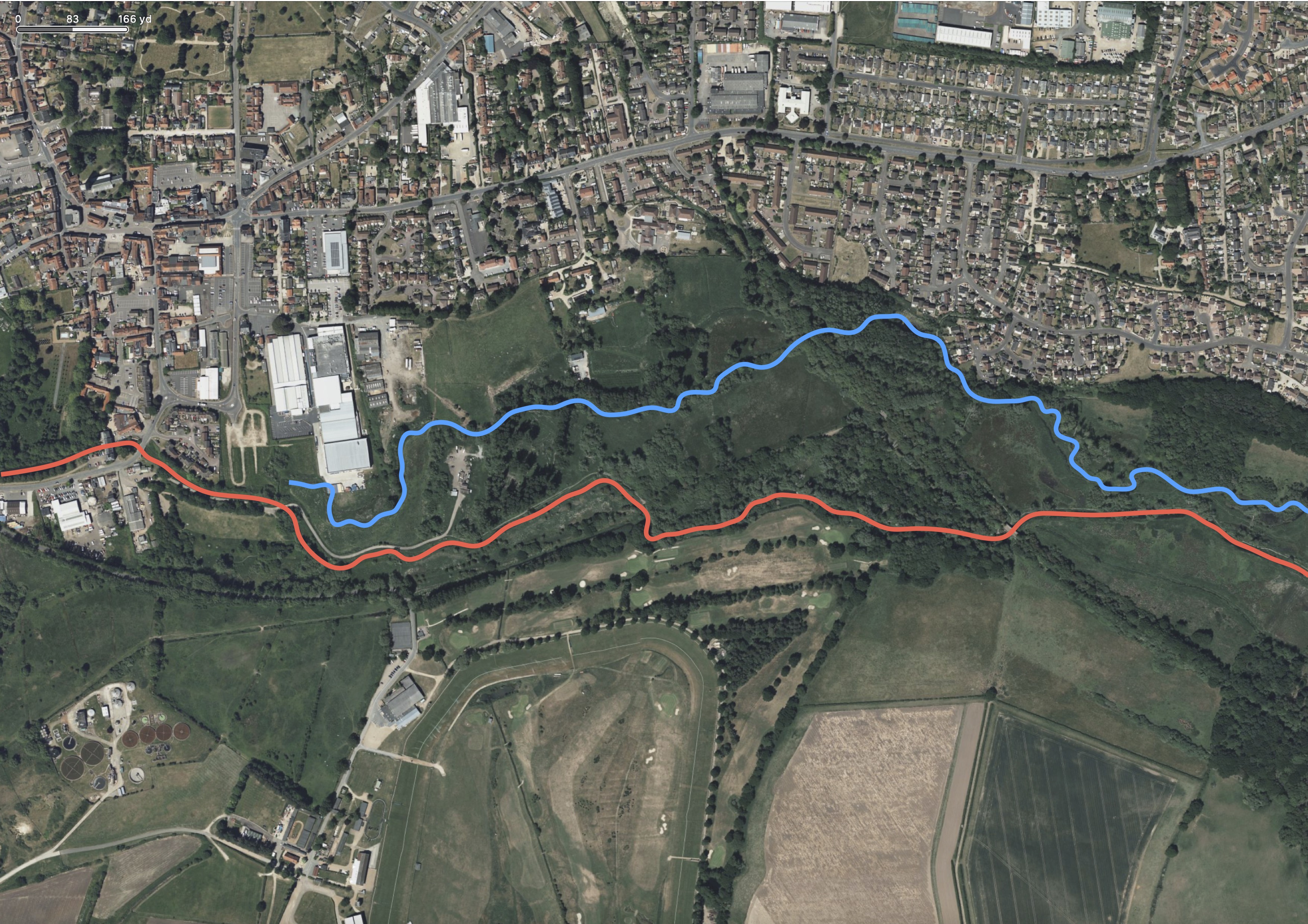
The Wensum here has been – like all chalk streams – diverted away from its natural course, impounded (in the two spots where the railway crossed it), and very heavily dredged and incised. The picture above shows the existing course in red and the natural course in blue. A chalk stream stuck in this kind of physical prison (red course) will take many, many years to break free. But break free it must … eventually. It would be intriguing to find out exactly how long “eventually” takes. I had been watching the Wensum in this rural but municipal reach, hoping its public ownership (it is council water) meant that it might be left alone long enough, and that I might live long enough, to find out.

Trees help and gradient help. Luckily for the Wensum, in the upper half, where there are not that many riparian trees, the stream is quite steep and in the lower half, where it is incised and impounded, there are lots of trees. So, it had the keys to its jail.

To recover the river must either:

a) recreate a meandering form within its current course (as in the picture on the left in the sequence above), which it will do a bit more quickly if the gravel bed is reasonably intact and if there is gradient, or much more more slowly if it first has to restore the gravel bed that was removed or if there is very little gradient (gradient equals energy and energy determines speed of recovery). In truth, this side of another Ice-Age, a chalk stream will not truly recover a gravel bed on the channel pathway from which the gravel has been removed: the best the stream can do in situ is blow out its banks and throw more gravel into the system, or fill up with silts and fine sands.

or it can

b) break out of its channelised, impounded and dredged course and carve a new pathway across the flood-plain, where there will be gravel that hasn’t been removed by dredging or find its way back to the original channel, which may not have been damaged.

It will only do either of these two things successfully if trees are allowed to fall in and create energy hot-spots, or fall in and sink to the bottom and set a new bed level with the silts and sands filling the spaces between, or so block the stream that the river is forced out of its banks and can find its way over-time to its original course, or maybe carve a new one. Or all the above.

Trees kind of matter therefore. They are critical to the process.

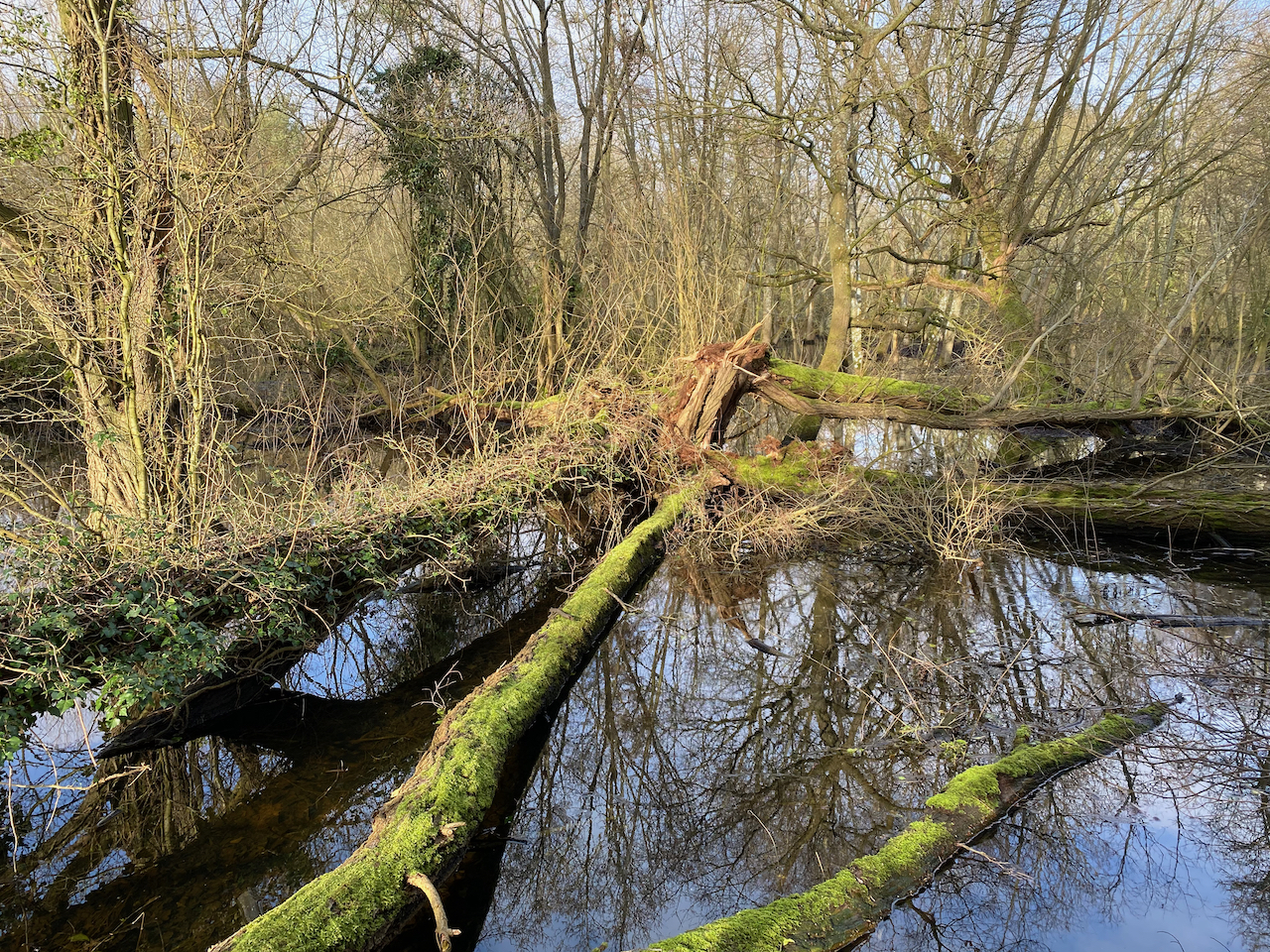
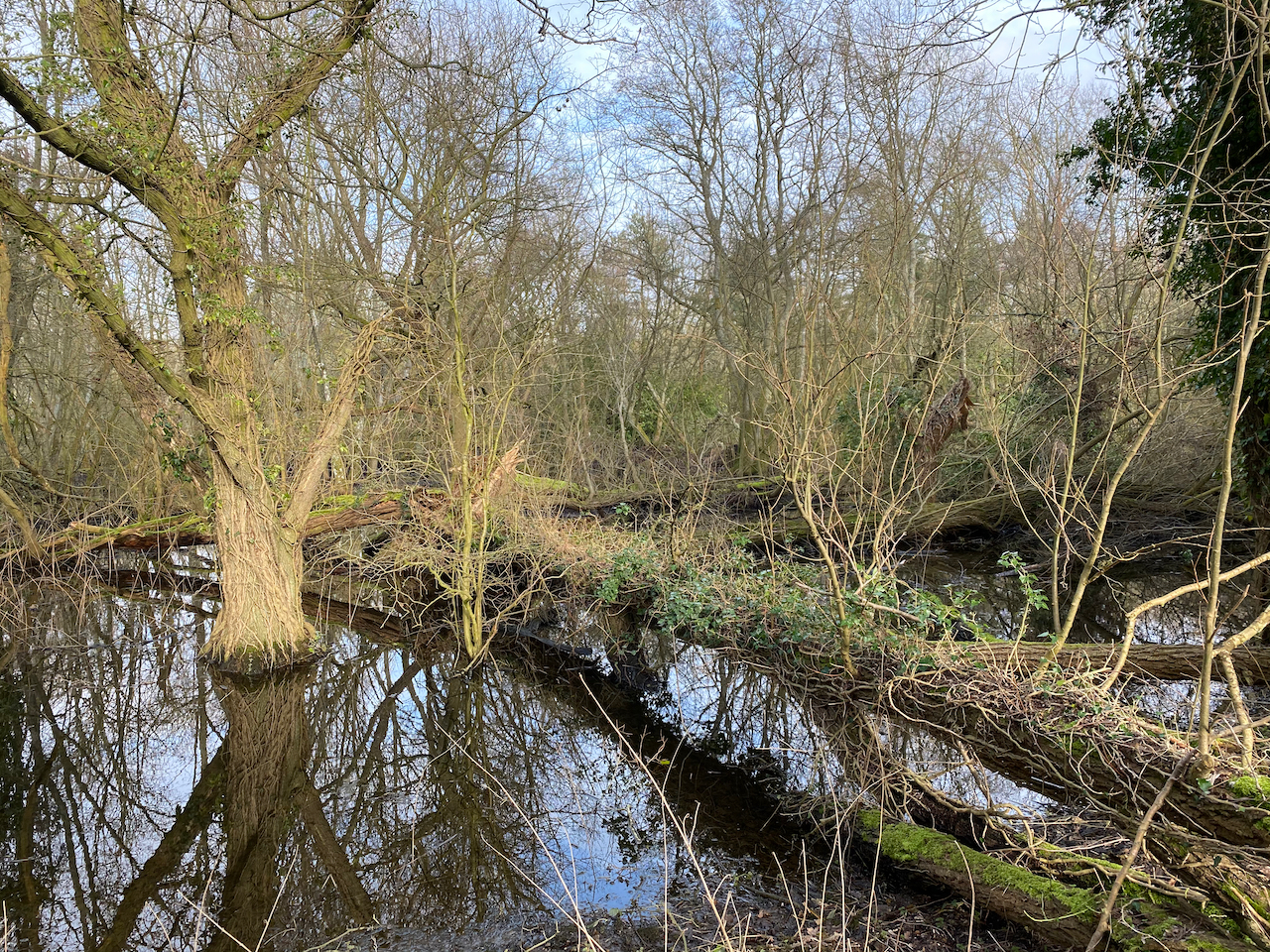
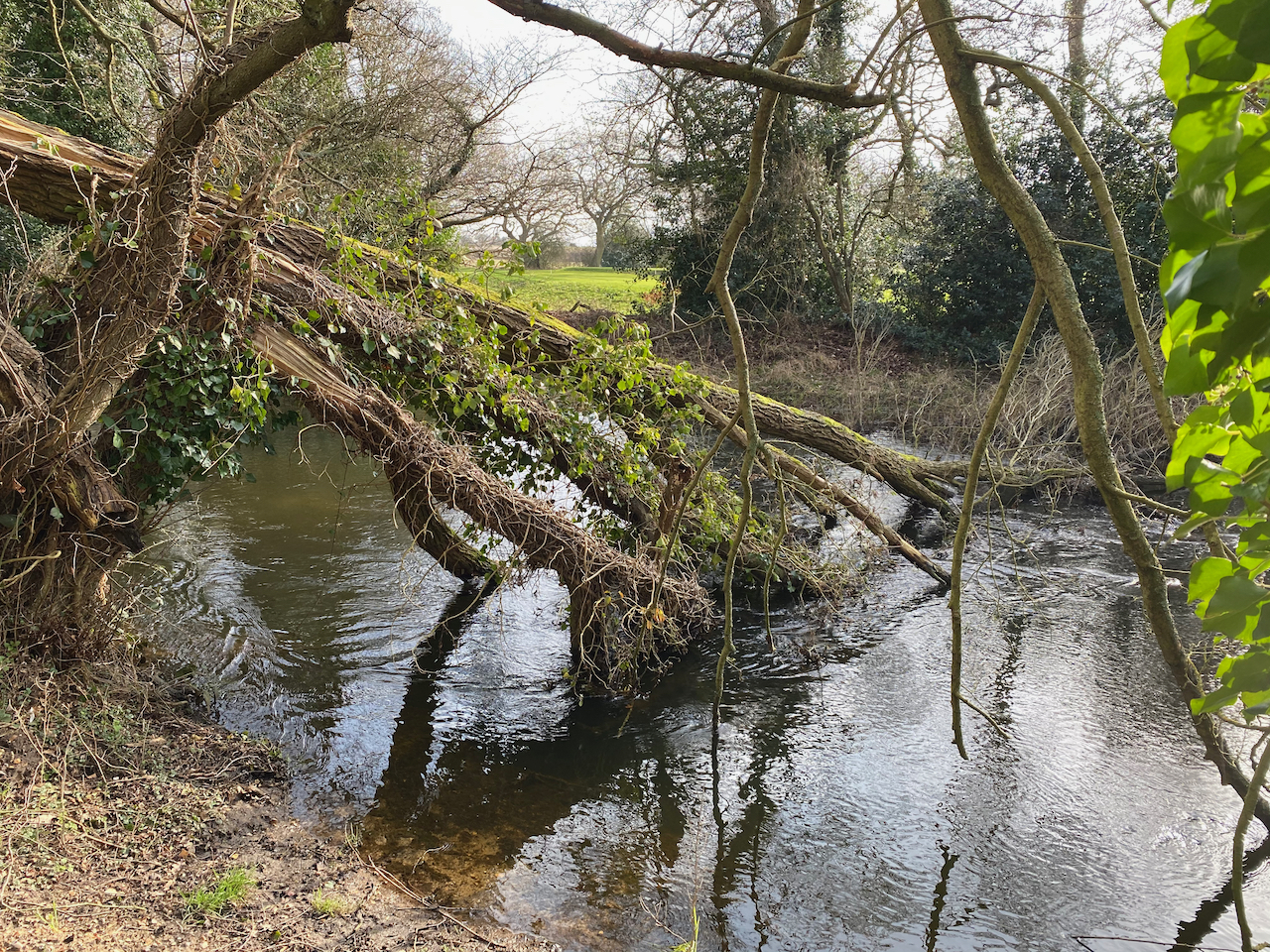
Amazingly, on the River Wensum in this reach, they had been falling in and falling and falling in and no-one had come along all tidy-minded to remove them. And bit by bit the stream was doing amazing things. I walked it in the high flows of the 2020/21 winter and took a load of photographs to record the process.

The top left image shows the river breaking out across the floodplain. The rest of the images are all taken in the woods to the north of the existing channel, and show the start of the process whereby a river starts to reclaim its former, natural pathways … so long as fallen trees are left in the existing channel.

The gallery below shows trees across the main channel which were facilitating this escape. The KEY difference between trees blocking a channel in this way and a flint weir of the type so often installed in well-intentioned “restoration” projects, is that the trees enhance the energy processes of the flowing stream, by creating pinch-points and blow-outs, whereas the gravel bar kills the energy processes by effectively impounding long tracts of the stream: the small energy release that occurs over the installed riffle looks good in photos, but is like lead face-paint to the ecology of the stream.

With all this process-driven self-restoration occurring on an SAC chalk stream, I had hoped the river was being left alone deliberately. I may have been wrong.

Last autumn I noticed works were in progress but was barred from taking a look by Heras fencing and Keep-Off signs. The little I could see through the barriers did not look encouraging. It seemed that the work was driven by the need to repair the footpath, but I could see that a lot of trees were being taken down and stashed untidily on the floodplain beside the raised path.

I went back this morning. The footpath is still “out of bounds” but given that a much more significant crime than trespass was clearly occurring along the river bank – and that lots of other people were also ignoring the injunctions – I walked down to take a look. I could see that some effort had been made to pin a few branches here and there into the edge of the stream. But set beside what had been taken out and – more than that – what could have been done with all the trees now felled and bulldozed out of the way, these efforts were pretty unimpressive. Large tracts of the stream are now wide open and tidy again.

This was mostly ecological vandalism with only a nod in the direction of river restoration or habitat mitigation. The process of self repair has been set back 20 years, sadly. I was a bit heart-bropken, to be honest.

What a missed opportunity! And more than that … what was the point? Did the footpath have to be repaired with enormous machines cutting a swathe through the place and tidying it up like Mrs Mop Transformer?

You say all this stuff about river restoration and everyone nods and sometimes you wonder if anyone really gets it. It’s about PROCESS. So, don’t do stuff that kills process. Least of all on an SAC! FFS.

Whose the beneficiary here … bats and fish, or people?

Sort of trying, in that one limb has been left over the stream … but why remove the lower limb, the one doing all the work?

What purpose was served by the removal of that?

Or that?

Nice and tidy, at least, with none of that messy stuff in the way.

Meanwhile, that flint weir continues its work robbing gradient from hundreds of yards, to spend it all on ten.

So … here’s an idea. Why not do what the Wensum wants to do if only we would let it. Let’s put it back into the blue channel, and for public access create a suspended board-walk that intersects the stream, but doesn’t snuff the life out of it.

Looking for unrecorded chalk streams

(Pictured above: a scarp-face chalk stream in Oxfordshire)

The South East Rivers Trust has issued a call for help in identifying chalk streams in their region. Please have a look at the link HERE.

For other areas, it’s worth noting that Natural England has welcomed this work from SERT, as it specifically works off and feeds into the new, updated NE map that we worked on last year. If you suspect that there are unidentified chalk streams in your region, then take a look at the SERT project or get in touch with them to study how they have run through the process of identifying, checking and notifying.

As SERT points out, while all the “classic”chalk streams are recorded, along the spring-line of the scarp slopes (ie what tends to be the north-east face of the chalk, where it sits on older layers of flint and greensand) there are currently numerous unrecorded chalk springs and rills.

These may even be nameless but are nevertheless ecologically very special. We need to think less in terms of chalk stream catchments here, as chalk spring-lines and their associated habitats.

A well-hidden scarp-face chalk stream near Cambridge

Chalk Streams First response to Thames Water WRMP

Apologies for the delay in publishing this … an oversight. This is the collective Chalk Streams First response to the Thames Water WRMP. It will be quite involved for the lay reader, so read my jargon-busting blog if it helps.

The key point, I feel, is that although abstraction reductions are now on the agenda, they are very much back-loaded towards 24040 / 2050 and beyond: take a look at the chart I have made up on the second page of the letter.

They don’t need to be. We have transfer schemes and ideas like Chalk Streams First that, with political backing, could be unrolled in a much tighter timeframe.

Chalk streams have waited far too long. If you can get your hands on the latest copy of Classic Angling, there is a very moving piece on the River Darent, once a mecca for London’s fly anglers: it makes you realise what we have lost … and what we have so long to wait for to return.

It is true that groundwater abstraction is empirically lower now than in the late 1980s. But we’ve reduced abstraction from such very high peaks, the gains are barely discernible when abstraction still remains far too high.

Jargon busting the Chalk Streams First letters:

I’ve recieved a friendly moan from an old friend that our letters to Water Resources South East (WRSE) and Affinity Water are unintelligible and therefore difficult to support.

As someone who is passionate about using plain English and trying to write simple, accessible prose I feel a bit embarrassed to receive this fair complaint. The submissions were to specialist audiences at WRSE and Affinity and they will be more than familiar with all the contents. But the average chalk stream fan won’t be. So, while I don’t intend to change the letters, a bit more content and explanation may well help you to endorse them.

Water Resources South East (WRSE) is one of several regional groups tasked by Ofwat (the government appointed watchdog of the water industry) with developing plans to build resilience of supply (making sure we don’t run out of water) and environmental protection into our national water-resources infrastructure (the abstractions and pipelines and reservoirs that bring water to your tap) over the next 50+ years.

This is the best opportunity we’ve ever had to ease pressure on chalk stream abstraction.

WRSE has developed a draft regional plan which is out for consultation with the general public: this is where you get a say in the priorities and thinking behind the plan. The deadline for responding to this consultation is the 20th February. LINK HERE.

In addition there are the water company WRMPs (water resource management plans) which deal with the application of the WRSE work in each given water company area. Again, the deadline for responding to the Affinity Water WRMP is the 20th February. LINK HERE.

I won’t deal with everything in these plans, but specific to chalk streams and especially Chalk Streams First (CSF being a proposal to reduce groundwater abstraction in the chalk stream tributaries of the Colne and Lea and take the water from the lower river instead after it has flowed down the chalk streams) the following should help you understand what we have said:

Prioritisation (where abstraction reductions will happen)

The WRSE plan has taken on board our ideas of prioritising abstraction reduction in the chalk stream tributaries. This is good news and we support it.

However, the WRSE “environmental deficits”(ie. the amount of water we should cease taking from the environment) in the most ambitious versions of the planning, are massive: so large it is difficult to envisage where all the replacement water will come from. These deficits have been arrived at through the application of Environment Agency flow targets on every single water body without, thus far, any published detail to draw distinctions between places where the ecological need is urgent and places where it isn’t.

Given that all water comes from the environment somewhere, the problem with this lack of prioritisation is that we could easily end up creating environmental problems in one place whilst trying to fix them in another, or we could end up not fixing them in a place of great ecological importance by protecting a place of lesser ecological importance.

We think this prioritisation has been slow to develop because it is a very difficult decision-making process. It must be done, however, or we will not achieve value for money, or even the right outcomes, in our attempts to restore and protect the environment.

Demand reduction (each of using less water)

Using less water is a really obvious way to ease pressure on the environment. Currently we use at least 33% more per head than we should: 150 litres per person per day versus a target of 100 – 110 litres per person per day. It’s easy to use too much water when you have no idea how much you are using: you just get complacent. On the other hand, incentivising people to use less water is very tricky: you rely on the full time application of a conscientious approach, which is tough to keep up.

Evidentially, by far the best way to get people to use less water is to fit a smart meter to the house: if people can have sight of how much they are using and how much it is costing them, and how much they could save by using less, they will use less. Simple as.

The government has now allowed for the designation of any chalk stream area as “water stressed”: this means water companies can roll-out compulsory smart metering.

We think they should get on with it as fast as possible.

New sources (finding new water)

The WRSE region is especially stressed because there are just too many people versus too few raindrops in south east England.

Whilst smart meters and leak reduction can help address a large chunk of the deficits, the results from both of these programmes are uncertain.

To ease pressure on the environment and address these flow deficits (as above) we also need to find new water from somewhere, ideally without creating another environmental problem in that other place.

Therefore, we believe the best and most certain way to ease the burden on the chalk streams in the WRSE region is to transfer new water into the region. And the best way to do this without creating a flow problem somewhere else is to transfer water that is “going spare”, so to speak.

GUC (Grand Union Canal)

The most obvious and massive source of water that is going spare is the 400 Ml/d (millions of litres per day) that comes from the Minworth sewage works outside Birmingham. Water that currently swells the flows of the Tame well beyond anything that would have flowed down it naturally, because this water ultimately comes from Wales (through Birmingham), where it rains a lot more than in the south east (and where there are fewer people).

There is also an easy way to get some of that water in to our region, via the Grand Union canal, which for Phase 1 (50 Ml/d by 2030) requires only a modest amount of extra work. This is a no-brainer. Everyone agrees it is. And so we support this transfer fully.

We would also like to see Phase 2 brought forward, so that there is less reliance on the uncertain leak and demand reductions. Not that these aren’t important measures, but they are at best, uncertain.

T2AT (Thames to Affinity Transfer)

Another component of these water transfer schemes that could help ease the burden for chalk streams is a pipeline called the Thames to Affinity Transfer, T2AT (aka Supply 2050). This pipeline would allow any recovered flow that comes from a result of dialling down chalk stream abstraction to be captured in the lower catchments and used to supply the places formerly supplied by groundwater abstraction.

Supply 2050 was once called Supply 2040. When we launched the Chalk Streams First idea we asked for it to be brought forward and called Supply 2030. So, moving it back is the WRONG DIRECTION OF TRAVEL and threatens to delay the recovery of the chalk streams by decades.

Therefore we have objected to this and asked for the Thames to Affinity Transfer to be brought forward.

The delay appears to be based on an Affinity Water estimate that the flow recovery from the chalk stream abstraction reduction (how much of the water you leave in the ground which comes back as surface flow) will be only 17% at low flows and during droughts. Therefore, they appear to be saying that we need a large SRO “strategic resource option” like Abingdon reservoir, or the Severn to Thames transfer, to underwrite the abstraction reductions.

Thames to Affinity transfer, therefore, is currently linked to the construction of Abingdon / Severn to Thames.

Chalk Streams First has no problem with either of these schemes, but strongly objects to the idea of linking chalk stream abstraction reduction to them, as it will delay everything.

We don’t agree with the overly precautionary 17% flow recovery estimate. Our own research suggests the flow recovery will be much more like 50%, as it was during the average flow percentiles that existed for the duration of the two worst droughts in the past 100 years (1921 and 1933/34) (these drought are used as benchmarks for planning).

That’s why we have asked for T2AT to be brought forward.

Groundwater Insurance Scheme

Although we don’t agree with the 17% figure, we do accept that there is uncertainty. No one knows for sure how much flow comes back at given times. The best way to insure against this uncertainty is a groundwater insurance scheme.

This is a tried and tested idea: there is one in existence called the West Berkshire Groundwater Scheme. It is used very occasionally (designed for use every 25 years or so) to pump water from the deep storage of the chalk aquifers of Berkshire into streams like the Pang, where it flows down to the Thames and feeds the London reservoirs during droughts, when they are running out of water. It adds 90 Ml/d to London’s supplies. That’s a lot.

But it is a counter-intuitive idea because it involves abstracting from the chalk in a drought!

Huh?!?!

For reasons that I have tried to explain HERE that actually doesn’t take water from the flow at the time, but instead creates a debt to future flows. This is because there is a time-lag between the abstraction and the impact. By the time the impact hits the winter flows would aid recovery.

Besides, you use the chalk streams to deliver the water.

So, the net impact is actually enhanced flows during the drought and lower flows than natural the following year. However, even through the flows would be lower the following year, they would still be much higher than if we carried on with the current abstraction regimes.

In other words the scheme allows you to dial down abstraction to a minimum most of the time, knowing that you have an insurance fall-back to help water supplies in a drought.

Its a total no-brainer in our opinion and we have asked for an urgent investigation into the viability of the scheme in the Colne and Lea catchments if it means we can get on with dialling down groundwater abstraction to the minimum level as soon as possible.

What does rheophilic mean?

rheo = flow / philic = loving.

Salmon, trout, ranunculus, blue-winged olives etc. are all rheophilic. Natural chalk streams have rheophilic ecologies.

But George Orwell would have always written flow-loving in the first place!

I hope all the above helps. Any more questions … just ask!