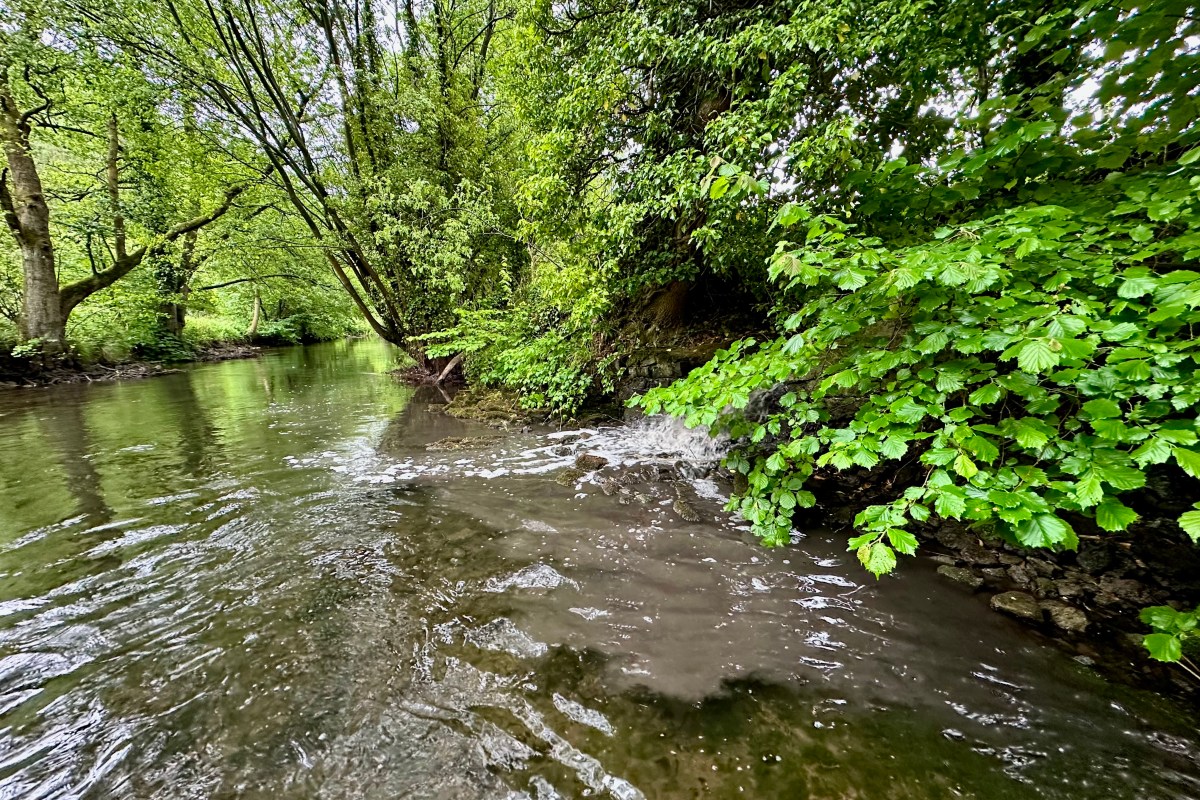
Pictured above: sewage? No. Road run-off from a mid-summer rain-shower.
You may remember Sophia’s petition for the protection of chalk streams, which quite easily surpassed the 10,000 signatories needed to elicit a letter from Defra, if not enough to trigger a debate in Parliament. However, a debate on river health was had recently (29th January) and chalk streams were mentioned several times.
The text of that debate can be found by clicking this LINK
I probably ought to let you all judge for yourselves what it amounts to or signals.
Personally, I have reservations about how easy it is now to dump blame on the water companies. Not that they don’t deserve a great deal of blame, but the parlous state of our rivers is not only down to water company malpractice. Our laws are at fault. Our regulation is at fault. Our pricing of water is at fault. Cheap food is at fault. Highways maintenance is at fault. Flea treatments are at fault. How much water we all use is at fault. Wet wipes are at fault. The ever increasing size of modern tractors is at fault. Our historic inheritance of mills, canalisation and dredging is at fault. The last three, historically the most remote, are in combination with all the above present day ills, the most significant impacts of all and yet receive virtually zero attention. Having said that, Minister Hardy, did at least extol the virtues of re-wriggling rivers.
Capping water company director’s bonuses might well be one in the eye for some of the folk who should be held to account, but I’m not sure it’s going to really do much to restore our beleaguered rivers more generally or chalk streams in particular.
For that we need some forensically focussed realignment of environmental law, economic drivers and regulation aimed not just at the water industry but at all the pressures that hold our rivers back.
There’s much in Minister Hardy’s final statement to indicate a general commitment to the above.
“Restoring the health of our rivers is fundamental to safeguarding nature, supporting resilient communities and securing our water environment for generations to come. The Labour Government are committed to delivering the most comprehensive programme of reform ever undertaken. It involves strengthening regulation, boosting enforcement, investing in innovation, supporting local partnerships and empowering farmers, land managers and water companies to play their part. From national action on agricultural pollution and chalk stream protections, to ambitious local projects in South Dorset, we are driving real, long-term improvements. Together, those measures demonstrate our unwavering commitment to cleaner water, thriving habitats and a healthier natural environment across England.”
The devil is in the detail, however, and in the end it comes down to that which can be quantified. How much less water will be abstracted from our chalk aquifers? By what date? How will we prioritise abstraction reduction so that we don’t repeat the mistakes of the way we have prioritised phosphorus reduction (ie driven by economics rather than ecological benefit)? Where will the replacement water come from? Will we now, finally, incentivise phosphorus reduction from tiny sewage works in headwaters and tributaries? Exactly how will we do that? Will we persuade or incentivise farmers to adopt better ways to keep soil on their land? Exactly how? Will local authorities adopt less damaging practice in local road maintenance programmes? When by? Etc. Etc.
Specific actions. Specific numbers. Specific dates. These are the things we tried so very hard to get into a Chalk Stream Recovery Pack. Without them it’s all so much fish and chips wrapper.
 Chalk-Streams