An ingenious proposal from water-resource engineer John Lawson could restore flows to two of England’s most over-abstracted chalk streams, decades earlier than currently planned, and save billions of pounds in the process. What’s not to like?
Regular readers of this blog will know of the work of John Lawson. He is the brains behind our Chalk Streams First concept for relocating abstraction in chalk streams without waiting donkeys years for expensive infrastructure. John is a very much untapped asset in our national water resource planning. He is a retired engineer – and a very clever one – with a long and celebrated career in the sector behind him. Our problem is that his ideas are counterintuitive and to some degree upset the water industry and regulatory establishment.
The idea I unpack below could be his best yet: it could save a river and save bill-payers billions. It has wider implications too, for chalk streams beyond the Darent and Cray, which I will explore in a follow on post. Surely, this time, John’s ideas will be listened to and acted on?
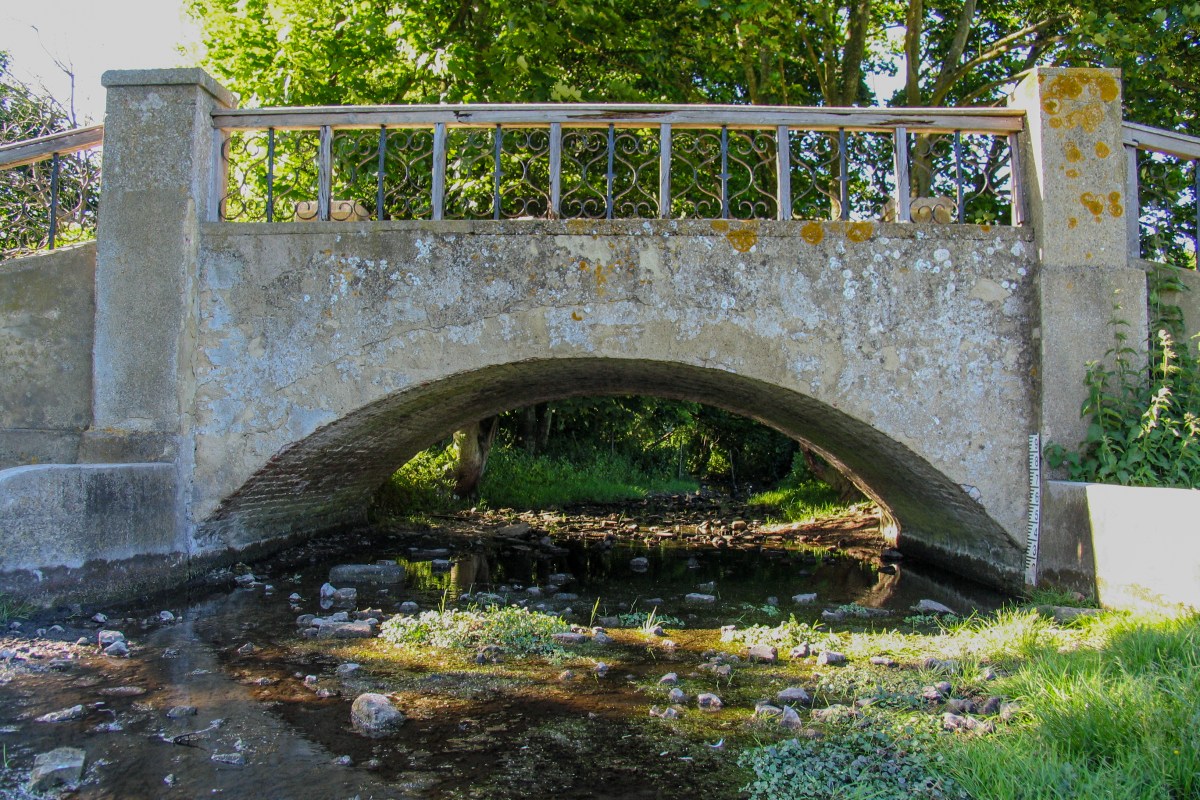
The Rivers Darent and Cray in Kent have the unhappy distinction of being among the most over-abstracted chalk streams in England. More than thirty years after the National Rivers Authority launched its River Darent Action Plan, the two rivers are still chronically short of water. In dry weather, flows can fall to a tenth of what they would naturally be. Parts of the Darent dry up altogether.
This is a tragedy. The Darent was once one of the most celebrated trout streams in the country. Special trains would take anglers from London to Kent for fishing festivals in which thousands of trout were caught. See the Classic Angler feature below. You’d have trouble wetting a line on the river today.
The problem is not a mystery. Far too much groundwater is taken from the aquifers that feed these rivers, leaving too little behind to flow from their springs. There have been some small reductions in abstraction over the years, but nowhere near enough. The amount of water still abstracted from the upper and middle catchments is about 61% of their average annual groundwater recharge.
The water companies and the Environment Agency admit that this is a problem. Their current plans envisage large-scale reductions in abstraction, totalling approximately 158 million litres per day (Ml/d). Sure …. if delivered, these would restore flows in the Darent and Cray to something approaching their natural condition.
That’s a move on from where we were years ago but its still not great because most of these reductions are not planned until after 2050. And if you think they’ll happen then, as planned, you’ve got another think coming.
The water industry argues that it cannot stop taking water from the Darent aquifers until alternative sources have been developed. Much of the replacement supply is expected to come from Thames Water’s proposed £6.6 billion reservoir near Abingdon, in Oxfordshire, together with the pipelines and other infrastructure necessary to transfer water into the Darent catchment.
There is, very plausibly, another better, faster and cheaper way of approaching the problem.
A different solution
John Lawson is a highly experienced water-resource engineer who has worked with Chalk Streams First and numerous local river groups to investigate the impacts of groundwater abstraction. His work on the Kennet, the Chilterns chalk streams, the Ivel and the Tarrant will be familiar to regular readers of this blog.
Earlier this year, John was commissioned by the Darent River Preservation Society, South East Rivers Trust and Darent Valley Trout Fishers to investigate the effects of abstraction on the Darent and Cray and consider whether there might be a quicker, less expensive way of restoring their flows.
His report, Re-naturalising flows in the Rivers Darent and Cray, released to the regulators in May this year (2026), has some striking conclusions.
The most important is that it should be possible to restore the rivers to something very close to their natural flow regimes, in most years, without waiting for Abingdon reservoir or other major new water-resource schemes. The answer lies in something called conjunctive use.
This sounds techie, but the principle is straightforward. Rather than using one source of water continuously, conjunctive use varies the sources we use according to circumstances. Conceptually it is something the industry is actually quite keen on. If anything it is our side, the environmental advocacy side of the discussion, that resist the idea, mostly because the science behind the idea is counter-intuitive. In the case of chalk streams, John’s conjunctive scheme abstracts during a drought!
But stick with me because you’ll get it … Listen to where the water is coming from and when.
London’s water supply comes principally from the Thames and Lee, with substantial reservoir storage to maintain supplies during droughts. For much of the time, flows in these rivers are sufficient to meet London’s needs without drawing heavily upon its reservoir reserves.
Meanwhile, groundwater is continuously being pumped from the Darent and Cray aquifers, even when London has ample surface water available.
John’s proposal is to join these two systems together more effectively.
In normal conditions, water currently taken from the Darent and Cray would instead be supplied from London’s existing water resources. The groundwater pumps would be switched off, allowing aquifer levels to recover and the rivers to flow.
When a drought threatens London’s water supplies, the arrangement would be reversed. The Darent and Cray boreholes would be brought back into operation, reducing the demand on London’s increasingly scarce surface water.
Once the drought was over, pumping would stop again and the aquifers would recover.
In other words, instead of continuously exploiting the groundwater, we would conserve it as a reserve for when it is really needed, during a drought, which is when London’s supply is truly under threat.
This is not an entirely new idea. A smaller conjunctive-use arrangement between London and the Darent was considered in the 1990s, but never significantly implemented. John’s work develops the principle on a much larger scale and tests its potential using detailed modelling of both the groundwater system and London’s water supplies.
What difference would it make to the chalk streams? It sounds like abstracting in a drought could make them even worse? Wrong.
John has developed a version of the Chalk Streams First groundwater model to simulate the response of the Darent and Cray aquifers to changes in abstraction.
The modelling distinguishes between the Greensand aquifer of the upper Darent and the Chalk aquifer feeding the middle and lower Darent and the Cray. It reproduces the observed relationship between groundwater levels and river flows, and its results compare favourably with those produced by the Environment Agency’s more complex London Basin Model.
One finding is particularly important.
During the 1990s and early 2000s, groundwater abstraction from the upper and middle catchments was reduced by approximately 26 Ml/d. Analysis of recorded river flows shows that most of this reduction translated into increased river flow. This is significant because the relatively modest ecological improvements seen since then have sometimes been interpreted as evidence that reducing abstraction does not achieve very much. John’s analysis suggests otherwise. The abstraction reductions worked. They simply weren’t large enough.
His new proposal considers switching 84 Ml/d of existing groundwater supplies in the upper and middle Darent and Cray to drought-only operation. The modelling predicts that groundwater levels would typically rise by about a metre, approaching their natural levels, and that river flows would be fully or nearly restored for most of the time.
Even in significant droughts, when the boreholes would have to be brought back into service, river flows would remain substantially better than they are under the present system of continuous pumping.
After a major drought, the aquifers would take approximately 18 months to recover fully.
There is, of course, more to a healthy river than water alone. Historical modification of the river channels, pollution and other pressures must also be addressed. But a river cannot express its ecological potential without sufficient flow, and the scale of the predicted recovery is considerable.
What about London’s water supplies?
This is where John’s work becomes especially interesting.
Replacing 84 Ml/d of groundwater abstraction in the Darent and Cray with water from London might sound like it would put a substantial additional burden on London’s resources. But it’s a question of when that water would be required.
The Darent would be supplied from London when water was relatively plentiful. As drought conditions developed, the Darent boreholes would be brought into operation, conserving London’s surface-water resources.
Essentially we are dealing with two kinds of water storage: the man-made reservoirs of London and the natural reservoirs under the ground in Kent upon which the chalk streams rely. John’s proposal switches around which type is used when, meaning the rivers get to flow naturally, but London still has emergency storage in the form of the chalk aquifer.
John has modelled this arrangement against the historical operation of London’s water-supply system, including the severe 1933–34 drought.
His calculations suggest that the loss of London’s reliable supply capacity — what water engineers call deployable output — would be a minimal 7 Ml/d. This kind of pocket change can be found under any number of sofas: demand reduction, recycling, leak reduction etc. It is an extraordinarily small reduction in London’s drought-resilient supply capacity compared with the 84 Ml/d of groundwater abstraction that could be avoided most of the time.
The scheme would also preserve the existing groundwater sources as an important strategic reserve. They would not be abandoned, as envisaged under the water companies’ current long-term plans.
This is environmental cake-ism of the best kind. What’s not to like?
Okay, the analysis is early doors. The effects of more extreme droughts, including the 1-in-500-year events against which water companies must now plan (a really stupid stricture, by the way), and of future climate change have yet to be tested fully. There are also practical questions about water quality, engineering capacity and operating agreements.
How much would it cost, and how soon could it happen?
There’s some money to spend. New connections would be needed between London’s supply network and areas currently served by the Darent and Cray groundwater sources, together with improvements to the existing treatment and distribution infrastructure. John reckons that these works could cost several hundred million pounds. But this money would have to be spent anyway to enable the existing longer term plans. His proposal is simply to bring that investment forward.
More importantly, John’s analysis suggests that the scheme could avoid the need for approximately 150 Ml/d of additional strategic water-resource development elsewhere, saving several billion pounds.
His proposal also leaves some 76 Ml/d of lower Darent and Cray abstractions operating continuously, subject to further investigation of their effects on river flows. Because this abstraction is taken much further down the catchment where the water table is more stable, it is probable that the impact on flows is much less significant. Those sources could also be incorporated into the conjunctive-use scheme if necessary.
John proposes completing detailed investigations by 2029, establishing a pilot using existing network connections around 2030, delivering at least half the scheme’s potential by 2035, and completing the full scheme by 2040.
That would bring major environmental improvements forward by approximately fifteen years, and potentially more in the case of a pilot.
Where next?
John’s modelling needs to be tested against the water companies’ own resource models. The effects of lower-catchment abstractions need further investigation, as do the practicalities of switching supplies and ensuring resilience in extreme droughts.
But one of the most compelling aspects of John’s report is that it challenges the assumption that restoring the Darent and Cray must wait for the construction of an entirely new strategic water source, like Abingdon. Instead, it asks whether existing resources could be operated more intelligently. In the existing approach, groundwater is taken continuously from environmentally sensitive aquifers, while new infrastructure is planned to replace it. In John’s approach, the same aquifers become part of the solution, providing valuable drought resilience while remaining sufficiently full to sustain healthy rivers for most of the time.
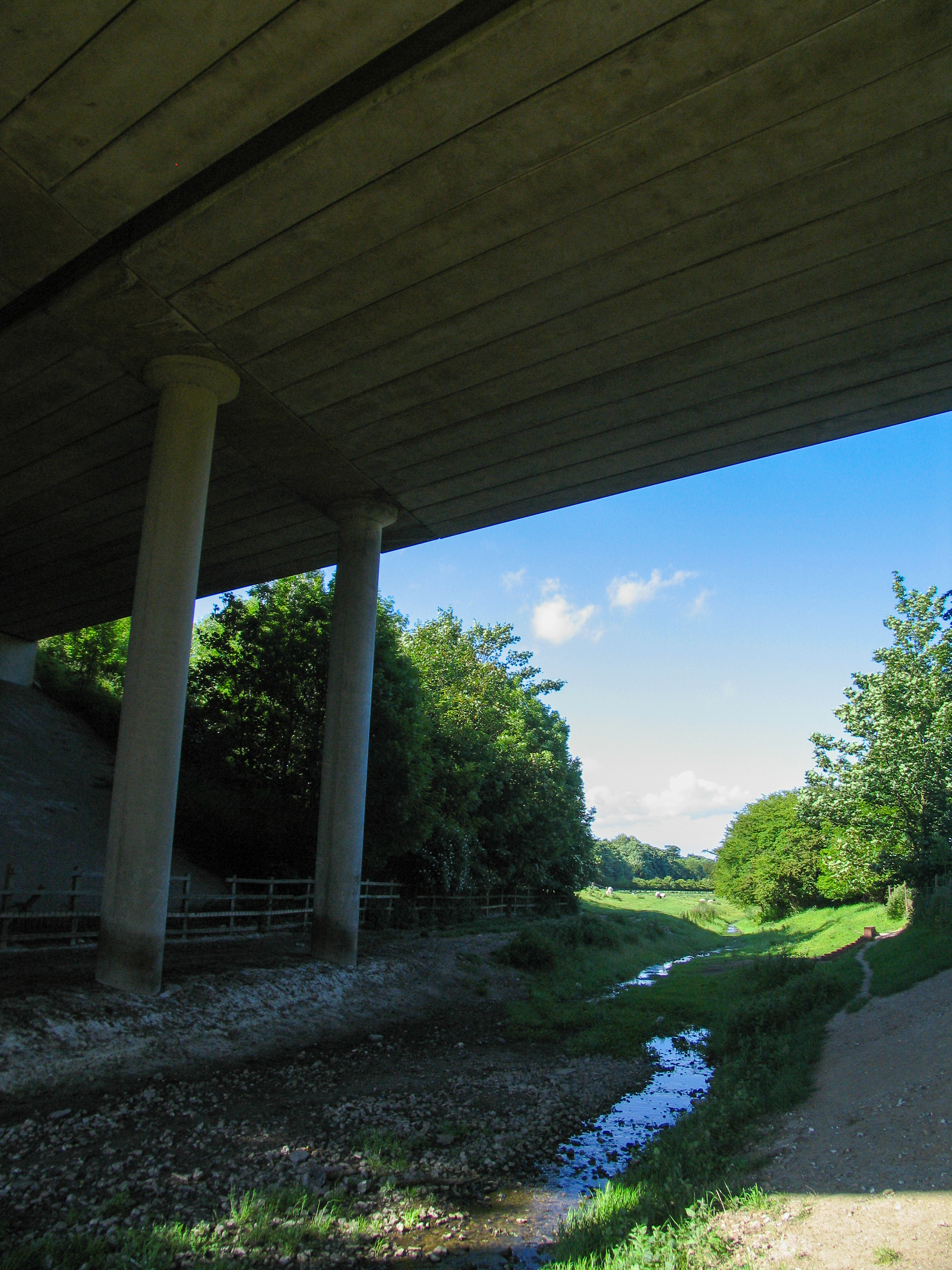
The Darent and Cray have been ruined by abstraction for over 50 years. Why should we wait for many more decades to pass before doing something about it, when an answer is there for the taking? Surely, this is an idea worth formal investigation with some urgency?
I’ll explore the encouraging wider implications in a follow on post.

