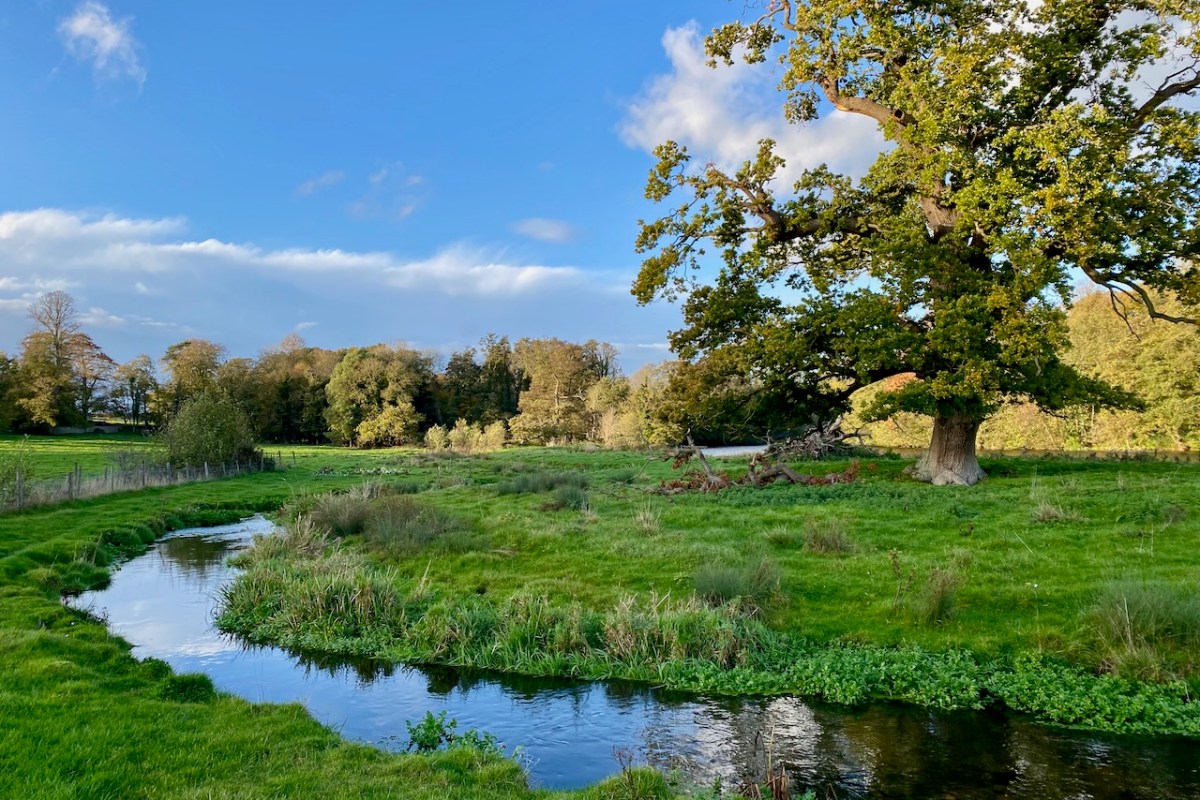
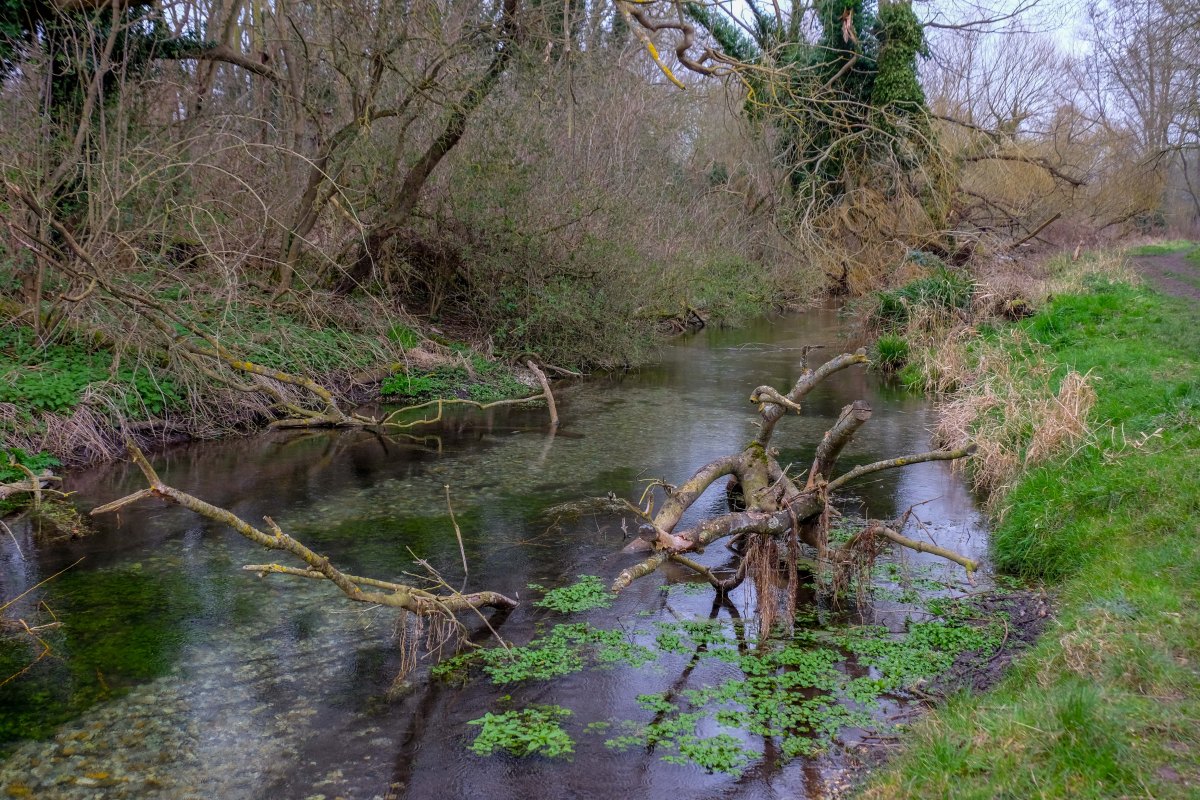
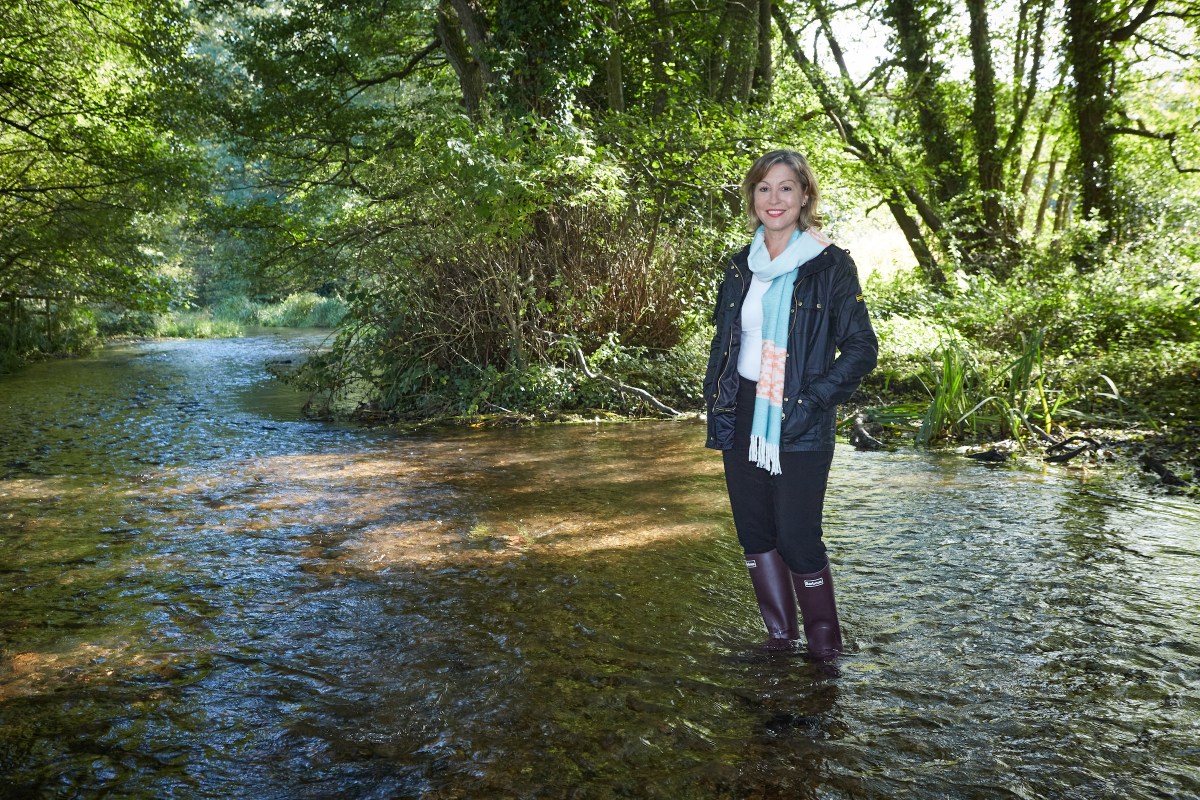
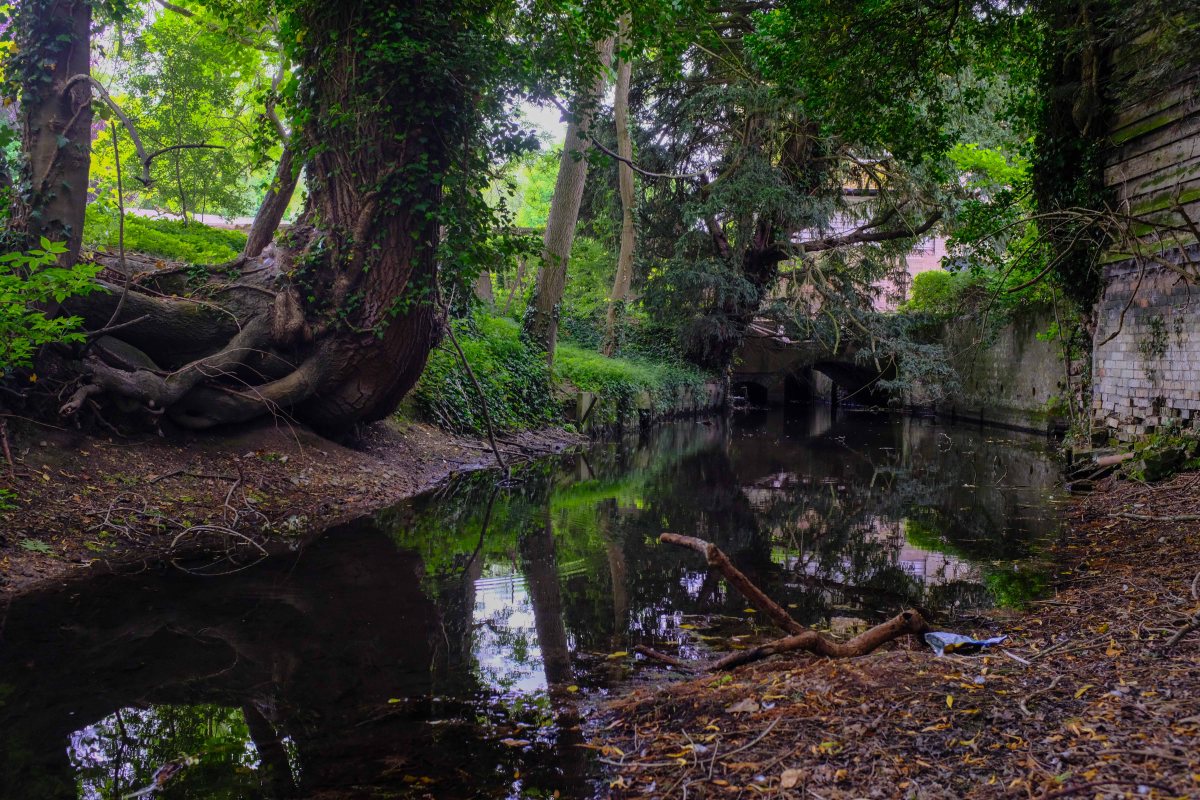
(Above: not so long ago this part of the River Glaven was locked in a tunnel: now look at it! There’s hope for all our chalk streams if we dare to make it happen)
I should have posted this on Friday but I was busy chairing the Chalk Headwaters Conference at Sparsholt and catching up with many old friends from Wessex chalk stream country. My presentation there was on the chalk strategy but also the chalk strategy implementation plan, which was published that day. Please take a look at the new plan HERE.
This plan has been many hours, weeks, months in the making; many phone calls, emails, meetings, consultations and negotiations. It’s not a once-and-for-all fix-all, but I do think it marks a step-change in our collective attempts to restore good ecology to our beleaguered chalk streams.
Not only do we have a consensus plan with consensus actions and timelines, but we have now garnered explicit support from all quarters – regulators, industry and NGOs, and the small-but-becoming-bigger-every-day army of chalk stream enthusiasts – for ideas like the flagship projects, the review of waterbody boundaries & abstraction sensitivity bands, the enhanced scenario for chalk streams in the national framework planning process, Chalk Streams First etc.
It’s great too, to have such supportive statements from the Minister, the Rt. Hon. Rebecca Pow MP, and from Defra and the Environment Agency. And from Ofwat too. These give us real gas in the tank when making the case for all the things we need to do to bring chalk streams back to health, whether that’s abstraction reduction or sewerage infrastructure investment or physical restoration of habitat.
Sadly, we are still not quite there when it comes to the greater and more explicit protected status we all asked for, along with the necessary investment driver. But I still have hope: the changes in government over the summer stalled progress, and it would be nice to think things might get back on track now Minister Pow is in post again. We all know what a difference enhanced status would make, by taking the brakes off investment along the lines established by making chalk stream high priority sites in the stormwater reduction plan.
This implementation plan will be revisited and revised every year, a commitment that I hope will help hold us all to task. So, over the next 12 months, let’s see how far we can get with actually making some of these ideas a reality. I hope, in 12 months time, to see tangible progress with the planning and construction of integrated wetlands, with the agreed level of environmental ambition for chalk streams in the national framework, with Chalk Streams First not only in the Chilterns but elsewhere, with the flagship projects and with the strategic and outcome driven planning of stormwater discharge reduction.
I was very pleased (with thanks to Trevor Bishop, WRSE director) to be given five minutes this morning to talk about Chalk Streams First as part of the parliamentary launch of the WRSE draft regional plan.
Trevor opened the speaking with an encouraging summary of how this plan could be a real game changer in terms of making environment stewardship integral to a more resilient and sustainable water resource infrastructure. As I say below, this is our best chance ever, to build a better system that is fairer to the natural world. And to restore our over-abstracted chalk streams!
It was great to see Sir Charles Walker MP, The Rt Hon Phillip Dunne and Sir Oliver Heald, MP – all stalwart chalk stream supporters over many years. Many thanks to Sir Geoffrey Clifton-Brown MP for hosting, on behalf of WRSE.
You can read the plan and give feedback HERE. Please do take the time to take a look and especially to give feedback ref the importance of abstraction reduction for chalk streams.
There will be a webinar on the 22nd Nov at 1330 to 1500. Register to attend HERE
My five minutes worth were as follows:
“As we plan for the future it’s important to remember the past: the miracle of running water and flushing loos in every home, on the one hand, and on the other the true cost that miracle imposed on the natural world.
In a cupboard in the High Wycombe public library there is a Sanitary Inspector’s report from the mid-19th C on the conditions in which the chair-factory workers of the town were living. Their water came from the stream, over which hung latrines, or from wells in the floodplain, the wells sometimes only a few yards from garden-shed loos, also holes in the ground, shared by forty or fifty people.
Most people were ill more or less all the time: they called it low fever, and thought it came from the awful smell, but it was cholera and it came from the dirty water. The report recommended piped water and a sewage system, but the councillors were concerned about the cost and it took decades to materialise. In fact, the slums themselves lasted until the 1950s when they were finally cleared and the occupants rehoused in airy, council houses on the hills above the town.
In those post-war years the resource of abundant, clean water in the chalk hills under those lofty new houses was nothing short of a miracle. It enabled the re-housing of Londoners bombed out by the Blitz into smart new towns and garden-cities in the Home Counties.
It enabled – and it subsidised – an amazing growth in prosperity and health. Hardly surprising that groundwater abstraction from the chalk aquifer grew almost exponentially in those post-War decades, climbing to a peak in the mid-1980s where in many of the chalk valleys around London over half the rain that fell from the sky to fill the aquifers was taken for public water supply. In dry years an average of half the rain, became all of the rain.
And although the water was free to us, there was a bill: the natural world picked it up. Those lovely chalk streams – a freshwater marvel almost unique to southern and eastern England – ran dry.
For forty years we have wrestled with how to resolve this dilemma: the convenience and low cost of water from the chalk aquifers and versus the ecological impact of drying and dry chalk streams. Round and round we go, sometimes denying the problem, endlessly measuring the problem, but never quite fixing the problem.
Now, through this regional planning process we have the best chance we’ve ever had, and may ever have, of achieving a better balance between the needs of society and those of the natural world.
The potential component of the plan that I’m especially passionate about consists of realigning the way we take water by creating the sort of system we should have built in the first place, if only we’d known.
Instead of taking water from the ground in the headwaters of these lovely chalk streams, we should take it much further downstream, after it has flowed down the rivers and nature has had first use: hence the name of our proposal, Chalk Streams First.
Chalk Streams First is supported by all the major environmental charities – the Rivers Trust, Wild Trout Trust, Angling Trust, the Wildlife Trusts, Wild Fish and WWF – as well as the local environmental groups in the Chilterns and Hertfordshire chalk hills, where the opportunity is ripe for the taking.
Chalk Streams First is a proposal that greatly reduces abstraction pressure without losing the water to public supply: much of the water left in the ground becomes surface flow which can be taken further down the river, placed into storage reservoirs and then used to supply all the places formerly supplied by the groundwater abstraction.
There are potential variations on the theme too: inter-regional water transfers like the Grand Union Canal, or Severn to Thames, could bring water into the upstream catchments, with the recovered flow going on to London.
Groundwater abstraction in the headwaters can be replaced by groundwater abstraction further downstream where there would be less ecological impact.
In places where there is no reservoir, or to get us through 18-month droughts like the one we have just experienced, we could use emergency groundwater schemes and use the chalk streams to deliver the abstracted water to public supply off-takes.
The point is, we can do it: we can have flowing chalk streams and resilient public water supplies. It just requires political will and engineering ingenuity. And while it needn’t cost the Earth, it might just save our piece of it. Please support Chalk Streams First and help us to make it happen … soon.
Thank you.”
Sir Charles Walker, Trevor Bishop and yours truly at the parliamentary launch of WRSE’s draft regional plan.
The South East Rivers Trust (SERT) is doing some work to ground-truth chalk streams in the south east (pictured above is the Nail Bourne, a tributary of the Little Stour). They’ve created a map of the recorded high and low-certainty SE chalk streams and are asking people to feedback on this: https://www.southeastriverstrust.org/help-us-identify-all-south-east-chalk-streams/
This links closely with work I’ve recently been doing with NE to identify all the country’s chalk streams. Even as we finished we were aware that even though we had tried our best to find and identify everything, there were most likely other valuable sites we had missed, especially amongst the more complex network of scarp-face, spring-line streams.
I have already posted HERE about making contributions / updates to the Natural England map. But with SERT collating efforts in their patch, you might also want to take a look at their portal.
I’ve been doing a few presentations this autumn, including at the 25th anniversary of the Chilterns Chalk Stream Project: a fascinating day in St Alban’s with a walk beside the River Ver through Verulamium Park.
To mark the day the Chilterns AONB produced a booklet called Celebrating 25 Years of the Chilterns Chalk Stream Project. There were a few copies in the room and I made sure to keep mine. It includes a fascinating, stream by stream analysis of pressures including some revealing water quality charts which show so clearly how various pressures very between different parts of a given stream and between streams: the impact of the canal on phosphorous levels in the Bulbourne, for example, is clear as day. But it’s more than a techie analysis: it’s very approachable and it also evokes so well how important chalk streams are to this special part of England.
When I mentioned to Kate Heppell how good I thought the book was, she said they had only printed a few copies. Which is great shame. However, it is now available online as a PDF and if I were you I’d download a copy pronto as it is a fascinating read and a fascinating history of the Chilterns Chalk Stream project and all the good work it does.
I’m delighted that on the 12th October 2022 the Rt Hon Rebecca Pow MP managed to raise the issue of ecological protection in parliament – citing chalk streams – making the point that a healthy ecology and a healthy economy are not mutually exclusive, rather they are symbiotic:
“I fully support this Government’s growth agenda, but would the Prime Minister agree that it can be achieved while also protecting and restoring our precious nature and ecosystems and working with our farmers, so that we meet our legally binding target to restore nature by 2030? I know she understands that; she has precious chalk streams in her own constituency. Will she agree that, if we get this right, there will be more jobs, skills and opportunities, because every nation in the world depends on its natural environment?”
I’m delighted also that the Prime Minister’s response was emphatic and in agreement:
“My hon. Friend did a fantastic job promoting the natural environment when she was at the Department for Environment, Food and Rural Affairs. We are going to deliver economic growth in an environmentally friendly way. This is about improving the processes and delivering better outcomes for the environment while making sure we have a growing economy as well. Those two things go hand in hand.”
The Chalk Streams First idea, for example, is a wonderful opportunity to place an iconic ecological project at the heart of a national grid for water. Ecology and the economy together.
I have sent the letter below to all those who have corresponded with me over the chalk stream restoration strategy, but just in case I missed anyone or you are not on the correspondence list …
One can’t help but be concerned at the news this morning that the new-look government is planning a review of ELMS, the UK farm subsidy scheme which will replace the EU’s CAP, “given the pressures on farmers, and the government’s aims of boosting food security and economic growth”.
Although a lot of good work has gone into ELMs nothing is beyond review, so this may not be the de facto existential disaster many conservationists are predicting. What is frustrating however, is the endless framing of this conversation about farming and nature as a binary choice between economic growth and ecological protection.
Both sides – if I can put it that way – are to blame for this. Conservationists too often make excellent the enemy of the good. Threatened by what they see as impractical, idealistic environmentalism, farmers can be reactionary and unwilling to take on new (in fact, old) and practical ideas about land husbandry.
It doesn’t have to be one or the other!
It is in fact perfectly possible to farm in a way that leaves space for nature, or to put it the other way round, it is perfectly possible to make space for nature whilst farming profitably and providing an invaluable service to society. (Jake Fiennes’ new book Land Healer is all about this pragmatic, conservation-minded farming: exactly why I was very pleased when the NFU asked Jake to represent farming on the CaBA Chalk stream restoration strategy panel: in fact his book wasn’t out when we developed the strategy, but I had met Jake and our ideas clicked.)
That’s also why we’ve been trying to develop / evolve, from the CaBA chalk stream group, a simple set of recommended rules for farming in chalk landscapes which we will put to Defra in mid November when we launch the implementation plan for the chalk strategy. With a review on the horizon, this could be timely.
Background
The CaBA chalk stream restoration strategy, published in October 2021, included a number of recommendations for simple rules for farming in chalk catchments.
The idea was to propose to the teams developing ELMs a small number of rules and incentives that would be:
• easy to follow
• effective
• practicable
• and would not adversely affecting the profitability of the farm business
The reasoning was that a good combination of the above would generate much higher take up and could be easily be regulated. I live in the countryside. I know many farmers. I know many chalk streams and I have practical experience of the impacts farming has on those chalk streams. I am sure that most farmers would be more than amenable to simple, practical ideas that help chalk stream to flourish, so long as these ideas are grounded in the practicalities of farming and of trying to make a living against the headwind of all the bureaucracy and diverse pressures farmers are under.
As chair of CaBA chalk group I was recently invited to sit on Defra EEG+ working group meetings and the Water theme for SFI and ELM. So, I decided to try and improve the first set of ideas via a series of meetings but with farmers and land managers driving the discussion. My plan was to take these ideas to the Defra meetings, backed with the expertise of the farming community.
Thus far we have had one meeting with a number of farmers in Norfolk and I now have two more booked: in Wessex on the 12th October and in the Chilterns on the 26th October (organised with the help of the Wessex Rivers Trust and Chilterns AONB respectively). I’d also be very keen to hear from other farmers and would be happy, if time permits, to hold an online meeting as part of this process. Get in touch if you’re interested. Although I can’t say how influential the ideas will be, the more that farmers contribute to and shape them the better.
In chalk catchments even a small area of land – if not well managed – can provide a very large problem via run-off pathways such as the road network: this picture is from the Wissey valley in May 2021 (there is a much broader buffer on this field now!).
Focussing on sediment run-off and chalk streams.
The impact of farming on water quality in streams is a potentially complex area but I want to focus on sediment in chalk streams because sedimentation has a very big impact that could be largely addressed with some very simple interventions.
Chalk streams in their natural state are ‘gin clear’ with very little sediment, clean river gravels and low nutrient levels: all of which is important for the ecological health and abundance of the species of plants, invertebrates and fish typical of chalk streams.
Our modern landscape, however, and the way it is farmed and developed, generates a lot of sediment run-off. And chalk streams being such gentle rivers have very limited flushing capacity. Many of them are modified by weirs and mills and denuded by abstraction which only makes all of this worse. In short, sediment gets into the river and it can’t get out, causing a significant negative impact on the ecology, by swamping out and homogenising habitat, filling the spaces in the gravel bed, or cloaking the bed of the river in particulate matter to which are attached phosphorus and all sorts of other toxic chemicals.
A 2005 English Nature Geomorphological Appraisal of the River Nar included a really good study of the ways sediment runs from farmland into a chalk stream. The report showed that fine sediment comes from:
• Arable fields – especially when they are recently ploughed.
• Pig units – there were increasing numbers in the valley, at the time (there are still many) some on steep land, close to the river.
• Road-side verges – especially when they are crushed each winter by farm vehicles too large for the roads they are driven down: this is a worsening problem.
• Dirt tracks – especially where these join up with the road network or run directly to the river.
• Aggregate works – from the exposed landscape around the works and from the road network servicing the works.
And that sediment enters the river via:
• Road crossings – where road drains discharge into the river.
• Footpaths, tracks and fords – where they cross the river.
• Intersections – of the dry valley network with the main river.
• Drains and ditches.
• IDB pumping stations and drains.
• Tributaries.
The important thing is this: in a chalk landscape points of sediment ingress are quite localised, but the area of origin can be broad. This is the case on most chalk streams, though the mixed geology chalk streams do get more surface run-off and chalk streams with livestock which graze to the river’s edge will also acquire sediment from damaged river banks. Urbanised chalk streams will also receive more diffuse surface run-off.
CaBA CSRG recommendations for farming rules in chalk catchments – DRAFT
Based on the above we have developed a set of simple rules / recommendations that could make a massive difference and which wouldn’t have to negatively impact the farming business. Sure, they’re are bit more bother than no bother at all, but there’s no real reason why these ideas couldn’t be adopted.
It’s also worth saying that there is an enthusiasm amongst the farmers I have spoken to for a level playing field: there is real concern and frustration expressed by farmers who go to extra effort to do the right thing only to find a neighbour not bothering. Therefore the idea of some very basic but compulsory rules appears to be well supported.
These ideas, as said, will be refined over two further meetings before being submitted by CaBA CSRG to Defra.
Basic rules
Compulsory basic standards for all farms in chalk catchments (could be trialled in the first instance via the CaBA CSRG flagship catchment restoration projects?)
• A farm-based site-specific soil and run-off audit and risk map, focussing on topography, gateways, and pathways from field to stream
• Compulsory buffer strips at high-risk leakage points (lateral width based on scale of risk according to the audit) designed to minimise escape of sediment on to pathways that lead to a chalk stream
SFI
As above plus …
• potentially higher impact farming such as outdoor pigs, carrots, parsnips, beet, maize, asparagus and potatoes: a 10-metre buffer around the full the perimeter of the field, but wider (up to 25 meters, say) at high-risk egress points (based on scale of risk according to the audit, while the areas of greater width can by offset by a commensurate area reduction along the low-risk boundaries)
• cover crops on maize fields (especially on sloped land)
• for outdoor pig units, a grass ley should be established before pigs are turned onto the land. Pig units should also not be sited on sloped fields or where the topography might increase the risk of run-off
• for other arable crops a 5-metre buffer where cultivated land runs alongside any ditch which leads to a stream, widening to 10-meters where cultivated land runs alongside any chalk stream itself (note that buffer strips preclude fertilisers, manures, pesticides, livestock)
• noting that later versions of SFI will include capital grants, recommend capital support for the relocation of gateways and crop pads from the high-risk locations as identified in the audit to lower risk sites
• adapt plough or cultivation patterns to minimise run-off in the infield high-risk areas as identified in the audit
• cover crops over all infield high-risk areas (based on levels of risk not just % of coverage)
• permitted crop-lifting and muck spreading periods set by a red / green traffic-light system based on localised 5-day weather forecasts? This system is used in Canada.
Local and Landscape Nature Recovery
Ideas to be developed could include:
Infield
• cover crops 75 – 100%
• zero or minimal till 75 – 100%
• infield grass buffer strips running perpendicular to slope
• green swales runnings through field dips
• restoration of hedges, especially those running perpendicular to slope
• restoration of woodland
• restoration of ponds
Riparian and in-river for higher level offers
• restoration of lateral connectivity between the chalk stream and floodplain designed to allow riparian & floodplain inundation above Q10 flows (for example): this should be achieved by restoring natural river bed to floodplain ratios (ie by infilling dredged stream beds) and NOT by impounding the stream
• restoration or recreation of lost or relic meanders patterns
• restoration of spring-line calcareous fens and flushes including infilling or blocking historic drainage and ditching networks
• restoration of wet woodland and riparian meadow by stepping back farming – except extensive grazing by suitable livestock – from the edge of stream
Note: throughout the discussion the group returned again and again to the need for chalk stream farming advisors to work with farmers on everything from the run-off risk mapping to the development of restoration ideas / opportunities. This is something that could be rolled out via the CaBA flagship restoration projects via the river trust network?
Incentivising hard to reach growers to support Local and Landscape Nature Recovery:
It was recognised that for proposals to have greatest impact they must be widely taken up across catchments. Collaboration was a common theme during the meeting, and farm clusters were identified as a potential mechanism to drive collaboration and engagement. A suggestion was put forward that payments for carrying out the proposed actions could attract a premium if they were obtained via a cluster group or similar (or standalone) initiative. However, this might not be feasible in areas where no cluster groups exist, putting some farmers at a disadvantage. It could also present new problems / cost / administrative burden?
Our new Prime Minister mentioned chalk streams at a hustings in Cheltenham earlier in the summer and in yesterday’s Daily Telegraph she cited a problematic lack of investment (which she aims to change) in large infrastructure projects such as reservoirs.
All this is good news, suggesting the new look government will take seriously the protection of our precious chalk streams and not make the mistake – as has often been made in the past – of regarding economic growth and ecological protection as mutually exclusive. Chalk streams have been waiting a long time for the protection and investment which is due if we are not to continue as dreadful hypocrites, unable to look after the natural wonders on our doorsteps.
Yes indeed, we need reservoirs: in the Fens and Lincolnshire, in Kent, Hampshire and the Thames basin, reservoirs would facilitate schemes which could protect public supply and ease the burden of over-abstraction – and this year must surely have shown what a burden it is. But it is worth remembering how long it takes to navigate the inevitable public enquiries that surround reservoir schemes, let alone build them. If we rely on reservoirs alone, we will be waiting a while. I photographed the bone-dry River Beane (above) in 2007, 2017 and now again in 2022 and I’m not sure how many more times I want to do that.
To deliver an effective, simple scheme guaranteed to build resilience of supply and to facilitate the ecological restoration of our precious chalk streams, our new Prime Minister, the new-look government and the new environment minister should (as well as lighting the touch paper on longer-term planning) urgently catalyse a more timely suite of schemes along the lines of a national grid for water resources. Below is a short paper which I hope may have found its way to a desk at Defra. If not, I post it here, just in case …
A national grid for water resources.
The restoration of chalk streams around London should be the ecological flagship at the heart of a more fundamental reform of water resource infrastructure in England and Wales and the creation of a ‘national grid’ for water supply which imposes inter-regional transfers onto our currently siloed and fragile supply network.
The south east of England has a high (and growing) population and a comparative shortage of water, especially in drought years.
The south east is currently dependent on reservoirs filled from the River Thames and groundwater abstraction from storage in natural aquifers.
However, the Thames reservoirs cannot be reliably refilled in dry winters. This runs counter to the mistaken popular perception that we only need to build more storage: there is already more storage than supply in the south-east during the problematic 18-month droughts, which include dry winters.
Groundwater aquifers, on the other hand, are already over-developed and the degree to which they are exploited causes significant ecological damage, particularly to chalk-streams, many of which are currently dry or very low (August 2022).
Fundamentally, the South East of England needs “new water” because not enough falls from the sky relative to the number of people and the needs of an already damaged environment.
By far the quickest way to achieve this is through inter-regional transfers from wetter and less populated parts of the country. For example, average annual rainfall per capita in the south-east of England is a fifth of that in Wales (assuming SE England = 19096 km2 / 800mm ave rainfall / 9.2 million people and Wales = 20779km2 / 1500mm ave rainfall / 3.2 million people).
The potential of inter-regional transfers (to supply water to the south east from Lake Bala in Wales) was first proposed by a Hertfordshire miller, John Evans, in the 1870s. It resurfaces as an idea every time there is a severe drought and then gets forgotten again till the next time.
More recently, however, the need for inter-regional transfers was firmly identified in the 2016 Water UK report: ’Water Resources Long-term Planning Framework’.
The role of inter-regional transfers is now a key component of the emerging National Framework for water resources and specifically WRSE’s draft plan which proposes that inter-regional transfers are used to move water from the wetter west to the dryer south east, including options such as Severn to Thames Transfer, repurposing the Grand Union Canal to transfer recycled water from the River Trent to the South East as well as potential options for transfers from the west country.
However, the National Framework timetable proposes that water demand management (water efficiency and drought measures) and leakage reduction will close the largest part of the supply demand imbalance through to 2050.
Shrinking demand through water efficiency is a vital measure, but offers uncertain results, while the already existing shortage of naturally available water in the Thames valley (as evidenced by the current drought) will become more pronounced if demand grows or if demand management proves a hard nut to crack.
Delaying the use of inter-regional transfers until after 2050 also delays the restoration of flows to the chalk streams which depend on over-exploited aquifers (and thus risks more and more headlines about dry rivers).
Severn to Thames Transfer
A transfer of water from the River Severn to the River Thames could yield in the order of 100 Ml/d, (in itself enough to restore close-to-natural flows to all the Chilterns and Hertfordshire chalk streams) requires zero inter-company trading and is deliverable in the short term.
With support from Vyrnwy, the Severn-Thames transfer could provide up to 500 Ml/d of yield for Thames Water and other water companies in the South East.
The draft WRSE regional plan indicates that the Severn to Thames transfer could potentially be implemented by 2033.
Minworth and the Grand Union Canal
A complementary option that amounts to the same principle of moving water from Wales to the south east involves the recycling of highly-treated effluent from Birmingham’s Minworth water recycling centre, transferred to the WRSE region via the Grand Union Canal.
The Minworth GUC transfer has a potential yield of at least 100 Ml/d (potentially higher given the dry flow from Minworth is 420 Ml/d) via the Ground Union Canal.
The draft WRSE regional plan indicates that the Minworth GUC transfer could potentially be implemented by 2035.
Both of these options bring new water into the south east region and would allow ALL of the abstraction reductions needed to restore naturalised flow to the iconic chalk streams of the Chilterns and Hertfordshire.
Chalk Streams First
These abstraction reductions in themselves also – counter intuitively – offer water resources options because they do not involve a total net loss to supply. A drastic reduction of groundwater abstraction in the chalk hills would allow groundwater levels and thus river flows to recover: in the Chalk Stream First scheme the aquifer remains a “reservoir of water” while the means of delivery becomes the chalk stream itself, with water taken for lower down the system after the natural eco-system has benefitted. Hence chalk streams first.
The flow recovery brought about by abstraction reduction is another strategic resource option amounting to approx 80% of the abstraction reduction averaged across the full year (flow recovery is lower in summer than winter, ranging between 30% and over 100%), using the London reservoirs as storage, and the Supply 2040 pipe network to return water to those places formerly supplied by groundwater abstraction.
Chalk Streams First +
Moreover if the problematic groundwater abstractions in the chalk tributaries are wholly or partly replaced with groundwater abstractions in the lower valley (an idea added to the proposal by Affinity Water) where they will have a much lower ecological impact, then there is no net loss to supply and ALL of the surface water flow recovery becomes available as “new water” in the same category as the STT and GUC water. This could yield up to 80 Ml/d averaged through the year.
Chalk Streams First offers the opportunity to put a flagship ecological restoration of England’s iconic chalk streams at the heart of the development of a national grid for water, and inter-regional water supply infrastructure which would, for the first time in history, move water from the wetter west and Wales, to the overstretched and dry London and the south east.
An awkward one this as it features yours truly moving his arms too much, but this is a film of our River Nar project made for the Norfolk Rivers Drainage Board and the River Restoration Centre 2022 river prize, for which the project was shortlisted.
The film was put together in only a few days by my son, Patrick, using his own interview footage and also footage very kindly supplied by Chris and Leo at chalkstreamfly and by Peter Christensen of Oslo University who has been studying chalk streams and their socio-environmental space (watch this space for Chris and Leo’s upcoming film for which this footage was shot).
Patrick – a film-production graduate – is looking for voluntary or professional projects at the mo and so if your trust or group would like help with an audio-video or photographic production project, drop him (or me) a line. A short film can do wonders to raise awareness for your local chalk stream.
Note: this blog is critical of the way WFD assessments have been applied on the upper River Ivel. It’s no secret that I think this WFD assessment process needs to be improved. Too many headwater chalk streams are effectively unprotected by what should be a powerful statutory driver. The criticism is meant with the best of intentions, however, and I hope it will be taken in that spirit.
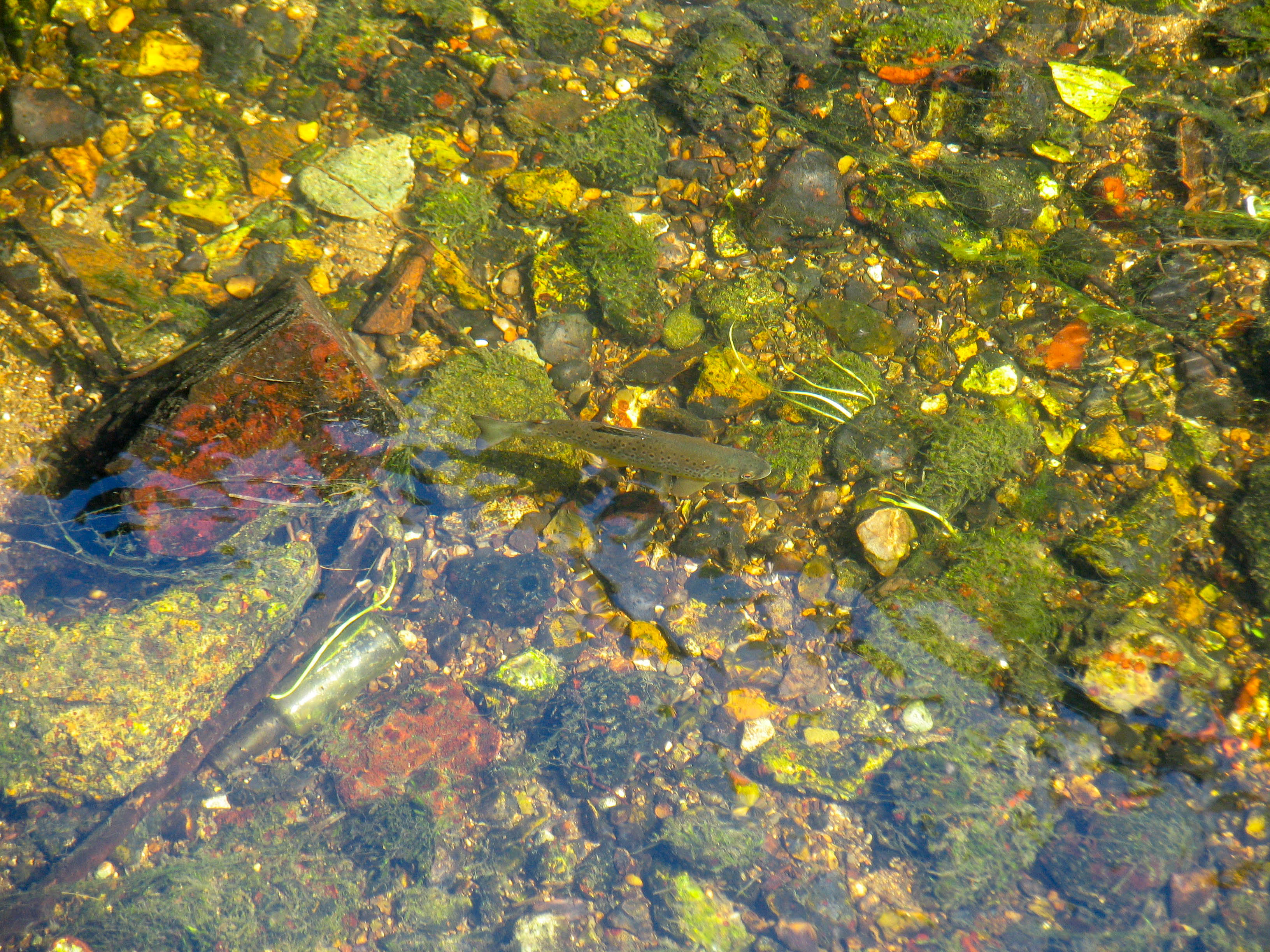
Although I have driven across its aquifer countless times on my way from London to Norfolk, until recently I wasn’t that familiar with the River Ivel, or the several chalk streams around it that form the Ivel’s headwaters: the Hiz and Oughton, Purwell, Pix Brook and Cat Ditch. I stopped there once, in 2005, to take a few photographs for my anthology on chalk streams and managed to get the snap below of a small, wild trout near the springs of the Oughton. So I knew that these were chalk streams and that they held trout. And I also knew that they were, like many East Anglian streams, easy to pass over, unknown and perhaps unloved.
But not universally unknown and unloved. Not at all. More recently, whilst putting together the CaBA chalk stream strategy I corresponded with a band of people who cared deeply about their local stream (or rather, the lack of it) and who had for years been railing against its condition as a river action group called RevIvel.
The River Ivel, they claimed, was now a shadow of the river that it should be. It was being abstracted, to the point that it barely flowed. And yet the Environment Agency seemed relatively deaf to their concerns, while Affinity Water claimed that this wasn’t true, that the groundwater abstraction, such as it is, does not reduce natural flows in the River Ivel.
Last November Revivel invited me to sit in on their virtual AGM. I listened with growing dismay and sympathy, to a familiar tale of hair-pulling frustration as the group recounted the minutiae of their efforts to get their case taken seriously. I didn’t say much and I can’t remember exactly what I did say, but I guess it would have along the lines of advocating what I try to do when tilting a lance at those windmills of bureaucracy: get seriously forensic, arm yourself with data (they’d done a lot of this already) and tirelessly pick apart the inconsistencies that have allowed a priority river habitat to not actually exist as a river.
All okay advice. But I also suggested they pick up the phone to conservationist and technical consultant, John Lawson, and ask him to do an independent analysis of the abstraction in the catchment, because with that they would have a much stronger case. That was the really useful bit.
Until now the ‘science’ of analysing the impact of groundwater abstraction on chalk stream flows has been rather one sided, to say the least. Water companies have claimed over the years (not quite so much any more, I’m happy to say) that groundwater abstraction doesn’t reduce surface flows, and that the passage of water underground and its interaction with surface streams is of such unknowable complexity that only expert hydrogeologists can understand it.
Common sense might suggest that if a catchment can be seen as some kind of basin with a boundary, an inflow of water and an outflow (which it can, in fact), then if you add another form of outflow the former outflow will reduce, about as surely as an apple hitting the ground when it falls off a tree. But I and many others have succumbed to cognitive surrender when arguing with experts about this: defeated by befuddling terminology, incomprehensible maths and the problematic fact that we can’t see underground. Although it must be a tempting tactic to impose cognitive surrender on the layperson in the street who is wondering where his or her river has gone, it is surely also a self-defeating one. They might not have beaten your argument, but they’re still angry and suspicious. And they don’t go away.
The CaBA strategy was all about building bridges across this divide, because we’ll only really restore our chalk streams if we all honestly acknowledge what’s wrong with them and work together – river lovers and water companies, regulators and NGOs – to fix them. Recommendation 5, in the CaBA Chalk stream strategy advocates the evolution of a collaborative approach towards knowledge-sharing when it comes to assessing and managing the impact of abstraction on stream flows. Water companies and the EA should share what they know and their data, while stakeholders should be allowed to contribute to the debate at a technical level, instead of just railing outside the door with pitchforks.
This is where it is jolly useful to have a John Lawson on the team.
John has now completed his survey and analysis of the River Ivel, and although it does make for some uncomfortable reading (I think the case of the Ivel may be about the best (best as in worst!) example of how a muddle in the Water Framework Directive assessment can have disastrous knock-on impacts), I think it also marks the first and thus a very important step in this attempt to democratise knowledge and move forward together.
John’s survey has revealed that in terms of groundwater abstraction as a % of the natural recharge of the aquifer (A%R), the upper Ivel is among the most heavily abstracted chalk streams in the country, with 50% of the rain that reaches the aquifer taken by groundwater abstraction. Only a few other chalk streams, like the Darent, or upper Lea, are in that territory. It is hard to imagine this isn’t having a major impact on flows.
In other work, John has already demonstrated the close, mathematical relationship between groundwater levels and stream flows, with a highly predictive formula that equates stream flows to the height of the groundwater above the stream bed at the point of assessment, and the v-shape of a river valley: because as groundwater levels rise, not only do the springs flow faster and faster (because of increasing groundwater head), but also, because of the shape of a valley, a proportionately greater and greater surface area is exposed to the saturated zone of the aquifer.
The Lawson formula therefore is Q = aH2.5. (I have looked and looked but I cannot find any version of this formula in groundwater literature, although it is linked to an important part of Theis’ foundational groundwater paper of 1940, where he wrote that a new ‘development’ (an abstraction) from an aquifer must reduce former outflow and that the only way this can happen is by a ‘reduction in the thickness of the aquifer’. Note that in America, where much of the hydrogeological science comes from, many aquifers are not V shaped.)
I like to write equations in prose because then I understand them. In English therefore, the Lawson formula shows that (in a chalk valley): “flow equals the height of the groundwater level above a given point in the stream, multiplied by a constant (which accounts for the properties of the chalk), multiplied by 0.5 (to account for rising head / gravity) and squared (to account for the v-shape of the valley).
John’s formula fits every chalk stream he has looked at, including the Kennet, Tarrant, Test, Misbourne, Ver and now the Ivel. It is quite compelling therefore.
The question then becomes: has groundwater abstraction on this scale lowered groundwater levels in the Ivel catchment?
John’s lumped parameter model simulates changes in groundwater levels and flows. It gives a very good fit between recorded and modelled output on all those rivers mentioned above, now including the Ivel and it suggests that groundwater levels are between 4 to 6 meters lower than before groundwater abstraction began. Interestingly, the Environment Agency figures back this up.
As does historical research carried out by RevIvel and incorporated into John’s report. Data from the Royal Commission into Metropolitan Water Supplies in 1893 (which recorded the depth of water in wells in the valley) suggest that groundwater levels at that time were about 3 to 6m higher than recent groundwater levels.
The existence of 19th century functioning water mills at Blackhorse Mill and Norton Mill, the commercial water cress beds at Baldock and a trout hatchery and fisheries at Norton suggest that the Ivel Springs and Nortonbury Springs would once have flowed perennially – which they don’t now.
Meanwhile long-term rainfall records cannot account for these changes: winter rainfall has – if anything – increased, albeit the catchment may well be less absorbent than once it was.
All this adds up to a large reduction from natural flows according to John’s way of assessing the link between abstraction, groundwater levels and flow: the current abstraction of 13 Ml/d, accounts for an average flow loss over the full year of 11 Ml/d (85% of the amount abstracted), albeit the loss of flow as a % of the abstraction is much greater at high flows than low: over 100% at high flows, more like 45% at low flows. Read the Lawson formula carefully and you’ll see why in the part that represents the shape of the valley.
I have to say, for the sake of fairness, that Affinity Water (AW) has a different way of looking at this. Based on data collected during switch-off tests, AW argues that the cessation of abstraction appears to have only a very small impact on flows. They have concluded that the presence of semi-permeable layers in the chalk impedes the connection between the deeper, confined aquifer (the part under the semi-permeable layer from which AW abstracts water) and the unconfined aquifer (the uppermost layer of aquifer which is directly in contact with the stream).
John argues that the switch-off tests were not nearly long enough and only ever happened one at a time: so it would be impossible to discern any difference in flow because the tests could not have made any difference to regional groundwater levels away from the cones of depression around boreholes. Abstraction would have to cease altogether for about 18 months and we would need a good recharge of rain to rebalance groundwater levels in the aquifer.
Incredibly, at the that heart of this is a diversion of opinion over what actually causes flows to diminish as a result of groundwater abstraction. John, as explained, argues that groundwater levels across the whole valley are the fundamental driver, and that the cones of depression around boreholes cause only localised, smaller-scale impacts, separating the stream-bed from the water table, for example or lowering / inverting the groundwater gradient at the stream edge within the radius of the cone.
AW and, as far as we can tell, much of the expert community, sees the cones of depression as the fundamental mechanism that reduces flows: thus AW has argued that when these cones of depression have filled in – as they quite quickly will during switch-off tests – that dynamic-equilibrium (the balance of the water table between inflows and outflows) in the aquifer is re-established.
Dynamic-equilibrium is when outflows balance inflows over time. It can be a ‘natural’ dynamic equilibrium, or an ‘unnatural’ one. Add abstraction to a virgin aquifer and the equilibrium will be upset for a while (meaning outflows exceed inflows), until groundwater levels reduce, and thus the former natural outflows reduces and then you are back to a state of equilibrium, albeit an ‘unnatural’ one (see my previous post on the bucket aquifer and you will understand this, if you don’t already).
Cease abstraction at a given pump and – as John would argue – of course the cone of depression will fill in. When it has, that is conspicuously not the same as ‘natural’ dynamic equilibrium. What is happening to the water no longer abstracted? It’s not yet discernible in flows because it hasn’t yet lifted groundwater levels: it’s still filling up space in the aquifer.
So, we have some fundamental disagreements.
Happily, we’ve agreed to convene a workshop under the CaBA banner and to invite independent experts to look at the evidence and our arguments and see whether we can find common ground. I see this workshop as the first part of delivering on the Recommendation 5 in the chalk strategy.
**
Meanwhile, the poor River Ivel continues to hardly flow at all and the only measure of relief on the horizon is a tiny 0.5 Ml/d augmentation, which as RevIvel argue, is the wrong mitigation and not nearly enough even if it were the right one (augmentation is actually part of our proposal for a more sustainable future, but only as an emergency measure for resilience of water supply during extreme droughts).
AW has written “Evidence suggests that abstraction is not likely to have a significant impact on flows in the Ivel. As a result it is considered that the ecology is not impacted by abstraction and therefore any reduction or cessation of abstraction is unlikely to improve the ecological status of the Ivel.”
Whatever way you interpret the Ivel evidence, the idea that groundwater abstraction on that scale is having no impact on flows, or ecology, seems too incredible.
The trouble is, the Water Framework Directive assessment of the Ivel, is as unhelpful as AW’s statement above.
The Ivel is classified as a heavily modified waterbody (HMWB). No real reason to disagree with that, on the face of it. There are many relic mills. On the other hand there are mills on most chalk streams not deemed to be heavily modified. In fact the HMWB designation isn’t supposed to describe the degree to which a waterbody is modified by relic structures like mills. It exists to account for waterbodies whose modification provides an essential and current socio-economic benefit (like a runway at Heathrow airport, for example) so that the waterbody so deemed only has to achieve good ecological potential, not status (a lower bar) and does not have to achieve good status in those elements or supporting elements affected by the relevant modification.
You can see the sense of it, but there are collateral impacts of this HMWB designation on many chalk streams in eastern England, streams which are part of larger, lowland waterbodies where modifications are essential (sea-gates for example, or navigational locks), lowering the bar for their chalk stream headwaters, where there is no reason to diminish expectations for proper restoration to good status.
I have encountered this before on my local stream the Nar, where in 2011 the EA classified the lower man-made watercourse, “not heavily modified” even though its perched trapezoid channel very clearly had a current, vital socio-economic benefit (keeping water off thousands of acres of Fenland farmland) and the upper natural watercourse as heavily modified, even though all its modifications had become redundant by the end of the 19th century. Thus the EA had – based on some fish scores carried out in unrepresentative parts of the channel – set in train a designation which suggested that the very homogenous lower river didn’t need to be improved, and the natural but much degraded upper river, didn’t need to be improved either.
So, the HMWB status is the first problem.
The second, deriving from that, is the bewildering assessment of ‘good’ anyway.
In 2016 the assessment was more convincingly representative of the Ivel as we know it, at least in that the waterbody failed because it was assessed as ‘poor’ for macrophytes (unsurprising given the lack of flow) and as ‘does not support good’ for flow.
By 2019 it was back to good again. On other hand in 2019 the macrophytes were not assessed at all. In fact macrophytes have only ever been assessed on the upper Ivel in 2014 and 2016, as “moderate” then “poor”, both of which are failures of a WFD key element, leading therefore to an overall fail.
It is worth mentioning here that Ivel is not assessed for fish. Not at all. Never has been. Why not? Fish are also a key element within WFD.
I can’t explain why, in the two screengrabs above, the cycle 1 box including 2013 and 2014 the overall status is recorded as moderate and in the cycle 2 box including 2013 and 2014 the overall status is recorded as good. In 2016, however, the status is poor, because the macrophytes score is poor.
However, when you look into the reasons for not achieving good status (known as RNAG), for macrophytes, you won’t find that flow, or lack thereof, is blamed at all. The RNAG for macrophytes is ascribed to the “agriculture and rural land management” sector, specifically poor soil management and structures.
Good status, so the assessment explains, was prevented by the heavily modified waterbody use and thus “action to get biological element to good would have significant adverse impact on use”.
Hmmm.
RevIvel could ask the EA exactly what it is on the upper Ivel, within the agriculture and land-use sector, that is heavily modified with an essential and current socio-economic benefit and then what it is about that use which would be significant and adversely impacted should any actions take place to bring the macrophyte status up to “good”.
I don’t think the EA would be able to provide convincing answers to those questions, because I’m not sure there are any. Sure, agricultural run-off might well be sending sediment into the stream, and sure the historic mills, where they impound the flow, will be exacerbating the impact of that sediment. But there are many chalk streams with runoff issues and old mills: make that 100% of chalk streams in fact. And they aren’t all at poor status for macrophytes. The real reason macrophytes are so poor in the upper Ivel is because it is hardly flowing and often dry.
And yet, and yet … the flow or hydrological regime’s status as “does not support good” (for some baffling reason flow is only a supporting element in the WFD assessment structure) was investigated, apparently in 2015. The investigation concluded that the flow supported good status after all and the level of confidence of that assessment is recorded as “certain there is not a problem”.
In his report John pointed out this rather counter-intuitive assessment of a chalk stream whose abstraction amounted to over 50% of the recharge. The EA explained that in 2015 the boundaries of the catchment were enlarged to include the Pix Brook tributary and the Letchworth water recycling centre (sewage works) discharge. The flow assessment point was moved to the new boundary, downstream of the sewage works and “this explains the change in flow compliance at the assessment point which is at the very bottom of the catchment from ‘does not support good’ for Cycle 1 up to 2014, to ‘supports good’ for Cycle 2 in 2015. The change took place as part of a national exercise to reduce the number of very small catchments – in this case between Astwick and Henlow”.
So, in fact the WFD assessment neither reflects conditions in the upper river, nor protects the stream from over abstraction, because according to the WFD assessment, the flow is just fine.
Right now that assessment is plain wrong. It is the perfect example of the way in which WFD flow assessment points, waterbody boundaries and an inconsistent application of WFD process, fails to protect many chalk streams.
All this has been highlighted in the CaBA Chalk stream strategy. Not only do we need a better driver for protection and restoration, we need to apply the existing one so that it actually works.
I have to say, I don’t feel this is entirely the Environment Agency’s fault: the WFD timetable was designed without a realistic consideration of the scale of the problem or what it would take to fix it: putting our much abused rivers into truly good ecological condition is a multi-decadal undertaking. With overly ambitious timetables the EA was set an impossible task and it was almost inevitable that the WFD assessment process would become skewed by the need to tell a sunnier story than was really the case. The one time the EA decided to take it on the chin, when water-sampling technology advanced to the point that various ‘forever’ chemicals entered the fray and caused mass WFD failures, it became another stick to beat them with. So, I understand why fudges like this one on the Ivel take place: the EA is forced to consider, at every turn, what the cost of a rigorous application of the WFD assessment process would actually be, how it would reflect on them (and the press they would get for ‘failing’, when actually they would be doing their jobs better), how it would play with the water industry and Ofwat and the government.
I don’t think things will get any easier now we have a cost of living crisis.
BUT … if we want to actually restore chalk streams as opposed to just talk about it, we have to be honest about the scale of the problem. Then we have to agree to solve it, even if it will take a long time. That’s what the CaBA strategy is all about.
The upper Ivel is the almost the worst example I have seen of a chalk stream that has fallen between the floorboards of the various so-called protection and restoration drivers. Let’s use its example to inspire a much more coherent way of working in the future.