Full text from the House of Lords debate ref the protection of chalk streams and the Bishop of Norwich’s amendment to the Planning and Infrastructure Bill.

Extracted from Hansard Report – Planning and Infrastructure Bill – Hansard – UK Parliament

Amendment 93

Moved by

Baroness Grender 

93: Clause 52, page 73, line 22, at end insert—

“(6A) Where a strategy area includes a chalk stream, the spatial development strategy must include policies on permissible activities within the area of the stream for the purposes of preventing harm or damage to the stream or its surrounding area.”Member’s explanatory statement

This amendment would ensure spatial development strategies include policies to protect chalk streams.

Baroness Grender 

My Lords, Amendment 93, in my name and that of the noble Baroness, Lady Jones of Moulsecoomb, aims to secure the future of England’s chalk streams by enshrining specific protections and standards into our planning regime. As we made clear in Committee, these globally rare ecosystems—there are only 200 in the world—are often referred to as our country’s rainforests in terms of biodiversity and they face genuine risk from piecemeal development and inadequate water management. These are risks that will only intensify without a robust and specific legislative lever.

Relatively recently, I went for a customary walk in a beautiful green space in south-west London, only to discover that the beautiful River Wandle, home to brown trout and kingfishers, had been destroyed by a devastating diesel leak. The Government intend to streamline housebuilding and environmental measures in tandem, but the practical reality is stark.

Chalk streams are uniquely vulnerable. Abstraction of water, chronic pollution and unchecked development have led to tangible declines in many local areas. In 2023, the Liberal Democrats collected data through freedom of information requests, which revealed that one in 10 chalk stream sewage monitors were faulty, with some water companies having much higher rates of broken or uninstalled equipment.

Amendment 93 delivers a targeted solution: a statutory driver for sustainable drainage standards before any development interfaces with public sewers, closing a loophole that currently exists and has allowed cumulative harm to chalk streams. This amendment would ensure that developers are compelled to apply national standards for drainage and water treatment ahead of any permissions, rather than leaving mitigation as an afterthought.

Amendment 94 in the name of the right reverend Prelate the Bishop of Norwich complements this approach, and I thank him for the work he has done on this issue and his environmental expertise, which he has brought to this debate. Amendment 94 tightens oversight and demands full transparency in environmental impact reviews on watercourses at risk, an essential safeguard for communities whose local rivers are too often treated as collateral damage by the planning system’s inertia.

None of us should accept that cleaner, safer waterways are an optional extra and a nice to have. By adopting an amendment on chalk streams and supporting, out of these two amendments, Amendment 94, this House will signal that nature restoration, water quality and sustainable infrastructure are not in competition but can be advanced through co-ordinated and legally binding steps. I urge noble Lords to support these amendments for the sake of our streams and the communities they sustain.

If the right reverend Prelate the Bishop of Norwich moves to a vote, these Benches will support him. It is right that, with something as crucial as our unique chalk streams, we ask our colleagues in the House of Commons to think again and strengthen and protect in law this ecosystem that is almost unique to England. I hope that this House will unite in voting for Amendment 94 and protecting this rare heritage for future generations.

Amendment 94

The Lord Bishop of Norwich 

My Lords, I shall speak to Amendment 94, and I thank the noble Earl, Lord Caithness, the noble Viscount, Lord Trenchard, and the noble Baroness, Lady Willis of Summertown, for their support. I am most grateful to follow the noble Baroness, Lady Grender, who has just spoken so powerfully about her amendment, as well as offering her support for this amendment. Amendment 94 would require a spatial development strategy to list chalk streams in the strategy area, outline measures to protect them from environmental harm and impose responsibility on strategic planning authorities to protect and enhance chalk stream environments.

Chalk streams, as we have heard, are a very special type of river. Some 85% of the world’s chalk streams are in England. They are fed primarily by spring water from the chalk aquifer, not rain, which means that they have clear, cold water and very stable flows. These globally rare habitats are found in a broad sweep from Yorkshire and the Lincolnshire Wolds through Norfolk, the Chilterns, Hampshire and Dorset. The Bure, Glaven, Wensum, Test, Itchen and Meon are river names that come to mind flowing, as they do, through the tapestry of English history and in our literature, such as the River Pang-based Wind in the Willows. They are rich in minerals, especially calcium, and this “base rich” environment supports a distinctive and rich ecology.

It is no wonder that this amendment and a similar one in the other place have received such positive support, including in your Lordships’ Committee. What it seeks to do is such an obvious thing, for what we love, we should desire to protect; what we value, we should safeguard; what is of global significance, we should be deeply proud of.

I am grateful that the Minister responded to my letter to her about my amendment. However, her response was far from reassuring in two ways. First, the Government have pointed to local nature recovery strategies as a way of protecting chalk streams. These could, of course, in future be capable of considering, avoiding and otherwise mitigating for direct damage to these habitats, such as occurs from the footprint of a development near a chalk stream. However, to do so, LNRSs will need more bite in the planning system than they currently have. We are still waiting for the regulations designed to do precisely that, placing a duty on local planning authorities to take account of the nature strategy when making planning decisions. 

We are still waiting for that to be commenced, and it is now a full two years after these regulations were promised in the Levelling-up and Regeneration Act 2023.

Even once the regulations are passed, LNRSs will not be well placed to map, quantify and avoid or mitigate for the offsite impacts of development such as downstream pollution or the additional water that will be abstracted from chalk streams or their aquifers to serve new homes. These very real threats to our chalk streams, over areas much larger than are covered by strategies, cannot be addressed by LNRSs.

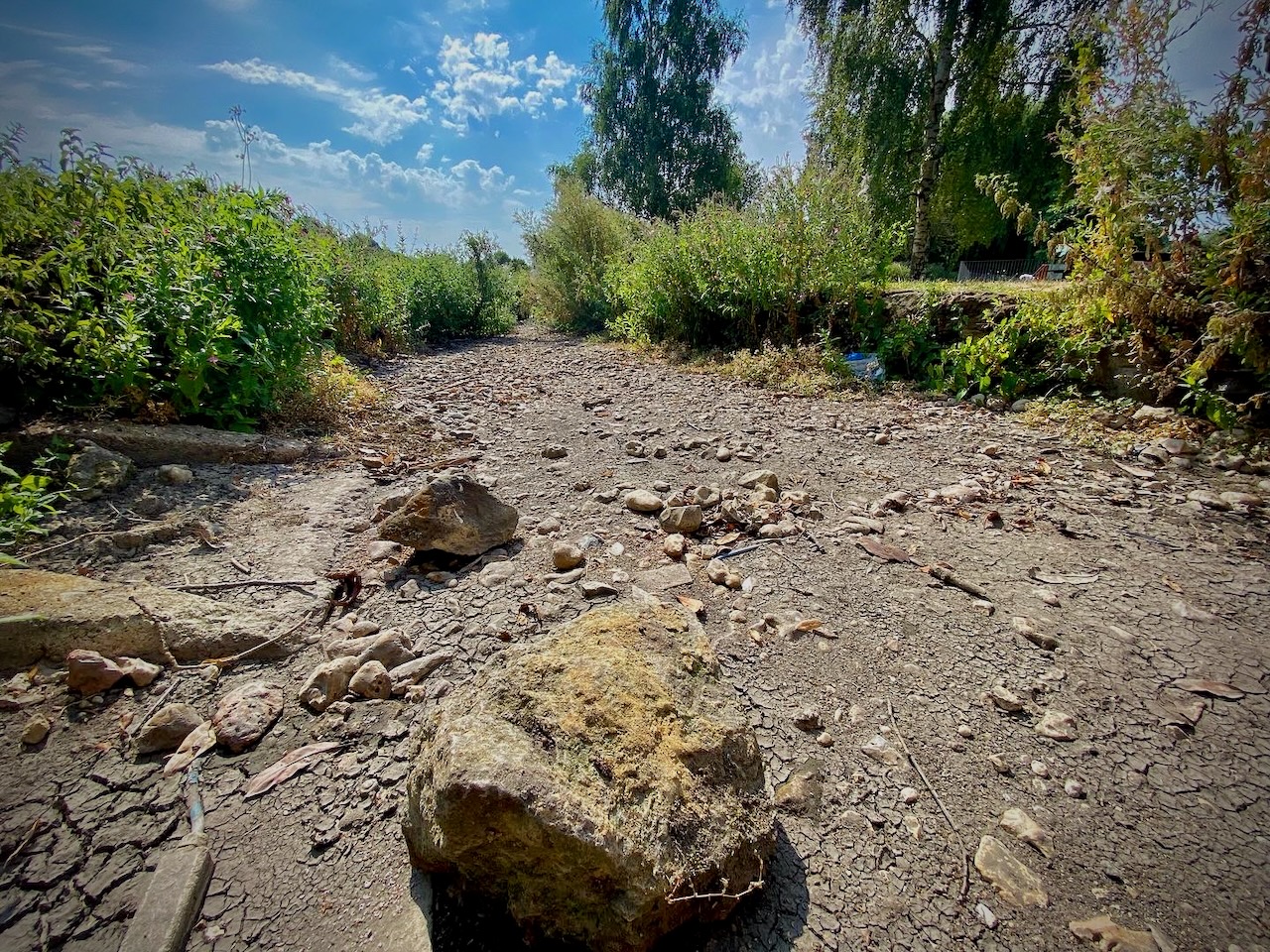
Secondly, the Government have pointed to their plans to limit overabstraction by water companies through amending licences, but their target achievement date is 2030. This could take far, far too long and be far, far too late for many threatened chalk streams. The current abstraction situation is grave. Water companies are not sourcing their water from chalk streams within sustainable limits. The Catchment Based Approach’s chalk streams annual review 2024-2—a mouthful of a title—published last week, reports that a third of chalk streams do not have healthy flow regimes. This CaBA report also highlights additional water bodies where, despite flows being classed as compliant overall, abstraction can cause significant local impacts in parts of the watercourse. For example, in the River Loddon, upstream areas are impacted by abstraction but, because of wastewater discharge downstream of them, flows at the assessment point are classed as compliant. If overabstraction occurs for a sustained period upstream, the whole chalk stream could well dry out.

In light of the growing and urgent challenges facing our chalk streams, we cannot afford to wait for LNRSs to have more planning bite, or for 2030, when the abstraction licence amendments come into effect. We need Amendment 94 so that spatial development strategies are equipped to enable planning authorities to direct development away from areas where development footprints, pollution and overabstraction could sound the death knell for declining chalk streams. I will certainly listen to the Minister’s response with care. However, if this amendment continues to secure wide support, I will look to test the opinion of the House.

Baroness Willis of Summertown 

I am pleased to add my name to the important amendment tabled by the right reverend Prelate the Bishop of Norwich, and to Amendment 92 in this group, because, let us be honest, we are not starting from a good place with chalk streams. As mentioned by my noble friend, the current status of these unique and extremely rare habitats in the UK is poor, with more than three-quarters failing to meet good ecological health standards. This is precisely why the chalk streams became such an important issue for debate in the Levelling-up and Regeneration Bill. I remember only too well the same Front Bench colleagues debating long and hard for their protection.

The chalk stream recovery plan, announced by the previous Government, was seen by many, including me, as a good step in the right direction. But here we are again, with chalk streams back in the firing line and, despite the reassurance from the Minister on Report that local nature recovery strategies could propose priorities for their protection, the problem with our planning system is that it requires local authorities only to have regard to our LNRSs, which is not strong enough to protect these vulnerable habitats. We came across this a number of times in the Levelling-up and Regeneration Bill. Those words are etched in my memory.

Also, although the NPPF recognises the importance of irreplaceable habitats, chalk streams, much to my alarm—and, I am sure, to that of many in this House—are not specifically listed as protected habitats. Therefore, they do not have the overarching level of protection in the Bill, through the spatial development strategies, in the same way other protected habitats do. The only hope left, therefore, is the chalk stream nature recovery plan, launched by the previous Government. However, in reply to the question on this asked in Committee by the noble Viscount, Lord Trenchard, who sadly cannot be here today, the Minister stated that even this is now on hold because it is out of step with the ambitious programme of water reforms proposed by the Government. Perhaps the Minister can say for how long it will be on hold, as a result permitting further damage to occur in these unique freshwater habitats.

I say this because time is of the essence here. As an ecologist, I went back to look at the literature. Research on chalk streams has demonstrated that while removing pollution can result in the improvement of water quality within a month to a few years, ecological recovery can take between 10 and 20 years. The more damage we do, the longer it will take for them to recover.

Lastly, surely there must be some no-go habitats in some of our river catchments, and these chalk streams should be one of them. I therefore urge the Minister to agree to this amendment, within which the spatial development strategy would mandate the sort of responsibilities that lead to the protection and enhancement of these unique and rare chalk stream habitats.

Lord Bellingham 

My Lords, I support both amendments. I made a speech in Committee in which I laid out very similar arguments to those put by the right reverend Prelate and the noble Baroness, Lady Willis. I will not repeat them now, except to say that the right reverend Prelate referred to a number of chalk streams in my old constituency of North West Norfolk. These incredible assets—these unique and precious assets—are at risk as we speak. I say to the Minister that neither amendment is particularly demanding. They are quite modest in their overall fabric and intent. If the Government are serious about their environmental credentials, and about trying to do something for the countryside, I urge them, please, to accept these amendments.

The Earl of Caithness 

My Lords, I have put my name to the right reverend Prelate’s amendment. I am delighted to see him back in the Chamber; we missed him in Committee.

My noble friend Lord Roborough was absolutely right when he said in Committee that all rivers are important. Yes, that is true, but chalk streams are that bit more important. The reason for that is that we have 85% of the world’s chalk streams. We are custodians for that majority, but 83% of those chalk streams do not meet good ecological standards. We have handled the whole situation very badly. I think we have taken a retrograde step with this Government, who have dispensed with the chalk stream recovery pack, which the noble Baroness just referred to.

I have written to the Minister and told her that I will ask her a number of questions. I have given her forewarning, so I expect replies. In what respect did that chalk stream recovery pack fall short? It was nearly ready to go when the Labour Government took over after winning the election. They could have pressed the button; that chalk stream pack focused on some difficult questions that nobody had fully addressed before, so why have they torpedoed it? What do they propose to do that will be better than that pack had proposed?

Let us go down to some specifics of the pack. It had time-bound commitments to reduce groundwater abstraction on numerous chalk streams which, according to the Environment Agency’s own data, are unsustainably extracted: for example, the Darent in Kent, where over half the rainfall that feeds the river is taken away for public water supply. There was a timescale for getting that right. Will the Government stick with that timescale or will there be something longer? Do the Government have plans to move water abstraction further downstream, rather than at the headwaters of these rivers?

The chalk stream pack also had a timebound commitment to address the hundreds of small sewage works in chalk streams that do not remove phosphorus in the treatment process and where there is currently no policy or incentive to drive investment. What are the Government going to do better to give a good timescale to get all those water treatment plants in good order? The pack also addressed run-off from highways and local roads, which I have spoken about before in your Lordships’ House, and how damaging it can be to chalk streams in particular because of the added silt. The CaBA chalk stream strategy recommends revised best practice guidelines for local councils that give more protection to chalk streams. Do the Government have better plans than that? The pack also put forward solutions to reform the farming rules for water, which are currently ineffective. What are the Government going to do to replace that recommendation?

I did not mention this question when I wrote to the Minister, but I will add it now: how do the Government intend to address the physical dysfunctionality of many chalk streams moved, straightened, dredged or dammed over the centuries and put them back to their natural state? In destroying the hard work of some very good, able and committed people who produced the chalk stream pack, the Government have alienated some potential friends in their effort to improve the environment. How are they going to get friends back onside when, after all that work, they have just dismissed it as though it did not matter? What plans do they have to include such people in the future to try to improve the whole river system for chalk streams? It is no good taking just one little area in one district or county council, because chalk streams do not understand those borders; they flow through lot of different councils. The whole thing has to be tackled on a holistic basis, and the only way to do that is by supporting the right reverend Prelate’s amendment.

Lord Roborough 

My Lords, I shall speak to the amendments in the names of the noble Baroness, Lady Grender, and the right reverend Prelate the Bishop of Norwich. I am grateful for their excellent, informative introductions. We on these Benches tabled similar amendments in Committee. The amendments share a vital purpose: to ensure that our planning system gives proper recognition and protection to chalk streams, one of our most distinct and rarest natural habitats. These streams help define our landscapes, support unique biodiversity and supply water to many communities. The amendments would require spatial development strategies to identify and protect chalk streams, setting out the responsibilities for planning authorities in their stewardship.

These are sensible, constructive proposals and I am grateful to those who have tabled and supported them. We will support the right reverend Prelate the Bishop of Norwich if he divides on his amendment this evening. Will the Minister say whether she considers chalk streams to be irreplaceable habitats, like ancient woodlands, and therefore deserving of similar policy protection? The case for stronger recognition of chalk streams within our planning system is compelling. They are an irreplaceable part of our natural heritage and a globally important asset, and the way we plan for growth must reflect that.

I hope the Minister has heard the House and will be able to accept these amendments, and explain, as the noble Baroness, Lady Willis, and my noble friend Lord Caithness have asked, why our chalk stream restoration strategy is on hold.

Baroness Taylor of Stevenage 

My Lords, I thank the noble Baroness, Lady Grender, and the right reverend Prelate the Bishop of Norwich for Amendments 93 and 94, which propose additional statutory obligations for strategic planning authorities in relation to the identification and safeguarding of chalk streams. With 85% of the world’s chalk streams found in England, these unique water bodies are not just vital ecosystems but are indeed a symbol of our national heritage. The Government are committed to restoring them, which is why we are taking a strategic approach to restoring chalk streams. Working in partnership with water companies, investors and communities, the Government will introduce a new water reform Bill to modernise the entire system so that it is fit for purpose for decades to come. This is essential to restoring chalk streams to better ecological health and addressing the multiple pressures facing these habitats.

Alongside the programme of ambitious reforms, the Government are continuing to deliver vital improvements and investment for chalk streams, including £1.8 million through the water restoration fund and water environment improvement fund for locally led 

chalk stream projects. Over the next five years, water companies will spend over £2 billion on chalk stream restoration.

The Government remain firmly committed to the restoration and protection of chalk streams. Plan-makers and decision-makers should recognise these habitats as valued landscapes and areas of high biodiversity. They deliver essential ecosystem services, contribute significantly to natural capital, and should be identified and protected through local plans.

As I emphasised in Committee, local nature recovery strategies provide a tool for identifying and enhancing chalk stream habitats. These strategies map priority areas for nature and are informed by key environmental data, such as the assessments carried out under river basin management plans. Under Section 12D(11) of the Planning and Compulsory Purchase Act 2004, spatial development strategies must already take account of relevant local nature recovery strategies.

In answer to the points made by the right reverend Prelate, local nature recovery strategies are a legal requirement and are prepared by responsible authorities, typically county or combined authorities appointed by the Defra Secretary of State. There are 48 LNRS areas and lead authorities covering the whole of England; there are no gaps, and no overlaps. LNRS responsible authorities work closely with local partnerships, involving all local planning authorities, to identify and map proposed areas for habitat management, enhancement, restoration and creation for biodiversity and the wider natural environment. The West of England Combined Authority published the first LNRS in November 2024. Five more have since followed: North Northamptonshire Council, Cornwall, Isle of Wight, Essex and Leicestershire. The remaining 42 are expected to be published by the end of 2025, or shortly thereafter.

I will also address the right reverend Prelate’s point about the provisions in the LURA. The Act created a duty requiring plan-makers to take account of LNRS. This builds on the existing requirement on all public authorities to have regard to LNRS in complying with their duty to conserve and enhance biodiversity. This duty will be commenced as part of wider planning reforms later this year.

Where a strategic authority considers chalk stream protection to be of strategic importance, Section 12D(1) requires that spatial development strategies include policies on land use and development that address such strategic priorities. Authorities will therefore be able to include such policies where appropriate.

Furthermore, planning policy is clear that decisions should prevent new and existing development contributing to unacceptable levels of water pollution. Where water quality has the potential to be a significant planning concern, an applicant should explain how the proposed development would affect a relevant water body in a river basin management plan and how they propose to mitigate the impacts.

Fixing systemic issues is essential to addressing the multiple pressures facing these habitats, and restoring our chalk streams to better ecological health is part of our overall programme of ambitious reforms for the water sector.

I will respond to the points made by the noble Earl, Lord Caithness. I am more than willing to answer all his points—I will try to do so briefly. It might have been more helpful to have them in writing before today, but I will cover the points he has raised. First, on the time-bound commitments to reduce ground water abstraction, we are tackling one of the biggest threats to chalk streams by reducing harmful abstractions by an estimated 126 million litres daily by 2030, protecting vital water flows to these fragile ecosystems.

Companies covering chalk stream areas, such as Affinity Water and South Staffs Water, have made specific commitments to reduce abstraction from chalk streams. Affinity Water has committed to reducing abstraction by 34% by 2050. Portsmouth Water is building a new reservoir in Hampshire to protect the River Test and the River Itchen—this is the first new reservoir to be built since the 1970s. In June 2025, the Environment Agency updated its national framework for water resources, which set out the importance of chalk streams and how we will include their needs in water resources planning and decision-making.

On time-bound commitments to address hundreds of small sewage works in chalk streams that do not remove phosphorus, under the Environment Act, to achieve the 80% reduction in phosphorus load discharge, the phosphorus improvement driver prioritises action for catchments that meet one or more of the following criteria: catchments with water framework directive regulations—phosphorus standard failures; catchments with identified nutrification issues under the Urban Waste Water Treatment Regulations; and catchments where phosphorus targets set by conservation policy advisers are exceeded. That prioritisation ensures targeting to achieve the best environmental outcomes.

In addressing run-off from highways and local roads, the Defra Secretary of State has committed to including a regional element in the new water regulator. We are considering how road or highway run-off and urban diffuse pollution can be managed at a regional or local level as part of moving to a catchment-based approach.

Lastly, on the reform of farming rules for water—which the noble Lord said in his letter are currently ineffective—the levels of water pollution from agriculture are unacceptable. We are looking at reforming the regulations, including the farming rules for water, as a priority within a suite of broader interventions. We are also working with farmers, environmental groups and other parties to improve the farm pollution regulations to make sure that they are simple and effective. This will allow us to deliver pollution reductions and clean up our waters while supporting farm businesses to grow. I hope that is helpful to the noble Lord.

We need to continue to tackle the biggest impacts on chalk streams, including reducing the risk of harmful abstraction, and we are doing so, as I said, by 126 million litres through the amendment of water company abstraction licences, and rebuilding the water network with a record £104 billion investment to upgrade crumbling pipes and cut sewage spills. In light of all this, I hope noble Lords will not press their amendments.

Baroness Grender 

My Lords, I thank the Minister. It is very clear there is a strong feeling within this House that there is a need for something to shift and be enshrined in law. I beg leave to withdraw my amendment in order to hand over and support the right reverend Prelate the Bishop of Norwich if he decides to press his.

Amendment 93 withdrawn.

Amendment 94

Moved by

The Lord Bishop of Norwich 

Sharethis specific contribution

94: Clause 52, page 73, line 22, at end insert—

“(6A) A spatial development strategy must—(a) list any chalk streams identified in the strategy area;(b) identify the measures to be taken to protect any identified chalk streams from pollution, abstraction, encroachment and other forms of environmental damage; and(c) impose responsibilities on strategic planning authorities in relation to the protection and enhancement of chalk stream habitats.”Member’s explanatory statement

This amendment would require a spatial development strategy to list chalk streams in the strategy area, outline measures to protect them from environmental harm, and impose responsibility on strategic planning authorities to protect and enhance chalk stream environments.

The Lord Bishop of Norwich 

My Lords, I thank all who have contributed to this important debate and the Minister for her response. However, I am not convinced by her arguments; we cannot wait for a water reform Bill and have these arguments again at that stage. Amendment 94 seeks to protect chalk streams, this precious habitat which we are the custodians of. It aims to restore biodiversity and create a planning system that works with nature, not against it. At present, I am afraid, the Bill before us fails to do this for chalk streams. Thus, I seek to test the opinion of the House.
Sophia’s petition

Last Friday afternoon 30th May Sophia’s petition “please don’t abandon the chalk stream recovery pack” passed 10,000 names. By Monday almost another 1000 names had been added.

This is fantastic news. It means that the government must now respond.

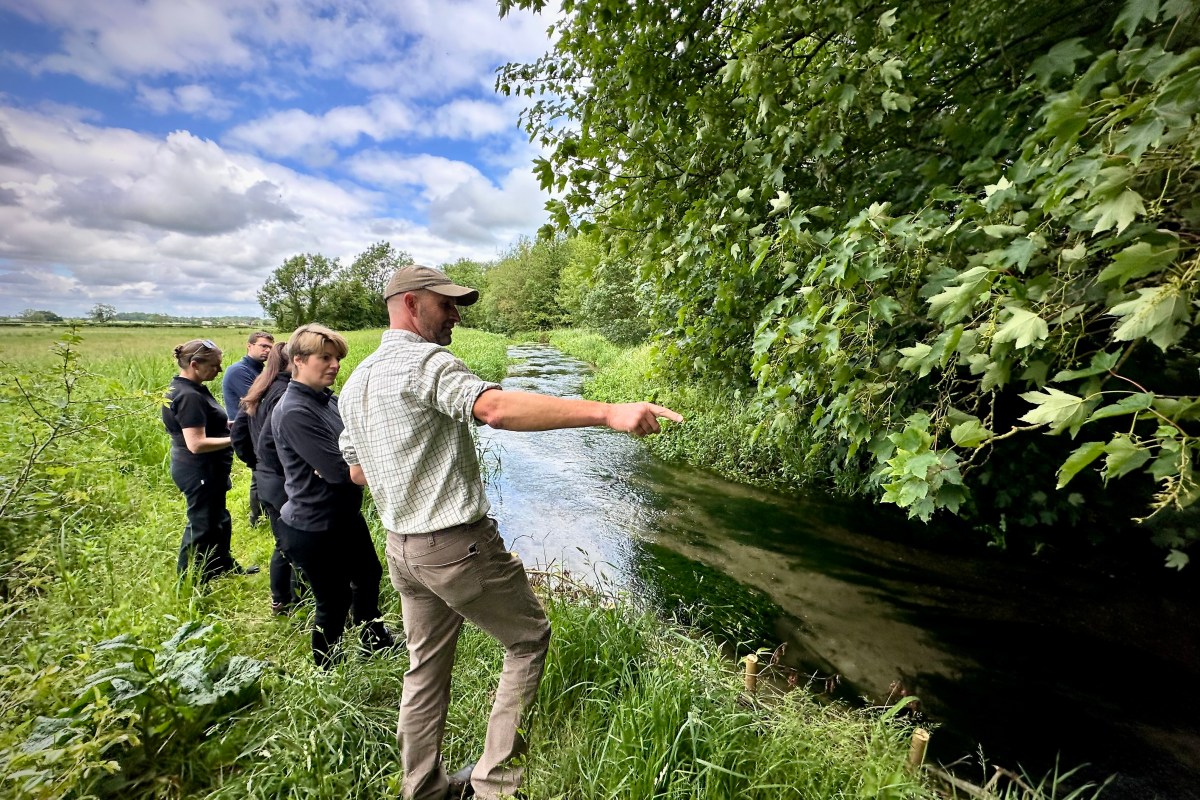
And maybe they have, to a degree. On Monday I met Minister Emma Hardy by a Yorkshire chalk stream. Many thanks to our guide Matt Arnold from the East Yorkshire Rivers Trust.

Though we were standing beside the Boston beck, perhaps one of the least pressured chalk streams in England, Minister Hardy was genuinely keen to know more about the multiple threats to chalk streams and what we should be doing to make things better.

We discussed the extreme levels of abstraction that exist on some chalk streams, especially those near London, and the suffocating nutrient pollution that comes from innumerable small sewage works where there is no phosphorous limit or where, if one exists, it is absurdly lax. We especially focussed on the lack of clarity in catchment level decision-making, something I feel the government could help with by unambiguously signalling the importance of chalk streams.

That signal should have taken the form of the Defra chalk stream recovery pack, of course, but I’m not holding my breath for a change of heart regarding its publication. Though you never know.

I will certainly continue to push, arguing why many of the measures in the pack were low-cost no-brainers: stuff that builds on existing policy with greater clarity and purpose, that would remove blockers in bureaucracy or give clear signals to water resource groups and water companies on where to prioritise abstraction reduction or target better water quality in vulnerable headwaters or that gives support to stakeholders.

My guess is that the treasury has put more or less everything on hold while it tries to prioritise growth through development.

This is worrying. Water efficiency through demand and leak reduction, for example – THE big plays in our national framework for water resources over the next two decades – means nothing for nature, unless accompanied by actual abstraction reduction. Of itself water efficiency simply makes headroom for development. And in the current climate this is almost certainly what it will be used to deliver.

Similarly, if the water industry is left to meet the previous government’s laudable nutrient reduction targets (as set out in the Environmental Improvement Plan) via “highest technical standards” at large works downstream of large population centres where highish standards exist already, then of course this will be the preferred “cost-effective” pathway for all parties.

All parties except fish and insects who might prefer those chemicals are removed upstream of where they live. The point is, you can create a great headline figure for phosphorus removal where it makes little ecological benefit, but why not direct the targets towards their purpose?

Without direction from government or its regulators on how to prioritise either abstraction or phosphorus reduction, economic efficiency of a decidedly anthropogenic kind will decide. River life will receive little benefit from initiatives intended to restore it.

Frustratingly, it’s all about economics – no matter who’s in charge – and so long as water is as cheap as it is, and so long as imaginative and economically-efficient ideas like Chalk Streams First or nutrient treatment wetlands or risk-based buffer strips (all measures a recovery pack might have given prominence to) are starved of oxygen, then nature will pick up the bill.

And thus the can is kicked down the road.

It doesn’t have to be this way. The chalk recovery pack would have been Defra’s first bespoke policy document for chalk streams. This government could yet dig it out, add some oomph to the stuff that got watered down, and defy my cynicism. No one would be happier to be proved wrong.

In the meanwhile, it was a pleasure to meet the Minister and I’m very much hoping we can meet again soon on one of the Flagship project sites, the Chess, for example where Kate Heppell is leading amazing citizen science research, or the Anton, where Simon Cain and Bob Wellard are concocting imaginative re-wilding schemes. And then perhaps the beleaguered Ivel which barely flows, or the Ver whose headwaters this winter have been constantly polluted with raw sewage.

The counter-intuitive (and heretical) idea that could unlock abstraction reduction.

It took me a while to get my head around the concepts in this post, so bear with me. This is aimed especially at eNGOs and other campaigners for chalk streams, because the more people there are who understand this counter-intuitve idea, the better. 

Here it is: you can save many chalk streams from unsustainable abstraction by conceivably using the aquifer in times of low flows and drought.

That is a head-muddler. But this idea could unlock real abstraction reduction, making the bad much better in the foreseeable future. This is far, far preferable in my view than holding out for a perfection (natural aquifers) that will never come.

It starts with my best attempt at explaining what I understand of the complexities of the interactions between groundwater, river flow and groundwater abstraction. Given that I vainly spent a long night in a hut in Iceland trying to explain the very same ideas to two angling friends of mine (they were belligerently uncomprehending in a (successful) effort to annoy me), this will be no easy task.

It is complex … kind of. It’s also quite simple really. Rather as the moon affects the tides, a simple idea leads to a complex set of manifestations.

Idea 1. Chalk streams flow from underground.

If you’re reading this blog you’ll already know that chalk streams derive most of their flow from groundwater. Rain sinks into the ground filling fractures in the underlying chalk and then lower down the slope it seeps out again as springs to create a chalk stream.

Idea 2. The level of the groundwater drives the flow in the river.

This is pretty simple. I used the bucket analogy before. Drill a single hole in the base of a bucket. Fill the bucket with water. As the bucket fills gravity drives water at an increasing velocity out of the hole. Now stop filling and let it empty. The flow diminishes to a trickle. EVERYONE gets this because it’s the same when you pee!

The rate of flow from springs in a chalk valley is driven by the hydraulic head of the groundwater above the springs. The higher the level, the greater the flow
… In more or less the same way as the water level in the bucket determines the force at which the water is driven through holes in the side of the bucket.

Idea 3. Groundwater rises in winter and falls in summer.

If you pour water into the bucket faster than water can leave it through the hole(s), the level in the bucket rises. If you stop pouring water in, the level falls as the bucket drains. This is exactly the same with a chalk aquifer. In winter, when it rains a lot, and it’s cold and the ground is wet and nothing is growing, more rain flows into the aquifer than can leave it and so the groundwater level rises. In summer, much less rain – if any – reaches the aquifer and so the groundwater level falls.

Groundwater rising. This chalk valley is dry most of the time but in February 2021 when recharge vastly exceeded discharge, it had filled to overflowing.

Idea 4. The higher the groundwater rises up the valley, the more the water pours out of it.

As groundwater level rises, stream flow increases. But not in a linear way as it would with a single hole at the base of a columnar bucket. In fact for every unit of rise in groundwater level, flow will increase by approximately X2 to 2.5 . Kind of like having twice as many holes at each level in the bucket as the level below.

There are a number of reasons for this which were debated at a recent groundwater conference. There is a summary of these ideas in Section 2 of John Lawson’s report Flow Recovery Following Abstraction Reduction which we updated following the conference and contributions from the likes of Rob Soley and Alessandro Marsili.

In short, this non-linear response is probably caused by a combination of: 

• the shape of the valley – if you imagine the groundwater filling the valley bottom and hillsides, assuming a perfect V- shape valley, for every unit increase the groundwater rises the area of saturated zone exposing springs rises two-and-a-half fold. Chalk valleys are not quite V-shaped but that’s the general idea.

• the fracture density in the chalk – which increases in the valley bottoms and with altitude. At depth chalk is very solid, but in the valley bottoms and higher up the slope and where water has flowed for thousands of years, the fracture density is much greater and the flow pathways are bigger.

• layering within the chalk – chalk accreted in layers under varying climatic / geological conditions and these layers are in turn interrupted by bands of clay and flint. These layers and the varying permeability and transmissivity can influence the way groundwater reaches with the surface.

• as the surface flow pathways lengthen (winterbournes rising higher and higher up the valley) the groundwater pathways shorten.

The fracture density and layering in the chalk, the shape of the valley and the length of flow pathways, all conspire to mean that when chalk valleys fill, flows will rise exponentially.

Idea 5. The impact of a constant groundwater abstraction has a varying impact on varying flows through the year

This is where things gets a bit more discombobulating. All of the above essentially means that as groundwater rises, flows increase exponentially. If that is true, then the reverse is true. For every unit of decrease in groundwater level, flows decrease exponentially.

This means …. drum roll … groundwater abstraction (which lowers groundwater levels) has a greater impact on high flows than low flows! This is a totally skull-tightening idea. Everyone thinks the reverse must be true. But it isn’t.

Groundwater levels and groundwater abstraction

Let’s start with the impact of groundwater abstraction on groundwater levels. In a natural aquifer system, the discharge from the valley must equal the recharge over time. Natural recharge = natural discharge / Time. This stands to reason: if it didn’t the valley would either fill to overflowing or empty (because over time one would exceed the other). 

Natural recharge derives from rain and natural discharge from river flow (and some evapotranspiration and flow through the ground). If I add another form of discharge in the form of abstraction, then the former natural discharge MUST go down. If it didn’t, the aquifer would progressively empty until there was no water left (an aside … hydrogeological literature generally describes anything less than draining the aquifer “sustainable”, because the aquifer is being lowered to a new dynamic balance, not mined. This is not the same as ecologically sustainable, however).

Look at it as simple numbers.

Natural recharge (10) = natural discharge (10) / Time.

Natural recharge (10) = abstraction (5) + natural discharge ? / Time.

What’s the new natural discharge? 5, obviously.

Now, as I showed with the bucket, the ONLY way in which the former natural discharge can go down is through a reduction in groundwater levels. If groundwater levels didn’t go down, then because the discharge is driven by the groundwater level the natural discharge would remain the same. As shown above, that is impossible.

Theis, the Isaac Newton of groundwater theory, wrote all this in 1940. The only way that the former natural discharge can go down (and balance the equation) he wrote, is by a reduction in the “thickness of the aquifer”. 

Okay, so pause and get your head round all that. 

• a single unit of rise or fall in groundwater level has a (very roughly) two-and-a-half fold impact on flows. 

• groundwater abstraction lowers groundwater levels.

ipso facto a single unit of reduction in groundwater level at high groundwater levels has a much greater impact on flows than a single unit of reduction in groundwater level at low groundwater levels.

It still hurts the head, but the discombobulating stuff above means that at high groundwater levels groundwater abstraction reduces flows by quite a lot more than 100% of the amount abstracted. And conversely, at low groundwater levels groundwater abstraction reduces flows by quite a lot less than 100% of the amount abstracted. Albeit over time groundwater abstraction must reduce flows by (essentially) 100% of the amount abstracted (it’s generally less than that for reasons that aren’t that important to the general concept, but basically because not all discharge occurs in the form of flow).

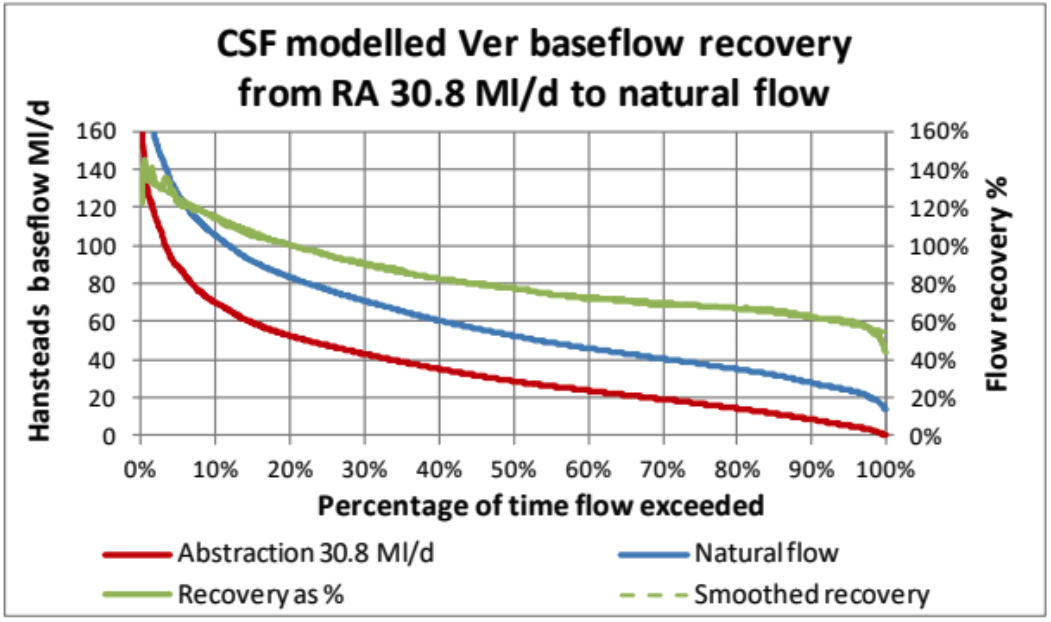
See the chart below to see what the Chalk Streams First modelling indicates % flow recovery would be if abstraction was reduced to zero in the River Ver. It varies through the flow cycle.

The above chart from Page 52 of John Lawson’s report shows that the % flow recovery (green line) at high flows (l/h end of X axis) is well over 100% and at very low flows (r/h end of X axis) is about 30% – 20%.

Idea 6. Groundwater abstraction at low flows is like a credit card.

The obvious question is … if groundwater abstraction at low flows reduces those flows by a lot less than 100% of the amount being abstracted, where the bloody hell is the rest of the water coming from? The answer: if it’s not a direct reduction from flows at the time, it is coming from aquifer storage.

This is easy to understand if you think of a large abstraction next to a small and diminishing stream. In the winter when the stream is gushing, there is more than enough water to satisfy the pumping. In the summer the stream reduces to a trickle or perhaps even dries up. But the pumping continues. At this point the abstraction is clearly not taking water from stream flow because there isn’t any. Another aside … I’ve read hydrogeologists describe this state as abstraction having “no further effect on flows”. This might be literally correct at the time. But it is misleading. The abstraction is effecting future flows. 

When a chalk stream dries but abstraction continues it is clear that the abstraction is no longer subtracting water from the river’s flow, but from aquifer storage: this is basically a debt to future flows.

At times of low flow and into droughts, groundwater abstraction increasingly draws on storage, upon which future flows are built. If you unnaturally drain the aquifer, it will clearly take longer to fill when it starts raining again, all before the flows in the river can respond to the rise in groundwater levels.

Therefore groundwater abstraction at low flows is like a credit card: much more a debt against future flows than an impact on present flows. This is a key idea behind the confusing concept of using groundwater abstraction to unlock abstraction reduction .

Idea 7. If you turn off the pumps you get greater flow recovery at high flows than low flows.

Essentially what all this means is that when you cease or lower abstraction you get well over 100% of the amount no longer abstracted at high flows and much less than 100% at low flows. That is what the chart above shows on the River Ver.

And this is the Achilles Heel of the Chalk Streams First idea. 

Water resources needs a constant supply of water. Groundwater abstraction gives that. Chalk Streams First says “turn off (or down) the pumps and take the water from river flows much lower down the catchment”. And while you get loads of water back in winter, you get less back in summer. Generally, you must have a storage reservoir to make it work and balance out the varying recovery rates into a constant and reliable supply. 

John Lawson – who came up with the Chalk Streams First idea – has long known this. We argue (with empirical evidence) that the flow recovery at low flows is actually much higher than the most pessimistic predictions claim, but nevertheless this variation in response is an issue we have to address. The answer is a reservoir.

BUT … then you get to the prolonged droughts when water companies are under real pressure. In these times, the flow recovery could conceivably drop even lower. What to do? The public must have water. This low flow recovery at very low flows in long droughts threatens the whole idea of reducing abstraction through schemes like Chalk Streams First. Especially now that we have to plan according to 1:500 year contingencies.

Idea 7. In droughts use groundwater abstraction to guarantee public water supply … so long as you’ve turned the abstraction right down to ecologically sustainable levels 95% of the time.

The insurance against the Achilles Heel of low flow recovery in a drought is a groundwater-fed public water supply scheme. There is one in existence already called the West Berkshire Groundwater Scheme (WBGWS). It is a series of wells in the Berkshire chalk that can, in extremis, be turned on and deliver a large amount of aquifer water into the Berkshire chalk streams, from where it flows to the Thames to be captured into the London reservoirs. The scheme is used very, very rarely: no more than once every 25 years. But it’s there. And it guarantees water in a drought.

The West Berkshire Groundwater Scheme wellfield: this scheme is rarely used but guarantees water in extreme droughts. It is a counter-intuitive idea that could unlock abstraction reduction in the Colne, Lea and Ouse chalk streams.

The impacts on the chalk streams are a) one of flow relief in the drought, because the flows get boosted. Albeit – and I have to emphasise this – flow augmentation in not the aim of the scheme, it is a bi-product. And b) at the end of the drought, when the pumps are turned off, the aquifer must recover before flows return to natural levels, so you get lower flows the following year.

But this is crucial: in modelled scenarios, the flows in the year of recovery are still better than they would be if abstraction ran all the time as happens at the moment in streams like the Ver, Misbourne and Beane.

So WBGWS type schemes could unlock Chalk Streams First type abstraction reduction in other settings, such as on the chalk streams of the Colne, Lea and Ouse (even the Darent). As such a scheme would insure against the public supply deficit in droughts created by replacing upper catchment groundwater abstraction with lower catchment surface water abstraction (the Chalk Streams First concept).

BUT …the Environment Agency is very cautious of such schemes

This is understandable because there have been some bad schemes in the past. But flow augmentation to compensate for the collateral damage of abstraction is a different thing altogether. 

Some schemes were developed in the past whereby to compensate for abstraction (which had dried the stream) water was pumped from the aquifer into a losing reach of stream and the whole thing was a highway to nowhere.

Other times the concept of augmentation is used to justify continuing, unsustainable abstraction. These schemes have given the whole idea of flow augmentation a bad rap, and one that has stuck like glue.

RevIvel claim that a flow augmentation scheme putting 0.5 ml/d into a dry river bed is not a good type of augmentation scheme, especially if it delays a proper solution to the unsustainable abstraction. This is the kind of scheme is very different from the idea promoted in this blog post.

BUT, I would argue that we need to be more pragmatic and open minded than a presumption against these schemes if we are to achieve the heretofore irreconcilable goals of reliable public water supply and restored chalk streams. Aquifers in the south east are managed one way or another. We need to make sure they are managed mindfully to achieve the specific outcomes we want and in this regard holding out for “natural” when a more flexible approach would unstick hopeful schemes such as Chalk Streams First would surely be counter-productive?

I understand the Environment Agency may be consulting on this topic later in the year. I know from many discussions I have had with chalk stream advocates that the ideas I have outlined above will be surprising and counter-intuitive to most of us, as indeed they are to me.

But it is vital we give the EA the encouragement to take a flexible, if ultra cautious approach, because the gains of doing so could be massive.

Prioritising abstraction reduction: we need common sense more than we need evidence.

It’s brilliant that the Environment Agency has, through the national framework, identified the flow deficits that exist on our chalk streams. 

It’s great that Environment Agency has signalled to the national framework groups that chalk streams should become a priority in terms of addressing those deficits.

Thus far, however, the Environment Agency has inclined to stand back – at least publicly – from guiding the decision-making that will be needed to apportion those abstraction reductions strategically and cost-effectively over time. This is being left to regional groups and partnerships, but it is not yet clear how these decisions will actually be made or if they will be consistent and logical.

Our CaBA chalk stream strategy called for the collaborative development of a prioritisation process and while everyone agrees the need, it still hasn’t quite happened.

In all of the meetings I have ever attended in which abstraction reduction is discussed the idea is aired that we will need evidence to justify and ensure wise decision-making, including evidence that ecological gains will follow mooted abstraction reductions.

On the face of it, the call for evidence seems only prudent and sensible – after all public money is at stake. 

But the idea that such evidence could ever exist is a chimera.

Clear cause-and-effect evidence according to a robust, before / after / control / impact method of proof, is – I argue – impossible to acquire. And it is so, precisely because of the infinitely complex web of cause and effect that is leant upon to justify the call for evidence.

Water companies will argue, and rightly, that reducing abstraction is expensive and, therefore, that there’s no point doing it if no benefit follows. Or if the potential benefit is neutered by some other factor such as a heavily modified river channel, or pollution from farms.  In certain settings we run a real danger of spending millions reducing abstraction, when other factors – like the fact that the river is navigable and impounded by locks and weirs – are as big or even a bigger brake on the ecological health of the system from which there is no possible relief. 

There are also settings where the cost of reducing (some of) the abstraction could be more cost-effectively spent (in terms of ecological gain per buck) improving the physical habitat. We have transformed canal-like channels in Norfolk into vibrant, wild and free-flowing streams for modest amounts of money, all things considered. £200,000 per km is dwarfed by the £4 million cost of replacing 1Ml/d of water. For that you could rebuild 20 km of knackered chalk stream.

I’m all for the intelligent and undogmatic trade-offs and counter-intuitive thinking that will be needed if we really are to balance the needs of society and nature.

But the call for evidence is self-deluding at best and a delaying tactic at worst.

Why? 

In the insanely busy and pressured landscapes we are talking about it is virtually impossible to strip out the variables: the physical condition of the channel; the micro and macro stressors of water quality which are highly complex and some of which we barely understand; shifts in the global agricultural markets which might generate or ease an agricultural pressure beyond one’s control or easy quantification; road run-off which might be terrible in a year when a local farmer is rearing pigs, or not too bad when the farmer gets rid of the pigs or in a mild, dry winter; the weather; the climate; the impact of invasive species like signal crayfish, or predation from cormorants when a cold winter forces them off the reservoirs: etc. etc. etc.

I defy anyone to design an experiment into the teeth of those variables, that could possibly isolate the beneficial or non-beneficial impacts over time of one single action. 

The only way you could construct such an experiment would be to select a stream where abstraction is pretty much the only pressure and a significant one, gather baseline data for at least five years, ideally a decade and then COMPLETELY TURN OFF THE ABSTRACTION in that stream and all nearby streams (because you need the signal to be significant to rise above the variables you can’t eliminate no matter how hard you try) and study for another five to ten years. The study periods would have to either equally include or exclude periods of drought and very wet years too. 

When helping to write Defra’s now scandalously abandoned chalk stream recovery pack, I was looking for exemplar case studies of where abstraction reduction had made a significant and demonstrable beneficial impact to ecology. I struggled to find a slam-dunk example, mostly because the reductions that have been made – though significant – have been made from very high totals and are actually quite small against the volumes still abstracted. For example, on the River Ver, while abstraction once exceeded 50% of recharge, it is still 30% of recharge.

This reach of the River Piddle used to dry regularly in the late 1980s early 1990s.

I cited the River Piddle in the end, even though the changes made there since the dark days of the late 20thC when the river dried up regularly, include flow augmentation as much as abstraction reduction. The Piddle, however, is indeed much better now than in 1989 – 93. I know because I’m lucky enough to co-own the bit that used to dry up and it is now an exemplar of chalk stream health. It is an example.

But even so, water companies and others will often say abstraction reductions made thus far haven’t yielded the hoped-for results. Either in terms of flow or clear ecological gains.

In terms of flows, this is not true. John Lawson’s analysis of the flow-recovery following abstraction reductions shows unarguably that flows do recover in proportion to abstraction reduction. But when the abstraction is really high and you only reduce it a bit … hmmm.

John’s report also shows that the reductions made, though significant and expensive in water resource terms, have been far too small relative to the size of the overall catchment abstraction and far too small to rise above the “noise” made by all the other variables (and many of these variables haven’t been attended to properly, either. We still have a lot to learn about high-quality and cost-effective process-based habitat restoration).

In the only really good long-term BACI type flow scenario that exists, flows on the River Ver reduced and then recovered exactly in sync with the abstraction increase and then reduction. Of course they did: where else would the water have gone to?

So, if slam-dunk cause and effect evidence that reducing abstraction Y will lead to X ecological recovery doesn’t exist and can’t be found, how do we approach the problem? 

Without knocking the idea that data and evidence are useful tools to guide our decision-making, we should not abdicate our own common sense. In the same way that we don’t need science to tell us that it’s warmer in summer (though we need science it to tell us why) we don’t need science to tell us that abstraction adversely impacts the ecology of a river (though we do need it to tell us why).

Many fine minds have spent a lot of time discussing and agreeing that sustainable abstraction in chalk streams should generally cause less than a 10% reduction in natural low flows, (which also, give or take, amounts to 10% or less of the average aquifer recharge). That is why we have the Environment Agency’s Environmental Flow Indicator, which is based on the UK Technical Advisory Groups deliberations on exactly this flow / ecology balancing act.

What we need beyond this work (that has already been done!) is not so much more impossible-to-find evidence but rather a screening process that aids and brings logic, common sense and consistency to the thorny issue of how to spend public money most cost-effectively in our collective goal of achieving sustainable abstraction on chalk streams. 

To give a really obvious example: we need a screening process that stops us spending billions of pounds reducing abstraction in a river that is navigable and therefore doesn’t really have a flow-dependent ecology, but compels us to crack on with spending millions of pounds reducing abstraction in iconic chalk streams which can also be physically restored for 200k per km!

That really shouldn’t be too difficult.

I have made a start below … comments welcome.

The ‘shocking’ State of England’s Chalk-Streams 2014

_dsf3142
England’s chalk-streams: their shocking state is the ecological restoration opportunity of our time.

Last night I was invited to speak at the launch of WWF’s new report: The State of England’s Chalk Streams 2014. The report reveals that over three-quarters of these iconic and globally unique rivers are failing to meet targets for ecological health.  This is what I said to the audience at the South Bank Centre:

“I want to talk to you this evening about how the state of England’s chalk-streams – a state this new WWF report correctly describes as shocking – could become the most incredible opportunity for ecological restoration. We have the means and we have the knowledge to rehabilitate this broken ecosystem. All we lack is the will. But will is only a change of mindset. Minds can be changed.

In some ways this ‘shocking state’ is not surprising.

I’ve just spent five years researching a book looking for the reasons why, in 1965, a chalk-stream in Buckinghamshire called the River Wye was buried under the streets of the town it gave life to. The answers were on one level mundane and soulless: the river was buried to widen a road. On another they were as complex and layered as the history of the valley that river flowed through. Geology and industry and slum clearance and town planning stacked up one after the other, until the river’s burial became as inevitable as the construction of a shopping centre above it: a retail cathedral which the Council named Eden.

The world over the struggle between nature and man, between the stream and the street, ends with the incarceration of the stream. It’s not that anyone especially means rivers any harm. It’s just that through an ironic twist of history rivers give birth to and then get in the way of economic expansion. Swap street for field, the principle holds.

English chalk-streams flow through landscape at the epi-centre of Western civilisation: certainly in terms of the depth of its history, the density of its use. In other words, they are a globally unique eco-system in the very hottest part of the fire. Of course they’ve been pushed to the edge of existence. Looked at this way, it is a minor miracle that we have any chalk-streams left at all.

That river was buried to widen a road. It is worth remembering that this is how it happens. No-one is planning or hoping for a world in which there is no room for nature. But the end of the wet and the wild is death by a thousand cuts: none of them is actually mendacious, but all of them are careless.

And yet, this grim fact is also an exciting opportunity. If economic growth almost always leads to ecological destruction, it doesn’t have to. Making room for nature begins with seeing how it matters. So why do chalk-streams matter? Why should we care more? I can try to tell you why I care.

I grew up in London, but every other Friday night through the late 1960s and then the 1970s we drove north to spend the weekends in Norfolk. I had no particular idea then, as I struggled to peer out the car window, that the route we took, around the edge of the Chilterns, across the Hertfordshire downs, up the ridge of the Gog Magog hills all the way to the multi-coloured cliffs of Hunstanton, was more or less entirely across a chalk landscape. But towards the end of the journey, when the evenings were long in summer I would ask my father to slow down over one or other of the bridges which crossed the streams near our house. One was over a river called the Ingol, where it tumbled over a small waterfall beside a bus stop. Another was over an equally small stream called the Babingley. I adored these miniature brooks for a reason I could never have explained. They just spoke to me and I loved to spend a few moments watching them flow.

Now, forty years on, I know that these little brooks were chalk streams. I also know that we would have crossed others on that journey: the Colne outside Heathrow, and then that river’s Chilterns tributaries the Chess, Misbourne, Gade and Ver. Running north up the A1 we would have crossed the Lea and the Mimram and then, riding the ridges of those chalk hills we threaded between the Beane, Oughton and Purwell. Turning east we narrowly missed a few more – the Cat Ditch, the Ivel, the Hiz – before we crossed the Cam and then the Granta. Further on we crossed the Snail and then the Fenland incarnation of the Lark. Then the Little Ouse, the Wissey, the Nar, and finally, nearing home, we crossed the Babingley, the Ingol, the Heacham and smallest of all, the Hun.

Those 24 names represent a good proportion of all the chalk-streams that exist globally: about one-eighth of those in England, whose total of a little over 200 streams – varying in size from the stately River Test in Hampshire, to diminutive little brooks you can almost hop over – make up most of the chalk-streams in the world. There are a number of chalk-streams over the channel in Normandy. But further afield, although there are great swathes of chalk across Kaliningrad, Bulgaria, Czechoslovakia, or the Ukraine, although there is chalk in Texas, Israel, Egypt and Australia, it seems that there just aren’t any rivers like the English chalk-streams. Ours appear to be almost unique.

To understand why you need to think of Europe as … well if you’re into cooking think of a layered cake and if you’re into DIY think of plywood. I’ll go with the cake metaphor …

… the chalk is just one layer, the white sponge say, sandwiched between layers above and below. Now, imagine you tilt the cake so the layers no longer lie flat. Now, squeeze it from each side so the whole cake buckles. Finally take a knife. This knife is made of time and ice and rain and wind. Run the knife across the top of the cake: but don’t be too careful about taking a neat, even slice. The knife, you’ll find, slips more easily through the softer layers, the cream, the fluffy sponge; but it struggles a bit at the toffee and caramel. It all gets a bit messy of course: the cake you have cut away, some of it dissolves, while some of it is spread across the surface elsewhere. This layered, tilted, buckled and untidily sliced cake that you have imagined is the surface of the earth. The layers of rock, the layers of the cake, show at the surface in bands. In places the bands are smeared over with the remnants of other layers. In places they stand clear. The layer of white chalk at the surface in the Chilterns, for example, has been cut away and is long since gone from over Scotland; it lies intact but deep under the surface of eastern France; and in Bulgaria, while it might be more or less at the surface, it is covered with great smears of other stuff.

This is why most chalk-streams are English. Chalk-streams only flow where that soft, soluble white rock protudes at the surface, and more to the point, where it is relatively uncorrupted by the marbled mess of depositions left behind by the knife.

And what is this chalk? It is the fossilised remains of infinitesimally small sea creatures which swarmed millions of years ago in pre-historic seas. Most of Europe was once under the sea. Chalk formed at its edges where countless billions of dead coccoliths rained down to the ocean floor, settling and compressing into a porridgy ooze, which became in time, chalk. It took a while: the chalk accreted at a rate of one millimetre a century, one centimetre every thousand years. And now we have our chalk hills: a great belt of them in England that runs from south-west Dorset, past London, through East Anglia and up into the Yorkshire Wolds. Some of these hills are hundreds of meters thick.

Chalk-streams, like most rivers, begin with rain. But when rain falls on chalk it sinks into the ground through fissures and cracks, or it soaks into the body of the chalk itself, turning the hills into underground oceans of trapped water. A drop of rain might travel five miles or 50 under the earth, it might stay down there five months or five years or five centuries. The subterranean topography that determines exactly where the water goes is immensely complex, almost unknowable.

What we do know is that here and there, in a wet furrow in a meadow, or under the roots of an ancient tree, or in a rook-filled copse on the edge of a hill, that water re-emerges as springs – and that in these special places chalk streams are born.

What flows from the spring is no longer plain rainwater, however. It is chalk-water: cold and clear, and rich in minerals. The steady flow of this cool, fertile water in meandering, gravelly channels creates spectacularly diverse ecosystems. The unspoilt chalk stream is like a watery Garden of Eden: chequered beds of water crowfoot swaying in the marbled currents, constellations of white flowers, vibrant green beards of starwort and clouds of water-parsnip; the banks decked in marsh marigolds, water mint, and flag iris; under the surface brown trout and grayling, young salmon and sea trout, white-clawed crayfish, freshwater shrimp; in and over the plashy meadows, snipe and otters, water voles and mayflies.

But chalk streams are special not just in their geological origins, and the wonderful ecosystems this creates. No river on Earth is as much a product of human as well as natural history. They are such gentle, malleable rivers. They have been harnessed and lived with for thousands of years, shaping and shaped by human history in one of the most used landscapes anywhere in the world. Think of the Roman villas, the mills, the medieval priories and holy houses, the castles, the ornate Palladian parks and gardens, the fisheries, the Georgian water meadows. All these things give chalk streams a distinct beauty that is not the same as the sublime, unpeopled beauty of craggy peaks and spouting waterfalls. Chalk streams are home-spun and life-giving. Chalk streams are pastoral. Chalk streams are living, flowing history.

This intersection of geology and geography, of climatic history and finally human history has created a unique type of river: Edenic, life-giving. Chalk-streams are an English Okavango Delta, an English Great Barrier Reef, an English rainforest. Which ought to mean we should value this heritage as highly as we would any other globally unique eco-system.

Sadly, we don’t. Instead these unique rivers are abused: some to the extent that they have dried up and ceased to be rivers at all. Others are rivers in so much as they have water in them, but in every other way they are changed. Some are buried underground. Most are polluted too. To our shame most of the really debilitating changes have occurred in the last 50 or 60 years. Before that time chalk-streams were certainly much-used river systems, but our relationship with these rivers was to a large degree symbiotic. Since 1946 a fatal combination of dredging, diffuse pollution and water abstraction has made it parasitic.

Today, the range of threats is diverse and most are difficult to overcome in a busy, valuable landscape which also supports farming and industry, people and businesses.

Difficult to overcome, but surely – given the value of these rivers – not impossible?

Remember that river which was buried to widen a road? Now, fifty years after it was lost to the world, the Town Council is planning to unearth it again. The change has come because they believe it is possible and can see reasons enough to want to. The river will bring back the heart of the town. Like the rock that made the river, history took that stream underground and has brought it to the surface again. All it takes is will. A change of mind. A different way of valuing things.

There are two ways to look at this struggle between man and nature, between environmental growth and ecological destruction. Either we sacrifice the places where we live and work and try to pickle the places we don’t: which won’t save them, by the way, because they too will shrink until there’s nothing left.

Or, we learn to make room for nature and create a world where unique eco-systems can exist alongside or even inside functioning, economically viable landscapes. It is that polar choice which makes the sobering state of the English chalk-stream the most tremendous opportunity. If we can make that room here – and I know we can – we set an example for the rest of the world. We create a beacon of hope.

If we can do this in this busiest of landscapes, we can do it anywhere.

If chalk-streams are our burning rainforest, it is up to us to put the fires out.”

Trees in Rivers

_DSF4010
2013

DSCF5440
2014

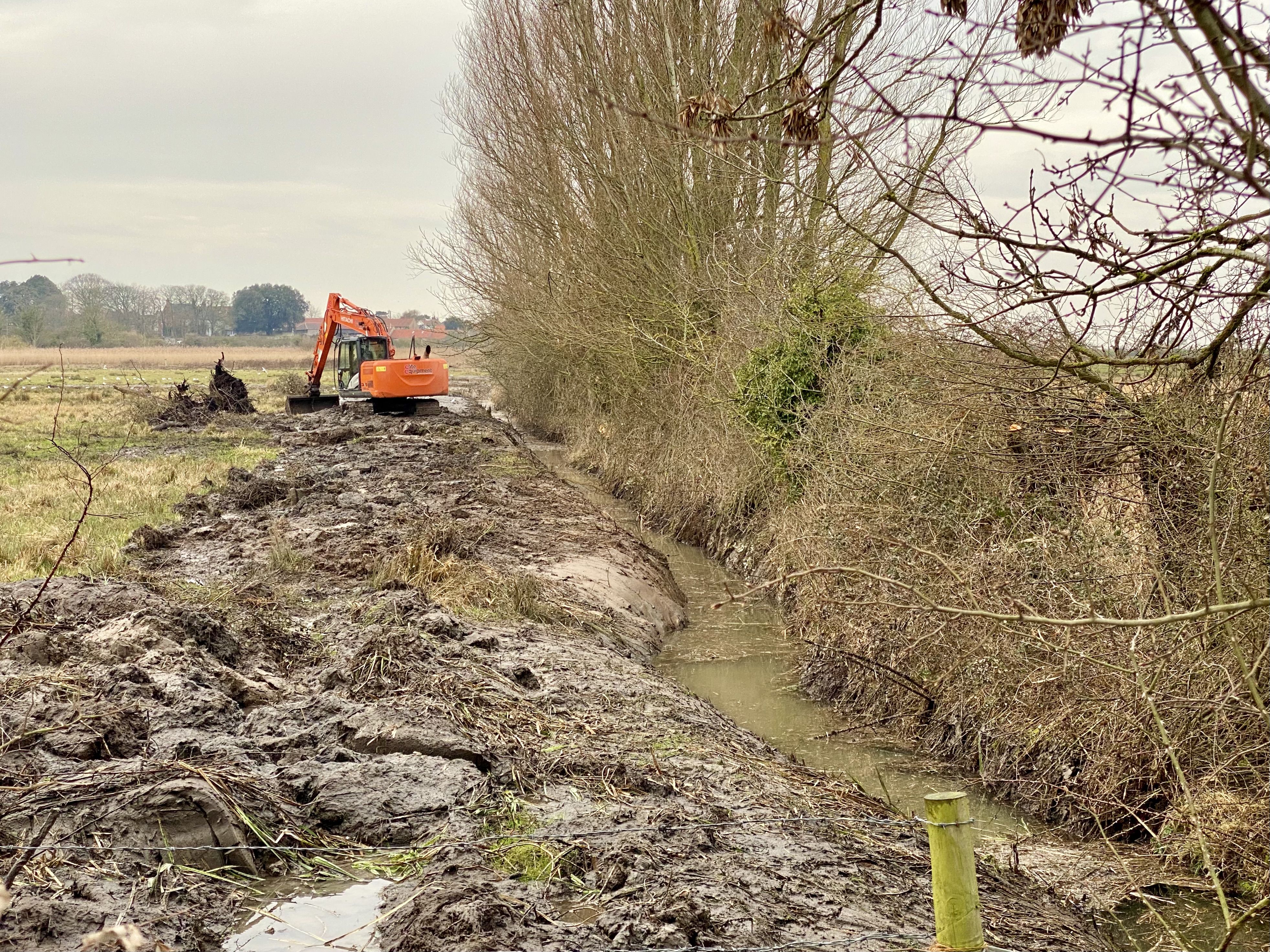
Monday morning 4th August and the next phase in the restoration of a small Norfolk chalk-stream begins. 3.5 km in two months, all being well.

Last year we (the Norfolk Rivers Trust working with Cain BioEngineering) took on a similar length – 3.5 km of straight and over-wide channel and did our best to replicate in two months what would have taken hurricanes and beavers (if we had them) two hundred years. You’ll get the idea from these before and after pictures: we felled trees and used them to rebuild a more natural, meandering channel.

It sounds simple enough. But why bother? Over the centuries chalk streams have been straightened, deepened and widened: for milling, for navigation, to construct water-meadows (a 17th Century technique for boosting farm productivity by flooding the floodplain) or to make them into drains (a 20th century technique for boosting farm productivity by draining the floodplain). The cumulative impact of all this modification has been to change our chalk-streams from the naturally meandering rivers they once were into uniform, over-wide and over deep canals.

Using trees to rebuild the meandering, low-lying riverbanks that a chalk stream should flow within brings a host of improvements to the habitat and eco-system. In the restored channel the water flows more quickly. The swifter flows scour the bed of stream so that there is clean gravel instead of deep mud. The faster flows favour weeds like ranunculus and starwort which help maintain a cleaner river, and provide better habitat for fish and insects. Along the shallow, wet margins reeds and grasses flourish and these also provide habitat for insects, birds and mammals. Selectively felling trees helps too, especially in the sort of semi-commercial forestry that borders a lot of our rivers: the ideal is the dappled sunlight and shade you’d find in a natural, mature flood-plain wood.

Altogether this carefully choreographed imitation of a small hurricane can absolutely transform a chalk stream, as these photographs show. The changes illustrated here have taken less than a year to evolve. In five or ten years the woody banks will have disappeared beneath trapped silt and vegetation and flowing through the middle will be a smaller and much healthier river.


DSCF5056
2013

DSCF5437
2014

DSCF5062
2013

DSCF5439
2014

_DSF4966
2013

_DSF5333
2014